
Talk · Use · Travel & flying
How do we read the Wh rating on a 10,000mAh power bank?
Watt-hours equal volts times amp-hours. A 10,000mAh power bank at a typical 3.7V cell voltage is about 37 Wh, but always use the Wh figure printed on the product when there is one.
 Wecent Editorial Team
Updated
3 min read
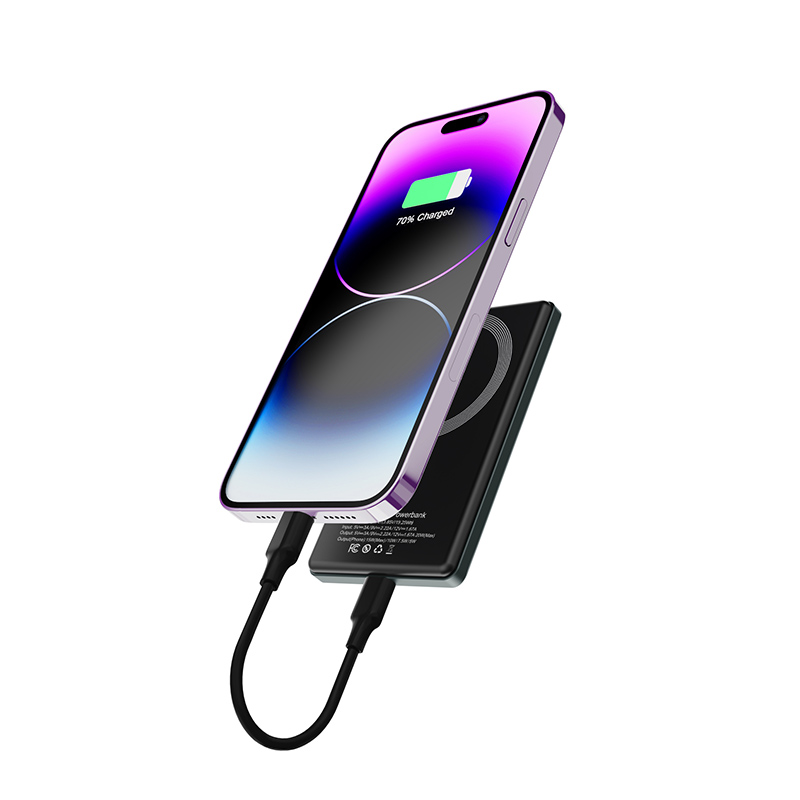
Our retail buyers say airline passengers keep asking whether our 10,000mAh and 20,000mAh power banks are under the limit. The label shows mAh only. How do we read or calculate the Wh rating, and how should we show it?
Short answer: Multiply the battery voltage by the capacity in amp-hours. For a 10,000mAh power bank at about 3.7V, 10Ah times 3.7V is 37 Wh. Use the Wh value printed by the maker when it exists, because mAh figures can be quoted at the cell voltage rather than the output voltage, and the Wh figure is the one airlines use.
The formula
Both the FAA and CATSA give the same formula: watt-hours equal volts multiplied by amp-hours. If a battery is rated in milliamp-hours, divide by 1,000 first to get amp-hours. CATSA shows the same step with an example.
Worked examples at 3.7V
- 10,000 mAh = 10 Ah. 10 × 3.7V = 37 Wh.
- 20,000 mAh = 20 Ah. 20 × 3.7V = 74 Wh.
- 27,000 mAh = 27 Ah. 27 × 3.7V = about 99.9 Wh, just under the 100 Wh line.
The 3.7V figure is a common nominal voltage for a single lithium-ion cell, so use it only when the label gives no other value. If the label states a different nominal voltage or a printed Wh figure, use that.
Why mAh alone is misleading
Many power banks quote mAh at the battery’s internal voltage, while the USB output is 5V or higher. A pack marked 10,000 mAh at 3.7V holds about 37 Wh, but it will deliver fewer mAh at 5V because of the voltage difference and conversion losses. Customers sometimes think the power bank is faulty when it charges a phone fewer times than the number suggests. That is the physics of conversion, not a defect.
Why Wh matters for travel
The FAA allows spare lithium-ion batteries up to 100 Wh in carry-on, and up to two larger ones of 101–160 Wh with airline approval. CATSA’s table gives the same figures. The FAA adds that many airlines set stricter limits, including on how many power banks each passenger may carry, so check the airline’s own rules.
What to print
- The nominal voltage, capacity in mAh and Wh rating on the power bank body.
- The same figures on the retail box and in the listing.
- Use the figures from the battery’s test and specification, not a rounded marketing number.
A caution on rounding
A product at 99.9 Wh is very close to the limit. Check that the rated value, after rounding, stays on the correct side, and have the figure on the label checked against the test report.
Sources checked on 24 Oct 2026: FAA PackSafe: Lithium batteries; CATSA: Guidelines for batteries.
Where this answer says to confirm with Wecent, the detail is not published on the product page and has to come from the datasheet or the factory. General facts come from the regulators, standards bodies or device makers named in the text.
Three more perspectives
Products discussed in this thread
Related articles & topics
Have a sourcing question about your own programme?
Ask our team More Travel & flying questions