
The minimum order quantity is not set by the customer’s budget or by the supplier’s preference. It is set by the smallest economical batch for each process in the chain – the SMT panel, the moulding run, the print plate, the test time and the certification amortisation – and the binding constraint is whichever of those is largest for your configuration. That is why the same factory quotes 200 pieces for one product and 2,000 for another that looks similar from the outside.
This guide is part of our OEM & ODM Charger Programmes. Read the full topic guide for the decisions that come before and after this step.
Custom USB C charger MOQ: the five process constraints that set the number
Five process constraints determine the opening quantity.
The SMT panel and reel quantities, the moulding batch where a new enclosure is involved, the print run for the packaging, the test time that every unit consumes, and the fixed cost of certification and documentation. The quoted MOQ is the largest of those constraints, expressed in finished units.
Understanding which constraint binds is what makes an MOQ negotiable in the right places. A configuration that reuses an existing platform and a simple carton is usually limited by the packaging print run, which is small. A configuration with a new enclosure is limited by the mould and the trial loops, which is where the large numbers come from. Two products with identical electronics can therefore differ by an order of magnitude in opening quantity.
Constraint 1: the SMT panel and component reels
Boards are produced in panels, and components arrive on reels with minimum quantities.
A short production run still consumes a panel and a set of reels, so the practical minimum for board assembly is a function of the panel size and the reel quantity rather than of the customer’s order. Where the platform is already in production, this constraint is absorbed by other customers’ orders; where the board is new, the customer carries it.
Constraint 2: the moulding batch
A new enclosure requires a minimum moulding run to amortise the setup and to produce enough parts for the trial loops and the pilot.
This is the constraint that produces the largest opening quantities, because it combines the mould cost, the trial loops and the sample gates. It is also the reason a platform route can open at 200 pieces: the mould exists and the run is shared across programmes.
Constraint 3: the packaging print run
Print plates and setup dominate the packaging cost at low volume.
A custom retail box with a photographic wrap and a moulded insert carries a setup cost that is spread over the first run, while a two-colour carton with a folded board insert does not. Where the packaging is the binding constraint, the fastest way to lower the MOQ is to simplify the packout rather than to negotiate with the factory.
Constraint 4: test time per unit
The functional test consumes station time, and station time is the constraint that limits daily output.
Every unit occupies the test station for a fixed cycle, so a small order still requires the station to be set up, calibrated and staffed. Where the test scope includes protocol verification with a real device, the cycle is longer and the constraint is tighter. This is a constraint that cannot be reduced by ordering fewer units; it can only be reduced by choosing a platform whose test programme already exists.
Constraint 5: certification and documentation
Certification is a fixed cost that does not scale with the order.
Where the platform already holds reports and the change is cosmetic, the fixed cost is a documentation update. Where the design or the radio behaviour changes, a test programme is added, and that cost has to be recovered across the opening order. It is the second reason new designs carry higher minimums than platform configurations.
| Constraint | What drives it | How to reduce it |
|---|---|---|
| SMT panel and reels | Panel size and reel quantities | Use a platform already in production |
| Moulding batch | Mould cost, trial loops, pilot | Re-badge instead of a new enclosure |
| Packaging print | Plates, setup, insert tooling | Simplify the packout and colour count |
| Test time | Station cycle per unit | Use a platform with an existing test programme |
| Certification | Fixed test and documentation cost | Keep the change inside the tested envelope |
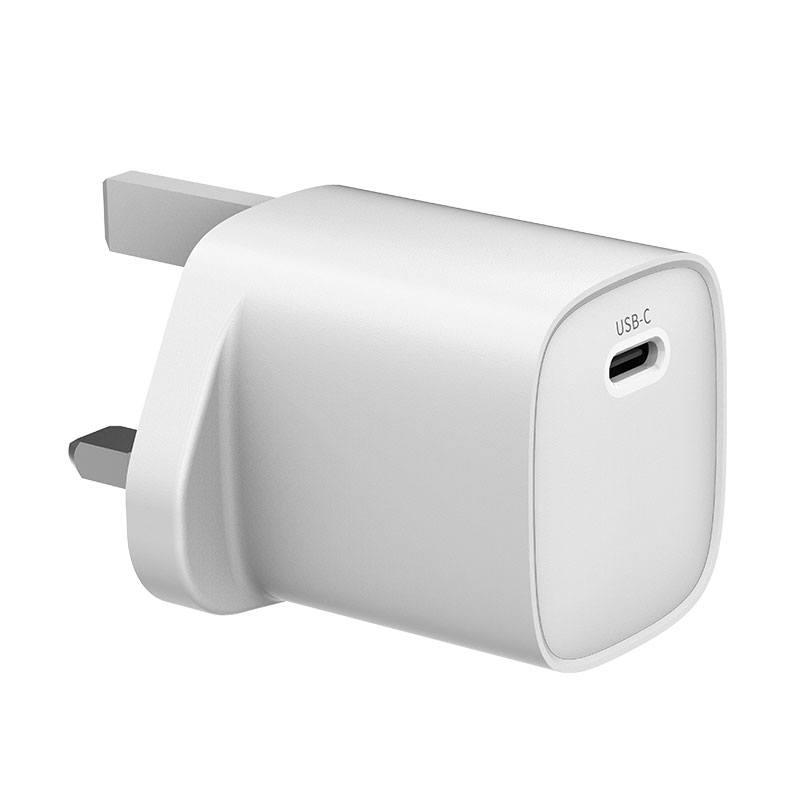
What a low MOQ actually costs
A low MOQ is not free; the fixed constraints are recovered somewhere.
They appear as a tooling invoice, a higher unit price, a narrower scope, or a longer lead time while the order waits for other production to fill the line. When a supplier quotes a low minimum on a new design, ask which of those applies. Where the answer is that the tooling is amortised into the unit price, the comparison with a platform route becomes an exercise in total cost rather than in opening quantity.
How to compare two MOQ quotations
Ask both suppliers to expose the same five constraints and the tooling position.
A quotation that states only a quantity and a unit price cannot be compared with one that separates tooling, packaging setup and certification. Ask also what the second order will be priced against – the same platform and the approved sample – because the second order is where the fixed cost has been recovered and where the unit price should reflect it.

FAQ
Why does the same factory quote different MOQs for similar products?
Because the binding constraint differs. A platform configuration is limited by packaging and test setup; a new enclosure is limited by the mould and the trial loops. A platform configuration is limited by packaging and test setup, while a new enclosure is limited by the mould and the trial loops, which is why the same factory quotes two different figures for similar products.
Can the MOQ be negotiated down?
The constraints can sometimes be reduced rather than negotiated: simplify the packaging, reuse a platform, or keep the change inside the tested envelope. The constraints can sometimes be reduced rather than negotiated by simplifying the packaging, reusing a platform or keeping the change inside the tested envelope, so ask which of the three is binding before asking for a lower figure.
Is a low MOQ always better?
Not if the fixed cost appears as a higher unit price or a longer lead time. Compare the total cost of the opening order, not only the quantity. Compare the total cost of the opening order rather than the quantity alone, because a low minimum can appear as a higher unit price or a longer lead time, and both are real costs.
What is a realistic opening quantity for a branded USB C charger?
From 200 pieces per model on an existing platform with logo, colour, label and packaging applied. From 200 pieces per model on an existing platform, with the logo, the colour, the label and the packaging applied, and the figure is set by the packaging print rather than by the electronics, which is why it does not rise with the port count.
Next step
Send the configuration and the quantity you are considering to Wecent Group through the contact page. The reply separates the five MOQ constraints, states which one binds and gives the tooling position and the second-order price basis. Related reading: OEM/ODM manufacturing, quality control and wholesale chargers. External references: USB-IF documentation, IEC standards, ISO 9001, EU CE marking, FCC equipment authorisation and ICC Incoterms.