
A branded charger programme can open at 200 pieces per model – if the route is a re-badge of a certified platform. Change that decision and the same product carries a mould, sample loops and a test submission, with an opening quantity set by the tooling rather than by the brand. The route is therefore the first milestone in the programme and the one that determines every later date, so it belongs at the start of the plan rather than in the middle of the quotation.
This guide is part of our OEM & ODM Charger Programmes. Read the full topic guide for the decisions that come before and after this step.
OEM charger manufacturer programmes: the path from route decision to production
The programme runs through six milestones in a fixed order.
Choose the route, freeze the specification, pass the sample gates, complete tooling and certification where the route requires them, approve the packaging proof, and run the pilot before the production order. Each milestone has an entry condition and a deliverable, and skipping one moves its cost to a later stage where it is more expensive.
The reason the order is fixed is that later milestones depend on earlier ones. Artwork cannot be frozen before the label content is settled by the certification scope; the packaging proof cannot be assembled before the accessories are decided; and the pilot cannot validate a process before the tooling is accepted. Programmes that slip usually show one milestone with no owner and no entry condition, which then starts late without anyone noticing.
| Milestone | Entry condition | Deliverable | Owner |
|---|---|---|---|
| Route decision | Requirement and market list | Route, tooling position and MOQ | Brand with factory input |
| Specification freeze | Route agreed | Frozen specification and quotation | Brand |
| Sample gates | Specification frozen | Approved branded and golden samples | Both |
| Tooling and certification | Mechanical design frozen | Accepted tool and reports | Factory |
| Packaging proof | Label content settled | Assembled box and print proof | Both |
| Pilot | Golden sample approved | Process validation with yield data | Factory |
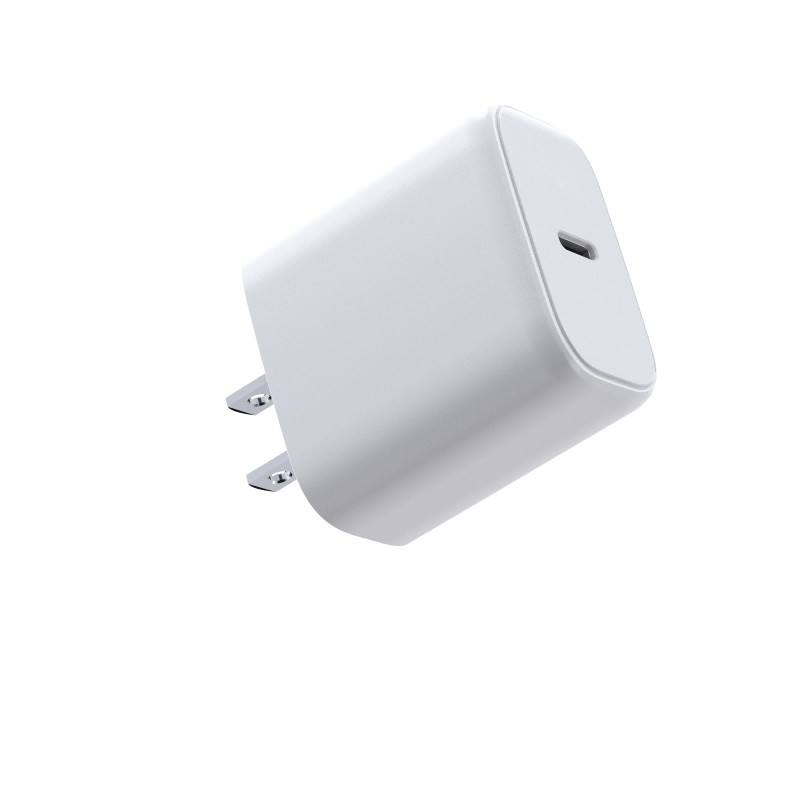
Step 1: choose the route
Re-badge, re-specify or co-develop, and state which one in writing.
A re-badge applies branding to a certified platform; a re-specification changes configuration inside the tested envelope; a co-development creates a new form or electrical design. The choice is usually made by the calendar and the volume rather than by the preference for differentiation: a re-badge can open at 200 pieces and ship quickly, while a new form is justified when the form itself is the reason to buy.
Step 2: freeze the specification
The freeze must state the wattage, the port layout, the plug strategy, the cable, the branding level, the markets and the opening quantity.
Each of those affects a different cost line, and leaving one open means the quotation describes an assumption rather than a product. Ask the supplier to restate the specification in the quotation, which turns a general enquiry into a comparable offer and gives both parties the same baseline for the sample review.
Step 3: the sample gates
Engineering sample, branded sample, packaging proof and golden sample.
Each gate should produce a signed record and a retained physical reference. For a re-badge, the engineering gate can often be closed from existing platform records, leaving the branded and packaging gates as the substantive checks. Approve colour and finish on a physical object rather than a screen, and record the artwork revision with the approval.
Step 4: tooling and certification where the route requires them
Where a new enclosure is involved, the mechanical design must be frozen before the tool is cut, and the trial loops follow.
Certification runs in parallel once a representative worst-case build exists, and the label text should be frozen before the print plates are produced. Where the programme uses a certified platform, this milestone reduces to a documentation update and a marking check, which is why the route decision dominates the schedule.
Step 5: the packaging proof
Approve an assembled box rather than a flat artwork.
The proof confirms the board grade, the insert, the print colour, the language versions and the accessories together, and it is the only artefact that shows how they interact. Confirm the carton dimensions at the same time, because they determine the pallet pattern and the units per container, and that figure belongs in the landed-cost calculation.
Step 6: the pilot
The pilot validates the process rather than the design.
It should run on the production line with production fixtures and the approved sample, and the report should state the quantity, the yield, the defects found by category and the corrective actions taken. Only after the pilot should a firm production schedule be committed, because the pilot is what turns an engineering success into a manufacturing plan.

What the three routes share
All three routes use the same platform, the same production line and the same test stations. What differs is how much of the design the brand owns and how much of the evidence already exists.
A re-badge inherits the reports, a re-spec reuses the construction evidence with a documentation update, and a co-development starts the evidence chain again.
The route therefore decides the schedule and the tooling position rather than the manufacturing method.
FAQ
Which route is fastest?
Re-badge. The platform, tooling and reports already exist, so the schedule is driven by artwork approval and the production slot. The platform, the tooling and the reports already exist, so the schedule is driven by the artwork approval and the production slot rather than by development. Ask which artwork items have to be frozen, because the schedule follows the approval of the marking and the pack rather than the production line.
How many sample gates are needed?
Four for a new product, fewer for a re-badge where the engineering design is already approved. A new product runs four gates; a re-badge runs fewer, because the engineering design is already approved and only the marking and the packaging change. Ask which gates apply to the route chosen, because a new product and a re-badge do not carry the same approval work.
When should certification start?
As soon as a representative worst-case build exists. On a certified platform, the work is documentation and marking. Wait for a representative worst-case build, because starting earlier means testing a unit that does not represent what will ship. Ask what makes the build representative: the enclosure, the components and the marking that will ship, because a unit without them does not carry the worst case.
What must be frozen before tooling?
The mechanical design: enclosure geometry, wall thickness, clearances and assembly features. Changing those after steel is cut is the most expensive change in the programme. The enclosure geometry, the wall thickness, the clearances and the assembly features are frozen, because changing them after the steel is cut is the most expensive change in the programme. and none of them can be changed afterwards without a new sample.
What does the pilot report need to contain?
Quantity, yield, defect categories and corrective actions. Without a pilot report, the first container becomes the pilot. Quantity, yield, defect categories and corrective actions, because without a pilot report the first container becomes the pilot and the buyer pays for the discovery. Ask for the categories rather than the total, because a report naming the failure modes is what allows the next run to be corrected.
Next step
Send the intended route, the specification and the target markets to Wecent Group through the contact page. The reply states the route, the tooling position, the MOQ, the certification scope and the sample timing. Related reading: OEM/ODM manufacturing, manufacturing services and quality control. External references: USB-IF documentation, IEC standards, EU CE marking, FCC equipment authorisation, ISO 9001 and ICC Incoterms.