
Qi2 Charger
Qi2 is the version of the Qi standard that made magnetic alignment part of the specification. Here is what that changes, which phones actually support it, how it differs from Qi and MagSafe — and how a Qi2 charger is built for your market.
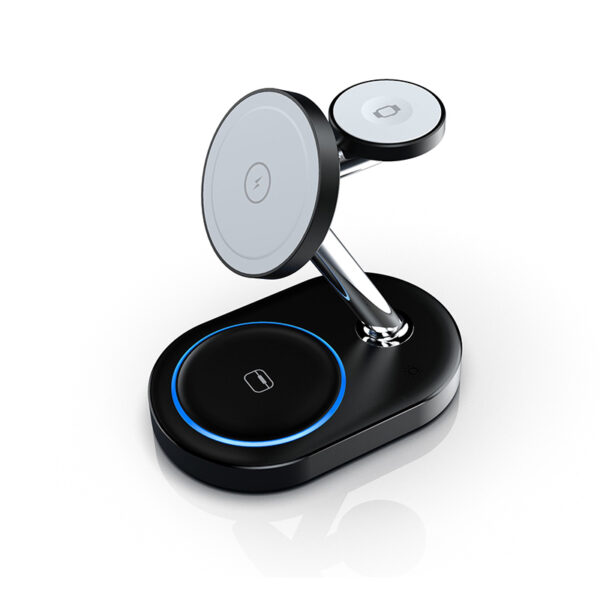
Qi2 and MagSafe are not the same thing: MagSafe is Apple’s magnetic accessory system, while Qi2 is the Wireless Power Consortium standard that added a magnetic alignment reference to Qi. That is why a Qi2 charger works across brands — any phone that implements Qi2 snaps into the same coil position, not just one manufacturer’s models.
What Qi2 actually changes, and why it matters commercially
Qi has always been a positioning problem in disguise. A phone placed a few millimetres off the coil centre still charges, but the coupling drops, the pad compensates with heat and the phone throttles its own charging to protect itself. On the customer’s desk that reads as “wireless charging is slow”, when the real cause is alignment.
Qi2 fixed it inside the standard. It adds a magnetic alignment reference, so a Qi2 phone and a Qi2 charger find the same coil position mechanically instead of by hand. The immediate effect is a rate that is repeatable rather than best-case, and the commercial effect is that a single SKU serves several phone brands instead of one.
- Alignment becomes part of the standard. Not a vendor feature — any compliant phone and charger pair up the same way.
- The rate becomes repeatable. The phone sits in the coil centre every time, so the rated figure is what the customer actually gets.
- One SKU covers more phones. Which is what makes a wireless product worth carrying for a distributor.
Qi, Qi2 and MagSafe — what each one buys
The three names get used interchangeably in listings and they are not the same. Qi is the baseline: any compatible device charges, at the legacy rates. Qi2 adds the magnetic reference, which is what makes cross-brand alignment work. MagSafe is Apple’s own magnetic accessory system, and a MagSafe-compatible accessory works with phones that carry Apple’s ring — including phones that predate Qi2.
| What you are choosing | Qi2 platform | Qi-only platform |
|---|---|---|
| Device coverage | Phones and chargers that implement Qi2 | Any Qi-compatible device, older included |
| Alignment | Magnetic — the phone finds the coil centre | Free position, placed by hand |
| Rate consistency | Repeatable, because alignment is fixed | Depends on the user every time |
| Best for | Current flagships and accessory ranges | Mixed fleets with older devices |
Most ranges end up carrying both, because a Qi2 flagship and a cheaper free-position SKU are bought by different customers. The magnetic charger page covers why alignment matters in use; the certification note covers what each market needs on paper.
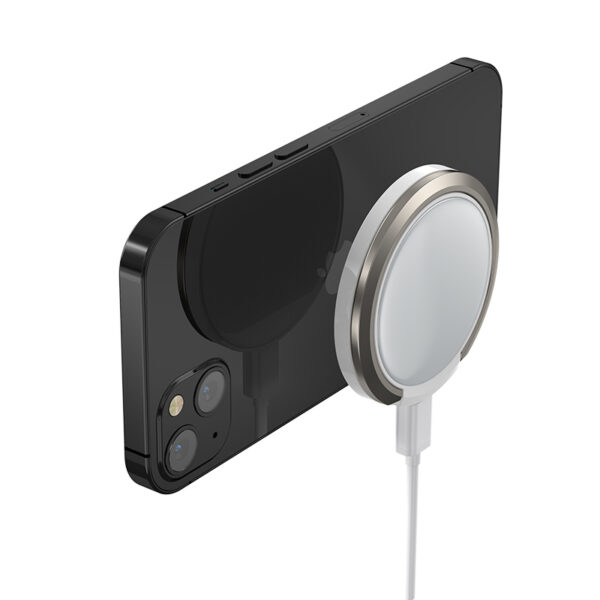
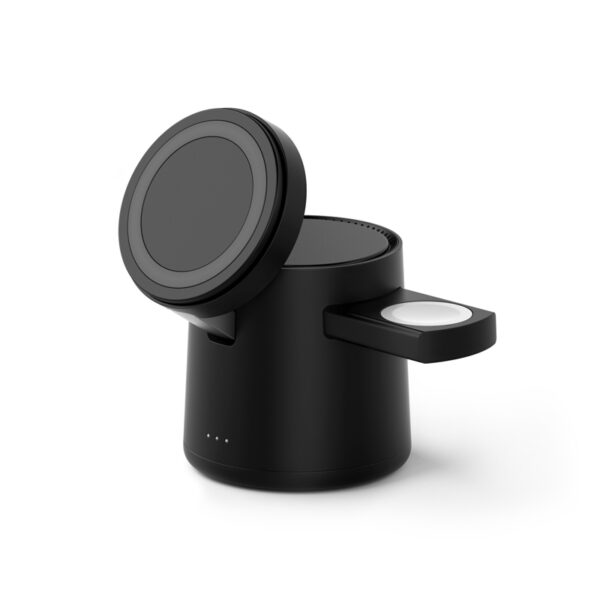
What you can change on a Qi2 charger
Everything below is applied on top of a platform that already holds its reports, which is what keeps the sample at 2–3 days and the MOQ at 200 pcs per model.
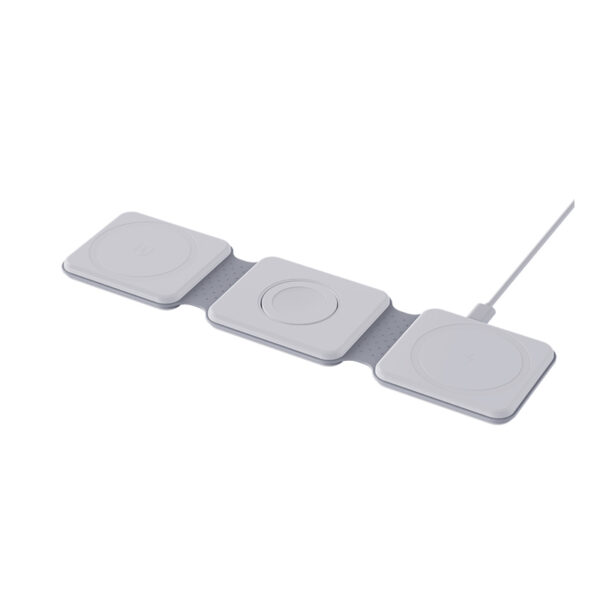
- Form and holder — flat magnetic pad, upright stand, folding travel unit, or a 3-in-1 board with watch and earbuds coils.
- Magnet and coil — hold force and coil position are specified together, so both are confirmed on the sample.
- Shell and face — ABS, PC, bamboo or wood face, PU leather and silicone, in your colour and finish.
- Logo, packaging and bundle — printing, colour box artwork, and a cable or adapter quoted with the set.
Qi2 charger — specifications
| Standard | Qi2 with magnetic alignment; Qi2 and MagSafe-compatible platforms in production |
|---|---|
| Charging rate | 15W on the Qi2 magnetic platform; higher-power Qi2 profiles are quoted per project and confirmed per device |
| Alignment | Magnet array holds the phone in the coil centre; hold force confirmed on the sample |
| Formats | Flat magnetic pad, upright stand, folding travel unit, 3-in-1 board, magnetic power bank |
| Coil layout | Single magnetic coil, or magnetic phone coil plus watch and earbuds coils |
| Housing and finish | ABS, PC, bamboo or wood face, PU leather, silicone; black and white as standard plus custom colour |
| Input | USB-C; adapter rating specified with the unit and quoted as a bundle where needed |
| Certifications | CE, RoHS, FCC, UKCA, PSE, KC, SAA and CB reports for a Qi2 charger, depending on the target market |
| MOQ | 200 pcs per model for a branded Qi2 charger; a trial quantity can be split across a few SKUs |
| Samples | 2–3 days with your logo and finish applied to the Qi2 charger |
| Mass production | 7–15 days after sample and artwork approval for the Qi2 charger |
| Carton | 50 pcs per carton as standard for the Qi2 charger, or customised to your requirement |
The rows above describe a standard Qi2 charger. Custom power stages, coil layouts, plugs and packaging are quoted per project, and every figure is confirmed on the datasheet before a sample is built.
Qi2 platforms in production
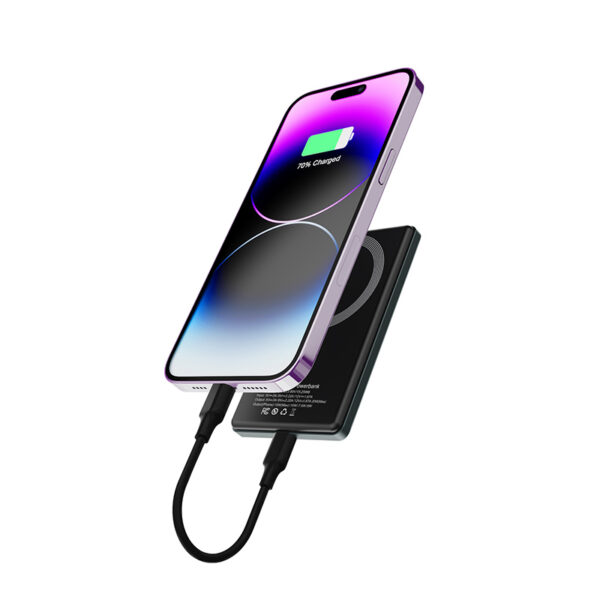
L8 Qi2 magnetic power bank
Qi2 coil plus a cell — a travel product rather than a desk one.
C11 MagSafe 15W
MagSafe-compatible 15W pad — the sibling SKU for phones that predate Qi2.
How a Qi2 charger is built and checked
A Qi2 platform adds a magnet reference to the coil, so the magnetic steps sit inside the normal test route rather than at the end of it.
Material preparation and checking
The Qi2 coil, magnet array, shielding, controller, housing and cable are checked against the approved bill of materials before a board enters the line, because the magnet and the coil are specified as a pair.
First-piece quality confirmation
The first Qi2 unit of a run is built and tested for magnetic alignment as well as charging rate before the line continues — hold force and coil position are confirmed on the bench, not assumed from the drawing.
Assembly on static-protected lines
Boards are assembled on static-protected lines, with the magnet array seated and shielded at one station rather than added to a finished housing.
Visual inspection rounds
Repeat inspections check coil centre, magnet seating, shielding placement, grip on the base and the cosmetic condition of the contact face.
Aging under load and electrical testing
Every unit runs an aging cycle under load and is re-measured afterwards, so a Qi2 design that holds its 15W band only while cool is caught in the factory rather than on a customer’s desk.
Charging and protocol verification
Output voltage and current are measured on the coil, and the negotiated profile is verified with a Qi2 phone, a MagSafe-compatible phone and a Qi-only phone in turn.
QA sampling, packing and shipment inspection
Sampling runs before packing, the box, cable and adapter are checked against the approved artwork, and the batch record ties a hold-force or rate complaint back to a magnet lot and a production run.
Because the magnet array and the coil are specified as a pair, a change to either one means a new sample rather than a new purchase order line.
Where a Qi2 charger gets specified
Retail own-brand
A magnetic SKU in your colour and box, sold against the phone brand’s own accessory.
Corporate gifting
A magnetic unit demos well and reads as a premium item in a gift box.
Travel and hospitality
Foldable magnetic units remove the alignment guesswork in a hotel room.
Desk programmes
Stands and 3-in-1 boards keep the screen readable while they charge.
Certifications and what comes with the shipment
The file for a Qi2 charger is assembled from the first sample rather than hunted down before dispatch, so the paperwork matches the market the container is going to.
CE / UKCA
European Union and United Kingdom market access for the finished unit and its power supply.
FCC
United States electromagnetic compliance for the finished unit.
RoHS / REACH
Restricted-substance documentation for the European market.
PSE / KC
Japan and Korea market documentation, quoted with the plug kit.
CB / SAA / GS / ETL
Additional reports quoted where the channel or retailer requires them.
ErP efficiency
Efficiency documentation for the EU external power supply regulation.
Reference standards behind this page: Wireless Power Consortium (Qi / Qi2), EU external power supply regulation (ErP), EU CE marking and the USB Implementers Forum for USB-C and Power Delivery specifications.
Related guides and platforms
Magnetic wireless chargers
Why alignment decides the rate a phone actually gets.
Wireless chargers explained
Every format, from a flat pad to a five-coil station.
3-in-1 wireless chargers
Phone, watch and earbuds on one magnetic board.
All Qi2 and magnetic models
The current magnetic range with wattage for each model.
Wireless charging pads
The format most Qi2 pads are built on.
Wireless charger manufacturing
What to check before choosing a factory.
Qi2 charger — FAQs
Are Qi2 and MagSafe the same?
No. MagSafe is Apple’s magnetic accessory system; Qi2 is the Wireless Power Consortium standard that added a magnetic alignment reference to Qi. A MagSafe-compatible accessory is built for phones carrying Apple’s ring, while a Qi2 charger aligns with any phone that implements Qi2 — which is why Qi2 products serve several brands at once.
Which devices are Qi2-enabled?
Phones that implement the Qi2 specification, plus earlier phones that carry a magnet ring and can use a MagSafe-compatible charger. Anyone can use a Qi charger at the legacy rate without alignment. Send us the device list and we confirm which band each one negotiates.
What is the difference between Qi and Qi2?
Qi defines the charging bands and the coil geometry; Qi2 adds a magnetic alignment reference on top of that. In use, the difference is that a Qi2 phone sits in the coil centre by itself, so the higher rate is repeatable rather than depending on how carefully the user placed it.
Does Qi2 require special adapters?
No special adapter is needed for charging — the pad and the phone negotiate directly over the coil. What a Qi2 product does need is a power supply that can feed its input requirement, which is why we specify and typically bundle the adapter rather than leaving it to the customer.
Is Qi2 faster than Qi?
Qi2 platforms run at the 15W magnetic band, which is the top of the standardised range, and they hold it because alignment is fixed. A Qi-only phone on the same pad charges at the legacy band it supports. The difference customers notice is consistency more than peak.
What is the minimum order?
200 pcs per model for a branded Qi2 charger, and a trial quantity can be split across two holder formats or two colours. Tooling and printing plates, where they are needed, are quoted as separate lines.
How long do samples and production take?
Samples normally ship in 2–3 days with your logo and finish applied. Mass production runs 7–15 days after sample and artwork approval, and a container programme takes 3–5 weeks depending on volume and packaging.
Which certifications come with a Qi2 charger?
CE, RoHS, FCC, UKCA, PSE, KC, SAA and CB reports depending on the destination market, with ErP efficiency documentation where an adapter ships as part of the set. The file is assembled from the first sample, so it describes the configuration a reviewer will open.
Does a Qi2 charger work with a case on?
It aligns through MagSafe-compatible cases. A thick case or a metal plate behind the phone reduces the coupling and often defeats the alignment, which is why the case is worth settling with the device list rather than discovering on the sample.
What happens if units fail in the field?
The platform carries a 2-year warranty with a 24-hour complaint response. Batch traceability identifies the production run, and because the magnet array and coil are specified together, a complaint about weak alignment can be traced to a magnet lot instead of guessed at.
Can the same platform ship under our brand?
Yes. Branding covers the shell colour and finish, the print method, the model designation and the retail packaging, while the electrical design stays unchanged — which is why the existing reports travel with the branded version.
Qi2 in more detail — the standard, the devices and what it means for a range Know more Know less
Where Qi2 came from
Qi has been the baseline wireless charging standard for years, and its weakness was always placement: the specification defined the coil geometry but nothing forced the two coils to line up. Phone makers filled that gap with their own magnetic systems, which is why one pad charged well on one brand and poorly on another.
Qi2 was the standard catching up. It took the magnetic alignment idea and wrote it into the specification, so a Qi2 charger and a Qi2 phone find the same position without either of them being a vendor accessory.
Qi2, Qi2.2 and higher power profiles
The profile ranges have moved since Qi2 launched, and higher-power variants exist for devices that implement them. What matters for a product is not the headline number but which profile your target phones actually negotiate, because a higher rate that no phone in the market asks for is a line on a box rather than a benefit.
That is why we confirm the profile against the device list before the specification is fixed, and state it on the model datasheet rather than generalising it across a range.
What a Qi2 charger needs to work well
Three things decide whether a Qi2 product behaves the way the standard promises: the magnet array, which has to hold the phone firmly enough to align without dragging a light base across the desk; the shielding, which keeps the field out of the phone’s own sensors; and the power supply, which has to feed the input requirement so the pad can negotiate its top band.
All three are specified together at the sample stage. A pad that is rated at 15W but fed from an underrated adapter will negotiate down and run warm, and the customer will read that as a product fault rather than a packaging omission.
Building a Qi2 range for a market
Most ranges end up carrying two or three SKUs: a Qi2 magnetic flagship, a cheaper free-position pad for older devices, and often a folding or 3-in-1 variant for a different channel. All three can share a power stage and a certification path, which is what keeps the tooling and the file work manageable.
Certification is prepared per destination from the first sample, and because the electrical design travels unchanged, branding a Qi2 platform is documentation and marking rather than new testing.
Send your spec, get a costed quotation
Tell us the phones the charger has to serve and the markets you sell into. You get the platform, the profile it negotiates, unit pricing at your quantity and the certification list per destination.
- MOQ from 200 pcs per model, splittable across a few SKUs
- Samples in 2–3 days with your logo and finish applied
- Reply within 24 hours on business days