
65W GaN Charger for Laptop and Travel
One USB-C charger that covers a thin-and-light laptop and a phone on the road — built on a tested GaN platform, with the plug kit, branding and retail packaging your market needs. MOQ from 200 pcs per model.
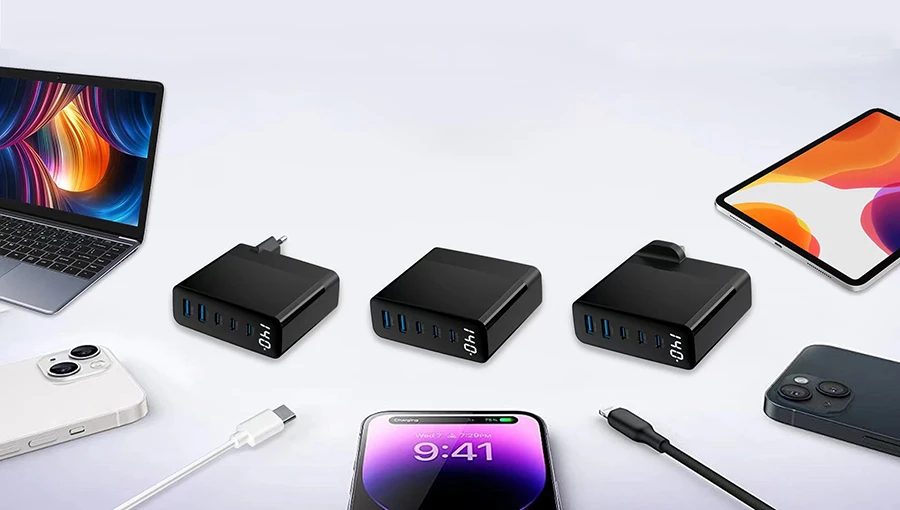
A 65W GaN charger is the usual fit for a thin-and-light laptop plus a phone on the second port. The two decisions that decide the product are the plug kit — one SKU for the EU, the UK, the US and Australia — and whether the second port holds its rate once the laptop has taken its share.
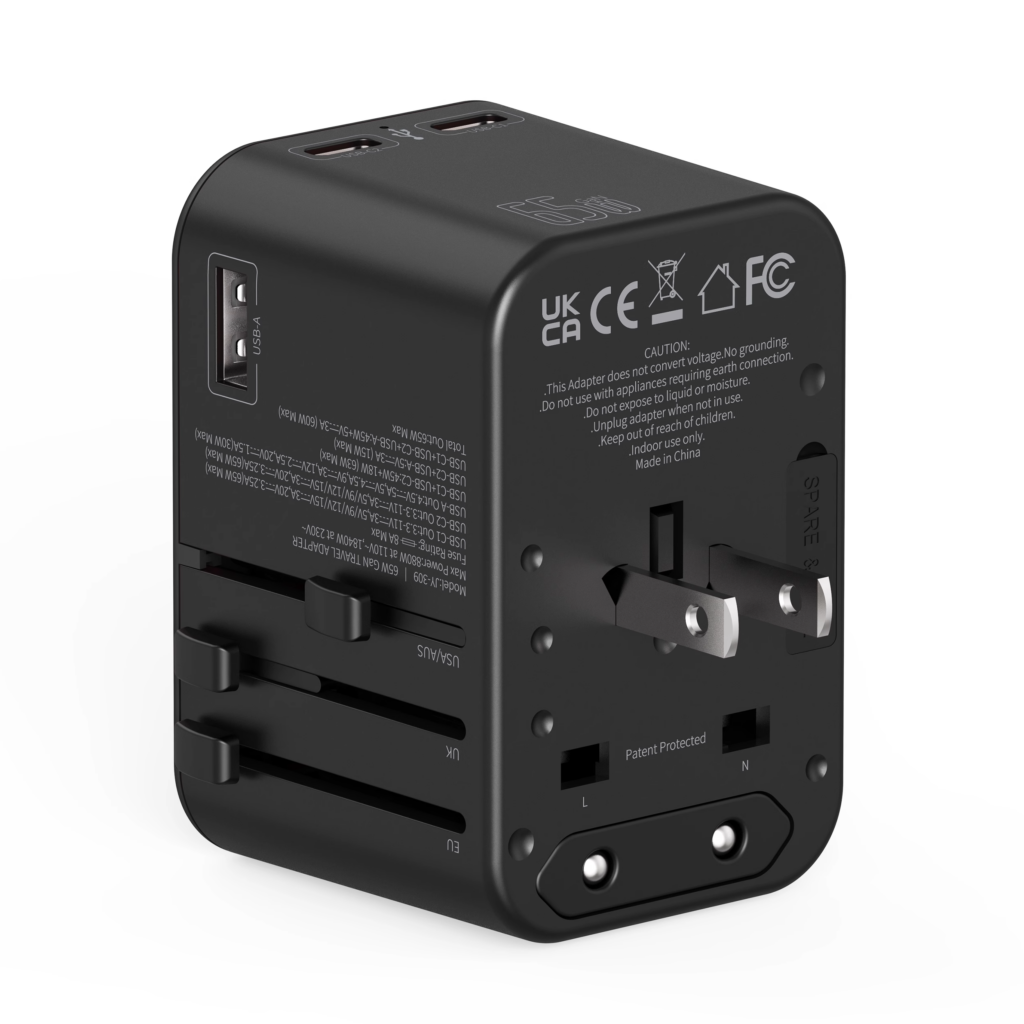
Why the laptop-plus-travel case is harder than it looks
Ask a buyer why they want a 65W GaN charger and the answer is almost never about the wattage. It is about carrying one brick instead of two, and about not needing a plug adapter in every country the product travels to. A laptop charger and a phone charger weigh more, take two sockets, and rarely accept the same wall plate outside one region.
Gallium nitride changed the size side of that equation. Higher switching frequency lets the magnetic components shrink, so a 65W adapter can fit a jacket pocket instead of a laptop bag. What it does not change is physics: the same energy is dissipated in a smaller shell, so a sealed compact housing has less thermal headroom than a bulky one — a unit that holds 65W for ten minutes is a different design problem from one that holds it for three hours on a desk.
- Plug kit decides which wall plates the SKU can serve across the EU, the UK, the US and Australia.
- Certification set decides which markets the file can travel into — CE and UKCA for Europe, FCC for the United States, PSE for Japan, KC for Korea.
- Port layout decides whether it is a laptop charger that also tops up a phone, or a phone charger that leaves the laptop at the desk.
65W or 100W?
If the product goes into a laptop bag and the phone is the second device, 65W is normally the right band and the smaller housing wins. If the same SKU has to sit on a desk for eight hours, or the fleet includes 15-inch laptops, move up to the 100W platform — the extra volume in the housing is doing thermal work, not cosmetic work.
| What you are choosing | 65W platform | 100W platform |
|---|---|---|
| Devices | Thin-and-light laptops and tablets, plus a phone | Thin-and-light with headroom, and heavier 15-inch units |
| Housing size | Smallest of the two — the pocket-sized travel case | Larger, more room for the power stage |
| Thermal headroom | Adequate for a laptop plus phone | More headroom for sustained multi-hour load |
| Plug strategy | Both platforms are quoted with EU / UK / US / AUS plug kits so one SKU can serve several markets | |
A useful way to sanity-check the band before committing is the wattage selection guide, and the plug trade-off is covered in the plug strategy note.
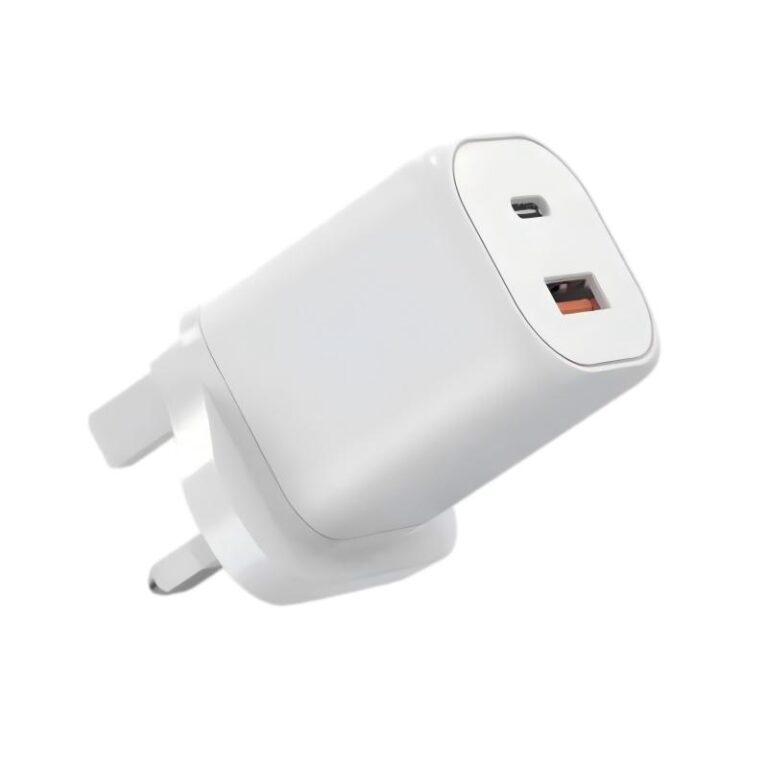
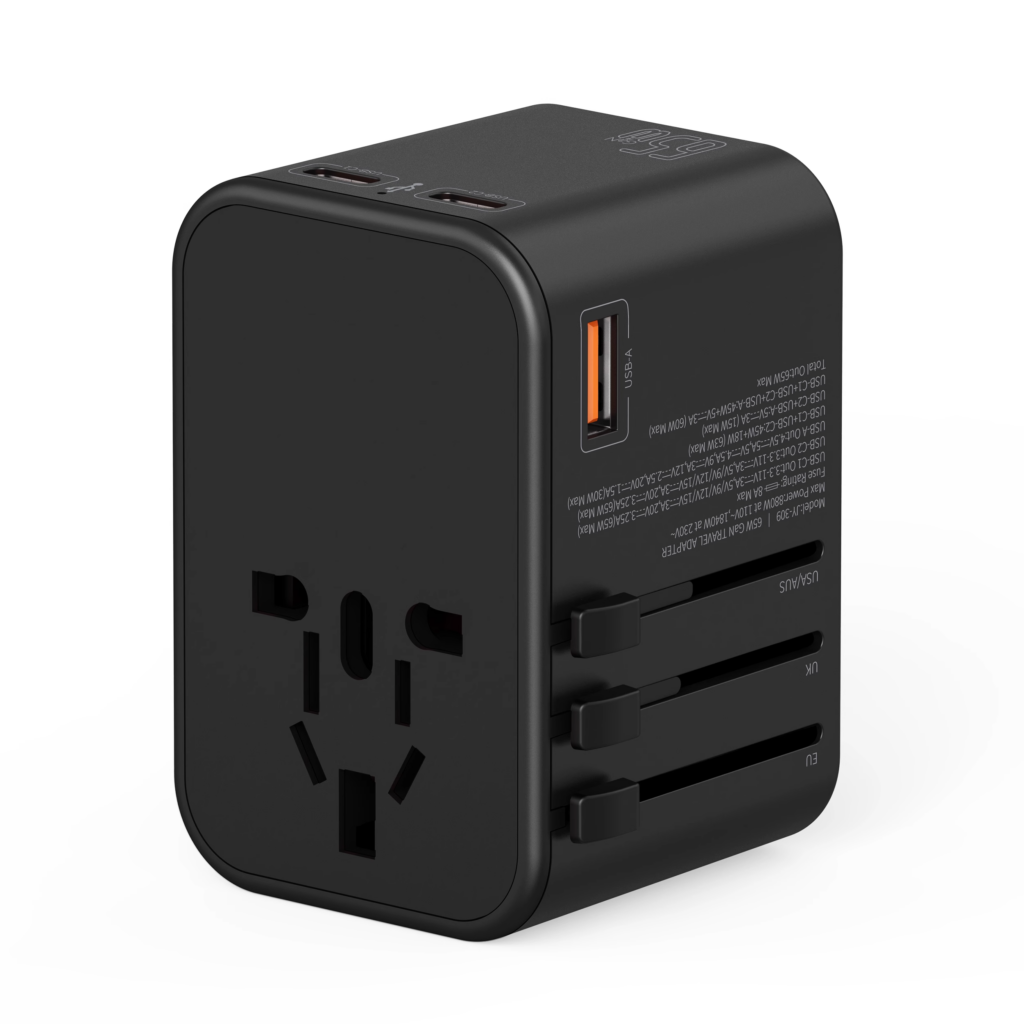
What you can customise
Everything below sits on top of the tested platform, which is why samples stay fast and the MOQ stays at 200 pcs per model.
- Logo and printing — silk-screen, laser etching or UV printing, single or multi-colour, placed to your artwork.
- Colour and finish — black and white as standard, plus custom shell colour and surface texture.
- Retail packaging — colour box, insert and sleeve artwork, or neutral packing for private label.
- Plug kits and bundles — choose plug types per destination and add a cable or pouch to build a retail-ready set.
65W GaN charger for laptop and travel — specifications
| Output power | 65W via USB-C Power Delivery |
|---|---|
| Port layouts available | 1× USB-A + 1× USB-C, or 2× USB-C, depending on model |
| Protocols | PD 2.0/3.0 and QC 2.0/3.0 on the 65W platforms; PPS ranges, AFC, FCP, Apple 2.4A and BC1.2 are tested per family and listed on the model datasheet |
| Plug kits | EU / UK / US / AUS, plus KR where the channel needs it |
| Mains input | Universal AC input — the marked input range is confirmed on the model datasheet |
| Certifications | CE, RoHS, FCC, UKCA, PSE, KC, SAA and CB reports depending on the target market |
| MOQ | 200 pcs per model; a trial quantity can be split across a few SKUs |
| Samples | 2–3 days with your logo and finish applied |
| Mass production | 7–15 days after sample and artwork approval |
| Carton | 50 pcs per carton, or customised to your requirement |
| Warranty | 2 years, with a 24-hour complaint response and batch traceability |
Values above apply to the standard configuration. Custom power stages, port layouts and plug kits are quoted per project, and every figure is confirmed on the datasheet before a sample is built.
65W and 100W platforms you can start from
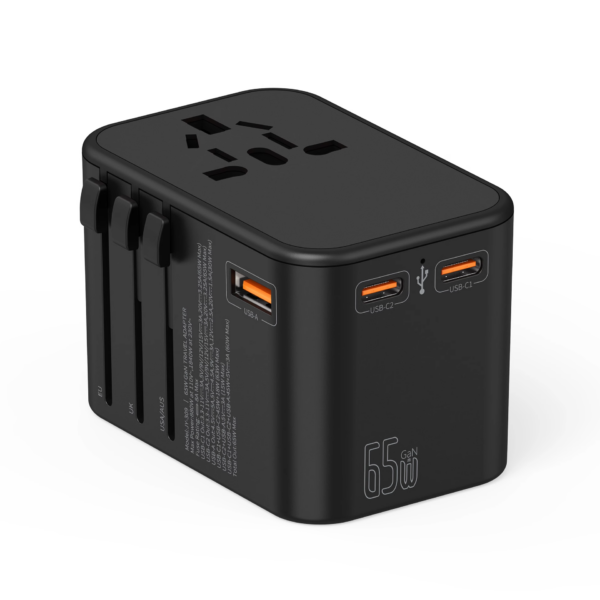
65W WET-67-AC — 1A1C
One USB-C plus one USB-A. The workhorse layout: laptop on USB-C, phone on the A port.
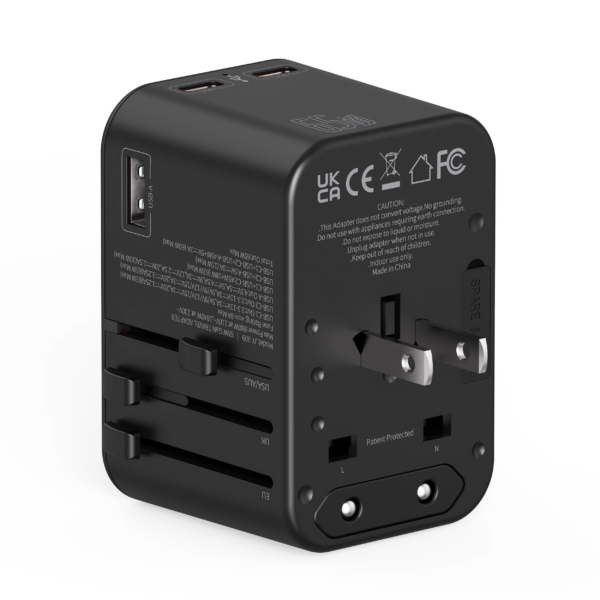
65W WET-67-CC — 2C
Two USB-C ports for a USB-C laptop and a USB-C phone, with QC 2.0/3.0 and Apple 2.4A support.
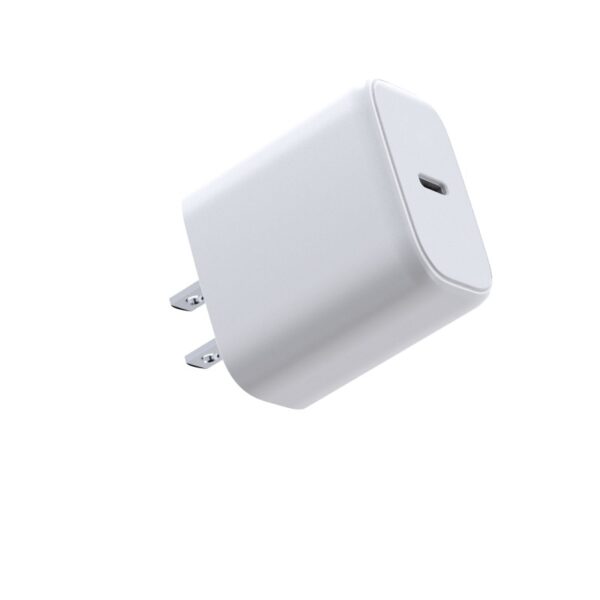
65W WET-67-C — PD & QC
PD 2.0/3.0 and QC 2.0/3.0 support, often bundled with a cable or pouch as a retail-ready set.
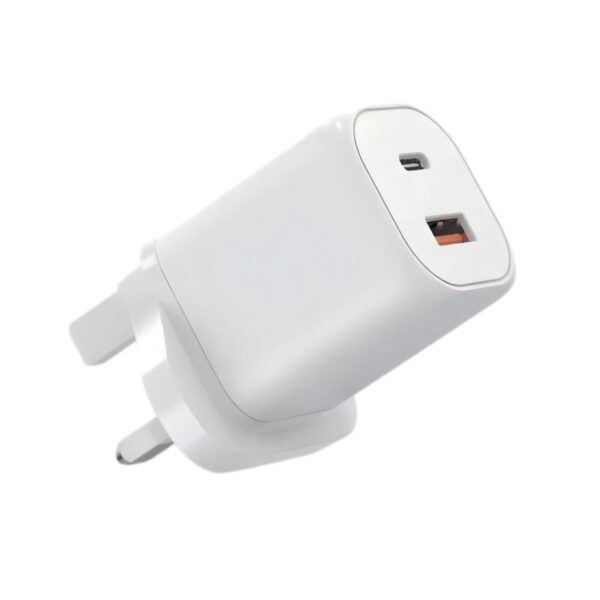
100W WET-100W-CA — heavier laptops
When the fleet includes 15-inch or performance laptops that pull more than 65W at full load.
How these units are built and checked
Material preparation and checking
Components are checked against the approved bill of materials before a board reaches the line — the power devices, capacitors, transformers and plug parts — so a substituted part cannot reach a shipment silently.
First-piece quality confirmation
The first unit of a run is built and confirmed against the specification before the line continues, which is where a drifting parameter is caught rather than a whole batch.
Plug-in production and wave soldering
Boards are built on static-protected lines, and each station works to a written operation sheet listing the tools, the handling rules and how a pass is judged.
Visual inspection rounds
Repeat inspections verify solder joints, component placement, screw torque, mechanical fit and cosmetic condition before the unit moves on to testing.
Aging under load, pressure and electrical testing
Units run an aging cycle under load and are re-measured afterwards, so early failures surface in the factory rather than in your warehouse.
Port and protocol verification
Output voltage and current are measured across every port, including PPS ranges, and handshakes are checked for PD, QC, AFC, FCP, Apple 2.4A and BC1.2 devices — this is where a second port that “works” but under-delivers gets caught.
QA sampling, packing and shipment inspection
Sampling runs before packing, the carton and accessories are checked against the approved artwork, and the batch report keeps every shipment traceable back to its production run and test records. This is the same inspection route described in quality control.
Where a 65W travel GaN charger gets specified
In-box accessory
Ships alongside a device launch, with the packaging matched to the product it accompanies and the plug kit matched to the launch markets.
Stand-alone retail SKU
A shelf and marketplace product in its own colour box — for electronics retail, brand stores and online channels.
Travel retail and hospitality
Multi-region plug kits suit travel retail, hotel rooms and shared desks where guests arrive with different wall plates.
Private-label sets
Pairs with a cable or pouch to form a gifting or corporate bundle carrying your own identity end to end.
Certifications and what comes with the shipment
The compliance file is assembled from the first sample rather than hunted down before dispatch, so the paperwork matches the market the container is going to.
CE / UKCA
European Union and United Kingdom market access for external power supplies.
FCC
United States electromagnetic compliance for the finished unit.
RoHS / REACH
Restricted-substance documentation for the European market.
PSE / KC
Japan and Korea market documentation, quoted with the plug kit.
CB / SAA / GS / ETL
Additional reports quoted where the channel or retailer requires them.
ErP efficiency
Efficiency documentation for the EU external power supply regulation.
Reference standards behind this page: EU external power supply regulation (ErP), EU CE marking, US DoE efficiency standards for external power supplies, and the USB Implementers Forum for USB-C and Power Delivery specifications.
Related chargers and guides
GaN vs silicon chargers
What gallium nitride actually changes about size, heat and cost — and where it does not help.
Choosing a wattage band
How 20W, 45W, 65W and 100W map onto phones, tablets, thin-and-light and performance laptops.
EU / UK / US / AUS plug strategy
How to decide between one SKU with a plug kit and separate SKUs per region.
MOQ and tooling economics
Where the 200 pcs threshold comes from, and how tooling, printing plates and packaging dies are quoted.
Certification for the EU and US
The documents a container needs for CE, UKCA and FCC markets, and when to start the file.
How an OEM project runs
Sample, artwork, approval gates and production sequencing from enquiry to shipment.
65W GaN charger for laptop and travel — FAQs
Is 65W enough to charge a laptop while travelling?
For most thin-and-light laptops, yes. A 65W USB-C supply covers the typical load of a 13–14 inch machine, and it will also hold charge on a lighter 15-inch unit that is not running at full tilt. If the fleet includes performance laptops or the charger will sit on a desk for hours under sustained load, the 100W platform is the safer specification.
Can one SKU cover the EU, UK, US and Australia?
Yes, with a plug kit. The unit is built with interchangeable EU, UK, US and AUS plug types, so one SKU can be packed for several destinations. Where a channel wants a single fixed plug — a domestic retailer, for example — that is quoted separately. The trade-off between one multi-region SKU and separate regional SKUs is covered in the plug strategy guide.
What is the minimum order quantity?
200 pcs per model. A trial quantity can be split across a few SKUs, so a first order does not have to commit a full container to one model. Tooling, printing plates and packaging dies are quoted separately from the unit cost when they are needed.
How long do samples and production take?
Samples normally ship in 2–3 days with your logo and finish applied. Mass production runs 7–15 days after sample and artwork approval. A trial order typically ships within 2–3 weeks, and a container programme in 3–5 weeks depending on the volume and the packaging work involved.
Which protocols are supported?
The 65W platforms support PD 2.0/3.0 and QC 2.0/3.0, with Apple 2.4A and QC support on the two-USB-C variant. PPS ranges, AFC, FCP and BC1.2 behaviour is verified per family and stated on the model datasheet, so you get the protocol list for the exact unit you are ordering rather than a generic claim.
Which certifications can you supply?
CE, RoHS, FCC, UKCA, PSE, KC, SAA and CB reports depending on the target market, with GS, ETL and ErP documentation quoted where the channel requires it. The compliance file is built from the first sample, so the documents match the country the shipment is going to.
Is a second port a problem when the laptop is connected?
It can be, and it is one of the most common specification mistakes. Total output is shared, so a second port can drop to a low trickle once the laptop takes its share. That is why the port layout is agreed before the sample: if the phone needs a genuine fast charge at the same time, the layout and the total budget have to be specified together.
Can I put my brand on the charger and the box?
Yes — logo and printing (silk-screen, laser etching or UV printing), shell colour and surface finish, retail packaging artwork, and the plug kit and bundle configuration. The electrical platform stays fixed, which is what keeps samples at 2–3 days and the MOQ at 200 pcs.
How are the units tested before they ship?
Every unit passes five gates: components checked against the approved bill of materials, soldering under static control, repeated visual inspection, electrical and aging tests under load, then QA sampling and a shipment report. Output voltage and current are measured across every port, including PPS ranges, and the batch report keeps the shipment traceable to its production run.
What does the packaging look like as standard?
Inner package is one charger plus a bubble bag and a box, with colour box customisation available. Outer cartons ship 50 pcs per carton as standard, or can be configured to your own requirement. Both layers can be redrawn around your existing packaging system.
What happens if a unit fails in the field?
The model carries a 2-year warranty with a 24-hour complaint response. Batch traceability identifies the production run affected, and the answer you get back is the batch report, the suspected cause and a written corrective action rather than a replacement promise.
How do I get a price and a lead time?
Send the quantity, the plug types, the packaging requirement and the destination markets. You get pricing, lead time and the certification list for those markets, normally within 24 hours on business days. A completed RFQ template makes the first reply sharper.
Send your spec, get a costed quotation
Tell us the quantity, the plug markets and the packaging you need. You get unit pricing, lead time and the certification list for your destination markets — not a generic price list.
- MOQ from 200 pcs per model, splittable across a few SKUs
- Samples in 2–3 days with your logo and finish applied
- Reply within 24 hours on business days