
Two quotations arrive for what looks like the same 65W charger, and the unit prices differ by more than the components cost. The gap is usually not margin. It is the amortisation of tooling, the packaging route, the branding level and the terms on which the price was built.
Why two quotations for the same charger differ
A quotation is a set of assumptions. Different assumptions about the enclosure, the quantity, the packaging, the accessory set and the shipping terms produce different prices for the same wattage. Comparing quotations therefore means comparing assumptions. Where the assumptions are not stated, the price cannot be evaluated.
The unit-price stack, line by line
| Line | Driven by | Moves most when |
|---|---|---|
| BOM | Power stage, ports, protection, cable | Wattage or protocol changes |
| Tooling amortisation | Mould and print plates spread over quantity | Quantity is low or the enclosure is new |
| Packaging | Board, insert, print, accessories | Retail versus bulk route |
| Labour | Assembly and packing time | Port count and packout complexity |
| Test and QA | Electrical test, aging, inspection | Warranty or market requirements rise |
| Freight | Volume, weight and terms | Carton dimensions or Incoterms change |
Tooling amortisation across order quantities
Tooling is a fixed cost, so its contribution per unit falls as quantity rises. At a low opening order, the amortised tooling can be a meaningful share of the unit price; at volume, it becomes negligible. This is why a factory that quotes a low unit price on a 200-piece order is either amortising the tooling somewhere else, or quoting a platform that requires no new tooling at all. Both can be legitimate; the quotation should say which.
MOQ steps and where they come from
Minimum order quantities usually follow material and process steps rather than an arbitrary number. A raw-material supplier sells by the reel or the sheet; a moulding run has an economic batch; a print run has a plate setup. The MOQ that reaches the customer is the sum of those constraints, which is why it can sometimes be reduced for a platform SKU and rarely for a new enclosure. A stated minimum of 200 pieces per model for platform-based re-badging is a commercial choice enabled by sharing the tooling across programmes.
Platform reuse and the 200-piece entry point
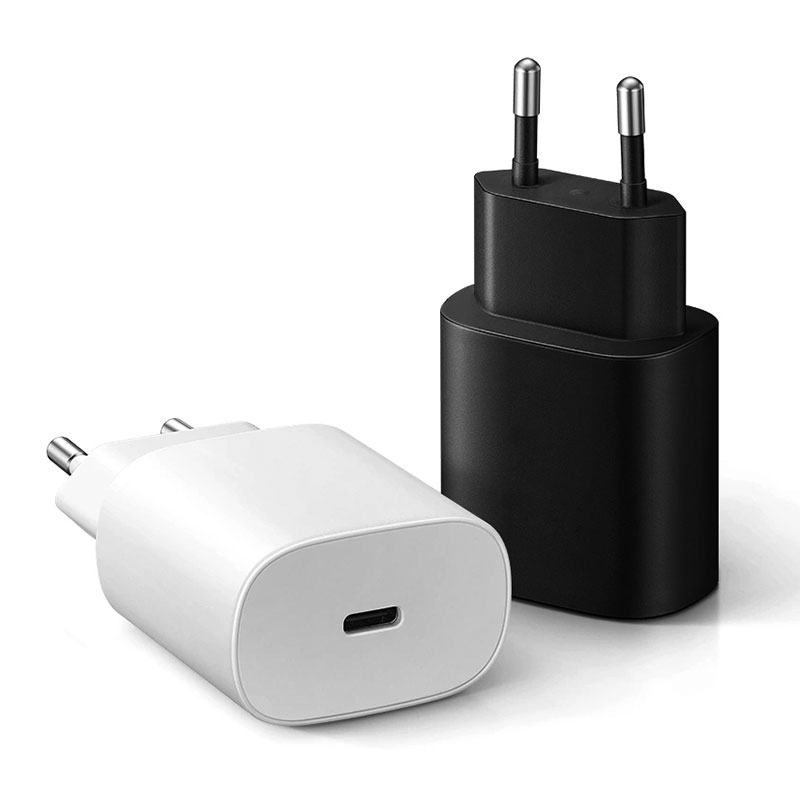
Platform reuse changes the economics of a trial order. The mould exists, the certification groundwork exists and the approved sample exists, so the incremental cost of a branded run is branding, packaging and production time. That is what makes a 200-piece opening order practical instead of uneconomic, and it allows a brand to test a channel before committing to a container.
Packaging and branding cost at low volume
Packaging is the line most likely to surprise a first order. Print plates, a custom insert and a small print run all carry setup cost that is spread over a small quantity. At low volume, a simpler packout – one or two colours, a folded board insert, a standard cable – can reduce the unit cost more than any negotiation on the charger itself.
Freight and carton volume in the landed cost
Unit price is not landed cost. Carton dimensions determine how many units ship per container, and the Incoterm determines who pays for what. A quotation that looks cheaper per unit can be more expensive per delivered unit if the packaging is bulkier or the terms shift more cost to the buyer. Ask for both figures.
Comparing quotations on equal terms
- Same enclosure and platform, or state the difference
- Same accessory set and cable rating
- Same packaging route and language versions
- Same certification scope and documentation
- Same Incoterm and packaging volume
- Same quantity and payment terms
Negotiation levers that do not damage quality
The safe levers are forecast accuracy, order consolidation, packaging simplification, longer lead-time acceptance and platform standardisation. The unsafe levers are substituting safety-critical components, removing the aging test, reducing the accessory rating or accepting a shorter warranty support commitment. A price reduction obtained by removing a control is paid back at the first claim.
Unit-price worksheet
- Wattage, port layout and protocol requirements
- Platform or new enclosure
- Opening quantity and annual forecast
- Packaging route and branding level
- Cable, accessories and manual content
- Certification and documentation scope
- Incoterm and destination
Frequently asked questions
Why is the MOQ 200 pieces for a branded charger?
It applies to platform-based models where the tooling already exists and the branded run changes only branding, packaging and production configuration. A new enclosure carries its own tooling and a higher economic minimum.
Is tooling charged once or per order?
Tooling is a one-off investment in the mould and, where applicable, print plates. It may be invoiced separately or amortised into the unit price, but it should never be charged twice for the same tool without a stated reason.
How much does private label add to unit cost?
It depends on the branding level. A logo and a label are minimal; a custom retail box with a new insert, multi-language print and a custom cable adds packaging setup and print cost, which is most visible at low volume.
Next step
Wecent Group quotes platform-based programmes from 200 pieces per model with the assumptions stated, so two quotations can be compared line by line. Send your specification and quantity to the contact page. Related reading: multi-SKU platforms, packaging cost engineering, payment terms and RFQ template. External references: USB-IF documentation, IEC standards, ICC Incoterms, ISO 9001, EU CE marking and FCC equipment authorisation.