
Two pads with the same headline specification can behave like different products. A single-coil pad with a locating ring delivers its rated power when the phone is placed on the mark and less when it is not. A magnetic pad fixes the position and delivers the same figure every time. A multi-coil pad sits between them, and the three routes differ in usable area, cost, thickness and tooling rather than in quality.
This guide is part of our Travel & Wireless Charging. Read the full topic guide for the decisions that come before and after this step.
Wireless charging pads: three routes from specification to production
Three routes, three outcomes. The route decides the usable charging area, the tolerance to misplacement and the tooling.
A single-coil pad with a locating feature, a multi-coil pad that widens the active area, and a magnetic pad that fixes the phone position. Each is a legitimate product; they are bought by different customers and specified in different ways.
Choosing between them starts with the question the product has to answer. A bedside pad that must be foolproof at night is a different brief from a desk pad where the user sees where the phone lands, and a travel pad that has to be thin is a different brief again.
Route 1: the single-coil pad
The thinnest and cheapest route, with the narrowest usable area.
One coil, one locating ring or groove, and the phone has to be placed on the mark. The construction is simple, the thermal path is short and the price is the lowest of the three. Its weakness is the tolerance to misplacement: a phone set down slightly off centre couples less well, and the customer reads that as a slow charger rather than as a placement issue.
Route 2: the multi-coil pad
A wider active area at the cost of a thicker stack and a larger thermal footprint.
Several overlapping coils mean the phone charges wherever it lands within the pad, which removes the placement question and suits a surface where more than one person uses it. The cost appears in the bill of materials, in the switching arrangement that selects the active coil, and in the heat that has to leave a larger area. Thickness usually increases, because the coils and the shielding stack up.
Route 3: the magnetic array pad
The most repeatable coupling, and the route that constrains the enclosure most.
A magnet ring concentric with the coil fixes the phone in one position, so the delivered power is consistent and the pad can be thin because the coil geometry is known. The requirements move to the phone side: the device or its case needs a matching magnet ring, and the holding force has to be enough for the way the pad is used. Where the products are held to a phone generation rather than a device list, that constraint belongs in the specification.
| Route | Usable area | Thickness | Bill of materials | Tooling | Fits |
|---|---|---|---|---|---|
| Single coil | One marked position | Thinnest | Lowest | Smallest | A desk pad with a visible mark |
| Multi-coil | Wide, position independent | Thicker | Higher | Moderate | Shared surfaces and public areas |
| Magnetic array | One fixed position, repeatable | Thin | Moderate, adds magnets and shielding | Largest | Bedside and car use |
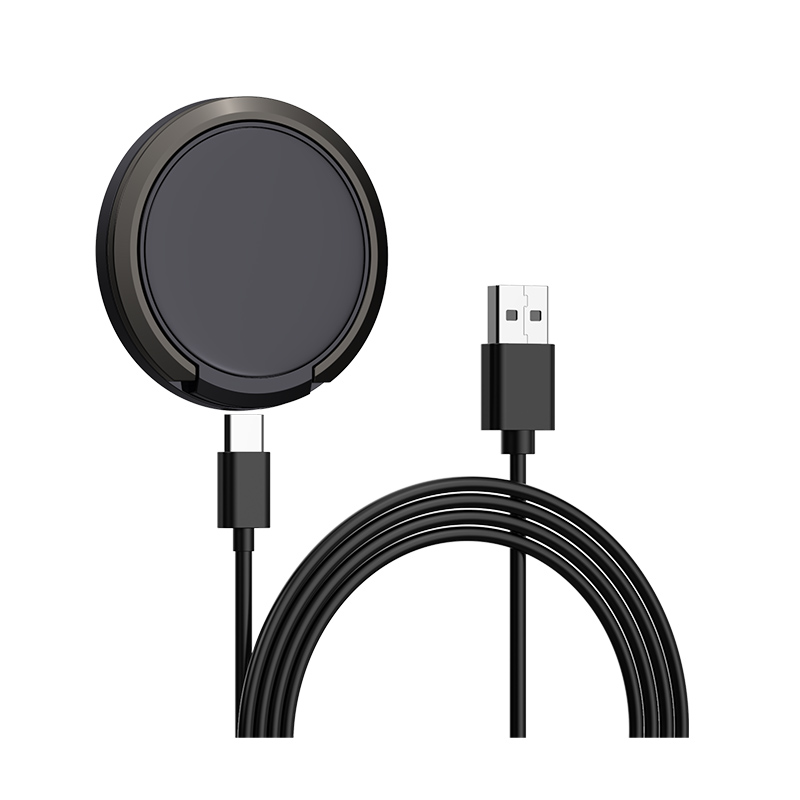
What the pad specification has to fix before tooling
Nine items, and the tooling quotation depends on six of them.
The device list with cases; the usable charging area; the alignment method; the delivered power with a named adapter; the input range; the thermal derating threshold and the ambient it applies at; the surface material and finish; the markets and the certification scope; and the packaging with its accessory set. The coil arrangement, the wall thickness and the surface material are the three that turn a quotation into a tool, and they are the three most often left undescribed.
Surface, thickness and the thermal path in a flat pad
A flat pad has less room for a thermal path than a stand does.
Heat leaves through the upper surface and the base, and the base is often in contact with a table, which is a poor conductor and a good insulator. That is why the derating threshold on a thin pad tends to arrive sooner than on a stand with more volume around the coil. The material choice and the internal spacing belong to the thermal decision, and the measurement has to be taken in the shipping assembly at a stated ambient rather than on an open prototype.
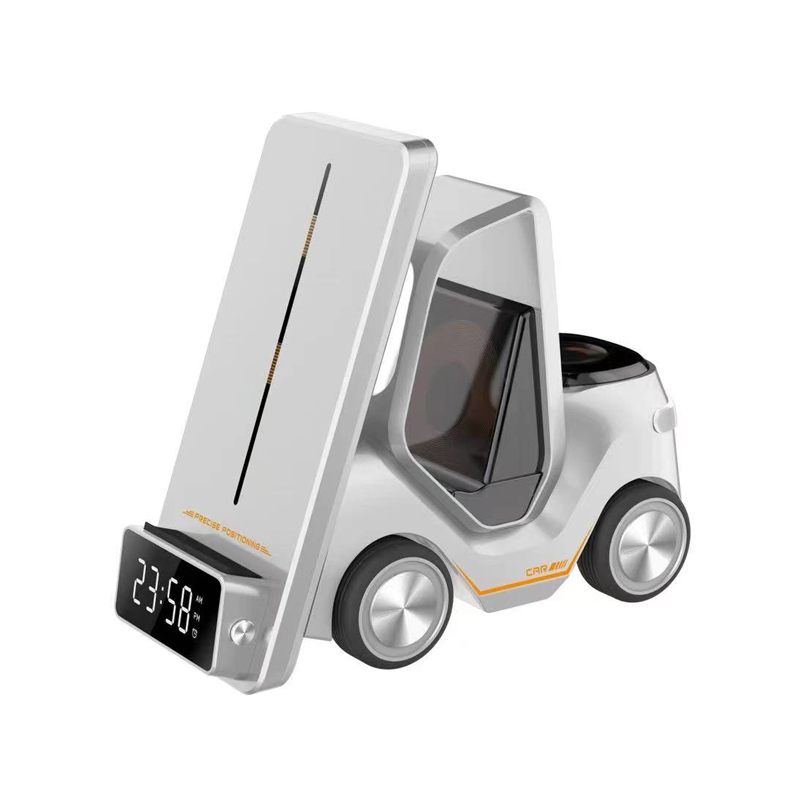
Certification and the market list for a flat pad
The market list decides which platform is usable, not the other way round.
Certification covers the radio interface, the safety of the adapter and the electromagnetic behaviour of the finished assembly, including the shielding. A platform that already holds the reports for the destinations removes the longest step; one that covers only part of the list adds a submission that has to run before production. Writing the list first is what keeps the pad from becoming a two-market product by accident.
FAQ
Is a multi-coil pad always better than a single-coil pad?
It removes the placement question, which matters on a shared or poorly lit surface. On a desk where the user sees where the phone lands, a single-coil pad with a clear mark delivers the same result for less cost and less thickness. Better depends on the use case. It removes the placement question, while a single-coil pad with a clear mark delivers the same result on a desk for less cost and thickness.
Some suppliers say a magnetic pad needs no alignment work. Is that right?
The user does no alignment work, and the assembly does more. The magnet ring has to be concentric with the coil within a defined tolerance, and that tolerance depends on the fixture rather than on the drawing. Concentricity is therefore measured in production. The user does no alignment work and the assembly does more, because the ring has to be concentric with the coil within a tolerance set by the fixture.
Why does the same pad charge one phone faster than another?
Because the receiving coil position, the case thickness and the phone’s own charging behaviour differ between models, and the coupled power follows all three. Naming the device and the case in the specification is what makes the delivered-power figure meaningful. The receiving coil position, the case thickness and the phone’s own behaviour differ between models, so naming the device makes the figure meaningful.
Can a pad be specified for a very thin product?
Thinness constrains the thermal path and the shielding, so the achievable sustained rate falls as the stack gets thinner. State the thickness target and the required sustained power together, because a thin pad that has to hold its rating is a thermal design problem rather than a materials choice. State the thickness target and the required sustained power together, because thinness constrains the thermal path and the shielding.
Next step
Send the device and case list, the intended use, the thickness target and the markets to Wecent Group through the contact page. The reply proposes a route, states the delivered power and the derating condition for the shipping assembly and sets out where the tooling sits for each option. Related reading: wireless charger applications, OEM and ODM charger manufacturing and charger quality control. External references: Wireless Power Consortium, WPC knowledge base, USB Power Delivery specification, IEC standards, EU CE marking rules and US Consumer Product Safety Commission.
{“@context”:”https://schema.org”,”@type”:”FAQPage”,”mainEntity”:[{“@type”:”Question”,”name”:”Is a multi-coil pad always better than a single-coil pad?”,”acceptedAnswer”:{“@type”:”Answer”,”text”:”It removes the placement question, which matters on a shared or poorly lit surface. On a desk where the user sees where the phone lands, a single-coil pad with a clear mark delivers the same result for less cost and less thickness. Better depends on the use case.”}},{“@type”:”Question”,”name”:”Some suppliers say a magnetic pad needs no alignment work. Is that right?”,”acceptedAnswer”:{“@type”:”Answer”,”text”:”The user does no alignment work, and the assembly does more. The magnet ring has to be concentric with the coil within a defined tolerance, and that tolerance depends on the fixture rather than on the drawing. Concentricity is therefore measured in production.”}},{“@type”:”Question”,”name”:”Why does the same pad charge one phone faster than another?”,”acceptedAnswer”:{“@type”:”Answer”,”text”:”Because the receiving coil position, the case thickness and the phone’s own charging behaviour differ between models, and the coupled power follows all three. Naming the device and the case in the specification is what makes the delivered-power figure meaningful.”}},{“@type”:”Question”,”name”:”Can a pad be specified for a very thin product?”,”acceptedAnswer”:{“@type”:”Answer”,”text”:”Thinness constrains the thermal path and the shielding, so the achievable sustained rate falls as the stack gets thinner. State the thickness target and the required sustained power together, because a thin pad that has to hold its rating is a thermal design problem rather than a materials choice.”}}]}