
A fraction of a millimetre decides whether a magnetic wireless charger couples at its rated power or drops to a trickle. The array holds the phone within a defined distance of the coil centre, and that distance, not the coil alone, is what the delivered power depends on. Three alignment approaches exist, and they differ in holding force, tolerance, case compatibility and tooling.
This guide is part of our Travel & Wireless Charging. Read the full topic guide for the decisions that come before and after this step.
Magnetic wireless charger manufacturers: three alignment approaches compared
The alignment approach decides the delivered power, the case limit and the tooling.
A ring array concentric with the transmitting coil, a pair of locating magnets with a mechanical feature, and a cradle that aligns the phone without magnets at all. Each fixes the phone position by a different mechanism and each carries a different engineering cost.
The comparison is not about which approach is modern. A ring array delivers the most consistent coupling and constrains the enclosure; a mechanical cradle costs the least and depends on the user; a paired magnet solution sits between them and is the easiest to adapt to an existing tool.
Approach 1: the ring magnet array
The strongest alignment and the largest tooling commitment.
A ring of magnets concentric with the coil fixes the phone in one position, which makes the delivered power repeatable across devices and cases. The array has to be aligned with the coil during assembly, and misalignment between the two is the most common cause of a unit that measures correctly on a prototype and inconsistently in production. Shielding behind the array is part of the design, not an accessory, because it protects the electronics and shapes the field.
Approach 2: paired magnets with a locating feature
A compromise that fits an existing enclosure more easily.
Two magnets combined with a locating lip or a raised ring define the position without a full ring array. The holding force is lower, so the phone can shift under a sideways load, and the tolerance budget is tighter because there is less redundancy in the geometry. In exchange, the tooling change is smaller and the design can be adapted to a platform that was not originally magnetic.
Approach 3: mechanical alignment without magnets
The lowest-cost approach and the one that depends most on the user.
A cradle, a groove or a raised locating feature positions the phone mechanically. It works reliably when the user places the phone the same way every time, and it degrades when they do not. The coupling tolerance is wider than a magnetic array, so the delivered power varies more between placements, which is why this approach suits a tabletop product with an obvious resting position rather than a bedside product used in the dark.
| Approach | Holding force | Alignment tolerance | Case compatibility | Tooling | Fits |
|---|---|---|---|---|---|
| Ring magnet array | Highest | Fixes the position | Depends on the case magnet ring | Largest | Repeatable coupling across devices |
| Paired magnets | Moderate | Defined by the locating feature | Needs a magnetic case or ring | Moderate | Adapting an existing enclosure |
| Mechanical cradle | None, gravity holds the phone | Widest | Case independent | Smallest | A tabletop product with one resting position |
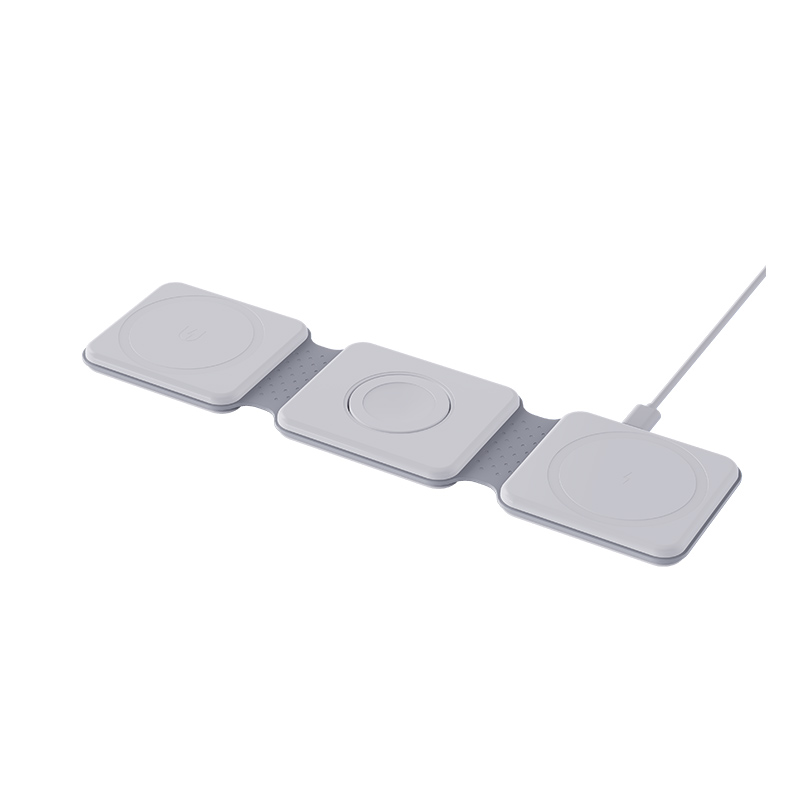
Why the case thickness changes the answer
Every millimetre between the coils reduces the coupling.
A case adds distance and, where it carries a magnet ring, adds its own alignment tolerance. The specification should state the maximum distance at which the rated power is still delivered, and that distance should be measured with a representative case rather than an ideal one. On a ring array the case also affects the holding force, so a heavy case that is acceptable on a desk may be marginal in a car holder.
Magnet grade, shielding and the thermal side effect
The array is a thermal component as well as a mechanical one.
Magnet grade and shielding determine how much of the field reaches the receiving coil and how much is diverted into the phone or the electronics. Poor shielding raises the losses, and those losses appear as heat within the same enclosure volume that the coil already has to keep cool. A temperature rise measured on a prototype without the array and the shielding in place will understate the production result.
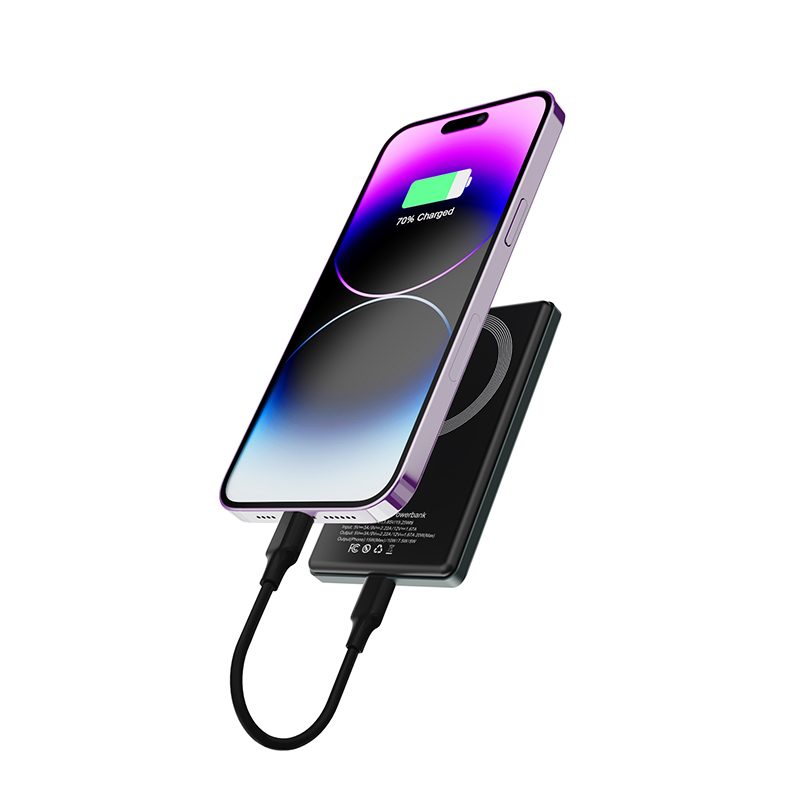
From concept to certified production
The alignment decision is taken before the tooling, and it is verified after it.
Once the approach is chosen, the array and the coil are fixed in the mechanical revision, the assembly fixture defines their concentricity, and the production test verifies the delivered power across the surface rather than at a single point. Certification follows the finished configuration: the magnet arrangement, the enclosure and the shielding are all part of the product that is tested, so a later change to any of them is assessed against the tested revision rather than assumed to be equivalent.
FAQ
Does a magnetic charger need the phone to have a magnet ring?
For the holding force, yes, either in the phone or in a magnetic case or accessory. The charging itself can still work without the ring, but the position is no longer fixed and the delivered power depends on where the phone is placed. For the holding force the ring is required, in the phone or in a magnetic case, while the charging itself can still work without it.
Is a stronger magnet always better?
No. Holding force is one requirement and shielding, field shaping, weight and the effect on nearby electronics are others. A stronger array that requires more shielding can raise the losses inside the same enclosure and make the thermal result worse. Holding force is one requirement and shielding, field shaping, weight and the effect on nearby electronics are others, so a stronger array can raise the losses.
How is magnet alignment controlled in production?
By a fixture that sets the coil and the array relative to the same datum, and by measuring the delivered power on finished units rather than only on prototypes. Concentricity measured on a prototype says nothing about the assembly process. Use a fixture that sets the coil and the array to the same datum, and measure the delivered power on finished units rather than on prototypes.
Can a magnetic array be added to an existing wireless charger tool?
Sometimes, where the enclosure has space and wall thickness to accommodate the array and its shielding. Where it does not, the change is a new tool rather than an insert, and the decision belongs with the platform selection. Where the enclosure has space and wall thickness for the array and its shielding it can be added, and where it does not the change is a new tool.
Which approach suits a car mount?
The ring array, because the holding force has to resist vibration and the position has to be repeatable without the user seeing it. A mechanical cradle that works on a desk is not sufficient in a car, where the phone moves with the vehicle. The ring array suits a car mount because the holding force has to resist vibration and the position has to be repeatable without the user seeing it.
Next step
Send the phone and case list, the mounting condition and the target markets to Wecent Group through the contact page. The reply proposes an alignment approach, states the case distance at which the rating holds and describes how concentricity is controlled and verified in production. Related reading: OEM and ODM charger manufacturing, wireless charger applications and charger manufacturing services. External references: Wireless Power Consortium Qi standard, Wireless Power Consortium, USB Power Delivery specification, IEC standards, UL standards and certification and TUV testing services.
{“@context”:”https://schema.org”,”@type”:”FAQPage”,”mainEntity”:[{“@type”:”Question”,”name”:”Does a magnetic charger need the phone to have a magnet ring?”,”acceptedAnswer”:{“@type”:”Answer”,”text”:”For the holding force, yes, either in the phone or in a magnetic case or accessory. The charging itself can still work without the ring, but the position is no longer fixed and the delivered power depends on where the phone is placed.”}},{“@type”:”Question”,”name”:”Is a stronger magnet always better?”,”acceptedAnswer”:{“@type”:”Answer”,”text”:”No. Holding force is one requirement and shielding, field shaping, weight and the effect on nearby electronics are others. A stronger array that requires more shielding can raise the losses inside the same enclosure and make the thermal result worse.”}},{“@type”:”Question”,”name”:”How is magnet alignment controlled in production?”,”acceptedAnswer”:{“@type”:”Answer”,”text”:”By a fixture that sets the coil and the array relative to the same datum, and by measuring the delivered power on finished units rather than only on prototypes. Concentricity measured on a prototype says nothing about the assembly process.”}},{“@type”:”Question”,”name”:”Can a magnetic array be added to an existing wireless charger tool?”,”acceptedAnswer”:{“@type”:”Answer”,”text”:”Sometimes, where the enclosure has space and wall thickness to accommodate the array and its shielding. Where it does not, the change is a new tool rather than an insert, and the decision belongs with the platform selection.”}},{“@type”:”Question”,”name”:”Which approach suits a car mount?”,”acceptedAnswer”:{“@type”:”Answer”,”text”:”The ring array, because the holding force has to resist vibration and the position has to be repeatable without the user seeing it. A mechanical cradle that works on a desk is not sufficient in a car, where the phone moves with the vehicle.”}}]}