
Two specifications can describe the same product and produce two very different programmes. One reads “15 W magnetic wireless charger, Qi compatible”. The other names the phone models, the case thickness, the alignment reference, the input range, the thermal limit and the markets. The second takes the same afternoon to write and removes most of the arguments that follow, because every claim in it can be verified instead of discussed.
This guide is part of our Travel & Wireless Charging. Read the full topic guide for the decisions that come before and after this step.
Wireless charger supplier specifications: three ways to write one
A specification fixes responsibility. A specification fixes what the supplier is responsible for, and the wording decides how much of it stays arguable.
Three approaches are common: a compatibility claim, an application envelope, and a test-verified parameter set. They differ in what they fix, what they leave to the supplier and how a disagreement is resolved.
Suppliers respond to the form they receive. A one-line compatibility claim invites a one-line quotation, and the gaps are filled by assumption. A parameter set invites an engineering response, which arrives more slowly and can be compared with the next supplier line by line.
Way 1: the compatibility claim
The cheapest specification to write and the most expensive one to enforce.
A claim such as “compatible with Qi devices” or “works with MagSafe phones” names a family rather than a configuration, so the delivered power, the alignment tolerance and the case limit remain undefined. When a customer reports slow charging, the answer cannot be checked against the document, because the document did not state what the product had to do.
Way 2: the application envelope
The specification states the conditions the product has to work in.
The device list, the case thickness, the ambient temperature, the input adapter, the surfaces the product will sit on and the markets describe an envelope rather than a product. Engineering answers follow from it, and the quotation can state which parts of the envelope are met by the platform and which would need a change. This is the level most retail programmes actually need, and it is the level that keeps the first prototype loop short.
Way 3: the test-verified parameter set
Every claim carries the test that proves it and the condition it was measured under.
Delivered power at the coil with a named adapter, efficiency at the stated operating point, temperature rise in the shipping enclosure at a stated ambient, the derating threshold, the alignment tolerance in millimetres and the foreign object behaviour. This level costs the most to produce because the measurements have to exist, and it is the only level that survives a technical review by a distributor or a marketplace.
| Approach | What it fixes | What it leaves open | How it resolves a dispute | Fits |
|---|---|---|---|---|
| Compatibility claim | A device family | Power, alignment, case limit | It cannot; the claim was never defined | Early exploration only |
| Application envelope | Conditions of use | Measured margins | Against the stated conditions | Most retail programmes |
| Parameter set | Measured performance | Little | Against the measurement | Distributor and marketplace reviews |
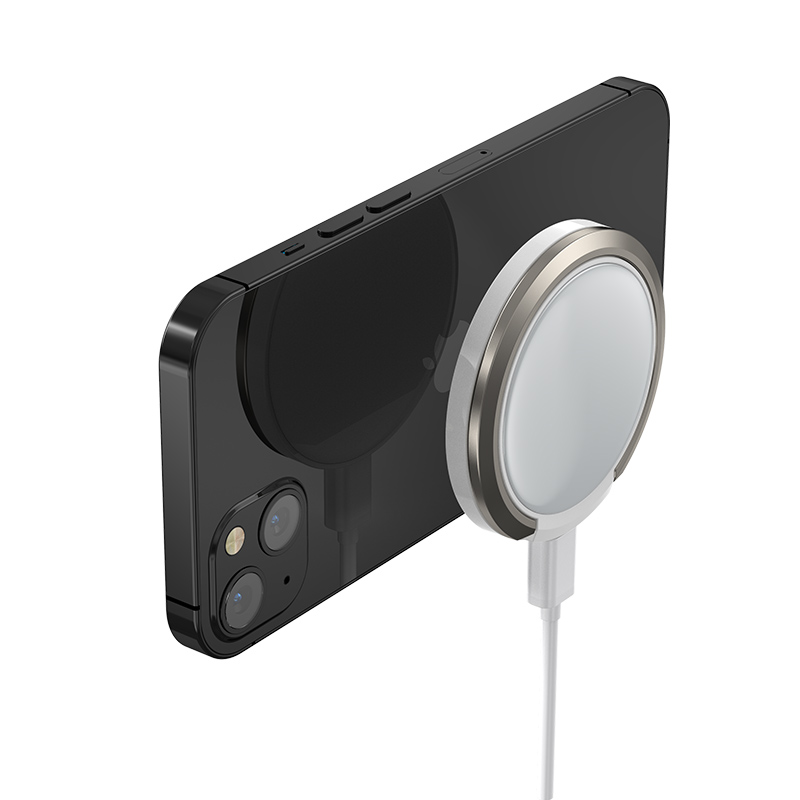
The items a wireless charger specification needs
Ten items, and each one closes a question the factory would otherwise answer by assumption.
The device list with the case thickness; the alignment reference and its tolerance; the delivered power at the coil with a named adapter; the input range and the adapter specification; the thermal derating threshold and the ambient it applies at; the foreign object behaviour; the surface material and finish; the markets and the certification scope; the packaging and accessory set; and the twelve-month forecast. The forecast is a specification item as well, because it decides which platform is economic and where the setup charges land per unit.
Who verifies what, and with which evidence
Split the verification between the factory, the test house and the brand.
The factory verifies the delivered power, the alignment behaviour and the thermal result as part of the production test. The test house verifies the radio and safety performance for the target markets. The brand verifies the retail-facing claims, including the case thickness and the device list in its own packaging, because those are the claims a customer will hold it to. Writing this split into the specification is what keeps a later question from becoming a negotiation.

Change control: what a specification change costs
The cost of a change follows the item, not the importance of the request.
A change of artwork, packaging or accessory set costs a print setup. A change of input range or delivered power costs an engineering review and possibly a new sample loop. A change of coil position, enclosure thickness or magnet arrangement costs the tooling. Asking which of those three categories a change falls into is the quickest way to price it, and it is why the items are best frozen in the order the tooling is cut.
FAQ
How detailed should a wireless charger specification be?
Detailed enough that every claim can be measured and every missing item is visible. An application envelope plus the measured parameters covers most programmes; a compatibility claim alone leaves the delivered power, the alignment tolerance and the case limit undefined. An application envelope plus the measured parameters covers most programmes, while a compatibility claim alone leaves the delivered power and the alignment tolerance undefined.
Does the brand or the supplier write the specification?
The brand writes the commercial requirements and the use case; the supplier adds the technical parameters it can meet and names the test that proves each one. A specification written entirely by either side usually contains assumptions the other has not seen. The brand writes the commercial requirements and the use case, and the supplier adds the technical parameters with the test that proves each one.
What evidence should come with the first sample?
Delivered power at the coil with the named adapter, the thermal result in the intended enclosure at a stated ambient, the alignment tolerance, and the input behaviour across the range. The sample itself is not evidence of any of those measurements. Ask for the delivered power at the coil, the thermal result in the enclosure, the alignment tolerance and the input behaviour, because the sample is not evidence of any of them.
Can the specification be written after the tooling is quoted?
It can, and the tooling quotation will then rest on assumptions about the coil position, the wall thickness and the surface material. Writing the parameter set first is what makes the tooling quotation comparable between suppliers. Writing the parameter set first is what makes the tooling quotation comparable, otherwise it rests on assumptions about the coil position and the wall thickness.
Next step
Send the device list, the case thickness, the target markets and the forecast to Wecent Group through the contact page. The reply returns the specification with the measured parameters filled in, the platform it matches and the evidence that will accompany the first sample. Related reading: OEM and ODM charger manufacturing, wireless charger range and charger quality control. External references: Wireless Power Consortium Qi standard, Wireless Power Consortium, USB Power Delivery specification, IEC publications, EU CE marking rules and TUV testing services.
{“@context”:”https://schema.org”,”@type”:”FAQPage”,”mainEntity”:[{“@type”:”Question”,”name”:”How detailed should a wireless charger specification be?”,”acceptedAnswer”:{“@type”:”Answer”,”text”:”Detailed enough that every claim can be measured and every missing item is visible. An application envelope plus the measured parameters covers most programmes; a compatibility claim alone leaves the delivered power, the alignment tolerance and the case limit undefined.”}},{“@type”:”Question”,”name”:”Does the brand or the supplier write the specification?”,”acceptedAnswer”:{“@type”:”Answer”,”text”:”The brand writes the commercial requirements and the use case; the supplier adds the technical parameters it can meet and names the test that proves each one. A specification written entirely by either side usually contains assumptions the other has not seen.”}},{“@type”:”Question”,”name”:”What evidence should come with the first sample?”,”acceptedAnswer”:{“@type”:”Answer”,”text”:”Delivered power at the coil with the named adapter, the thermal result in the intended enclosure at a stated ambient, the alignment tolerance, and the input behaviour across the range. The sample itself is not evidence of any of those measurements.”}},{“@type”:”Question”,”name”:”Can the specification be written after the tooling is quoted?”,”acceptedAnswer”:{“@type”:”Answer”,”text”:”It can, and the tooling quotation will then rest on assumptions about the coil position, the wall thickness and the surface material. Writing the parameter set first is what makes the tooling quotation comparable between suppliers.”}}]}