
The coil is rarely why a wireless charging programme runs late. The delays sit in the enclosure, the alignment reference and the thermal path, and all three are settled before any tooling is cut. A brand that treats the platform as a catalogue choice rather than as a set of four decisions usually discovers the real constraint after the mould already exists.
This guide is part of our Travel & Wireless Charging. Read the full topic guide for the decisions that come before and after this step.
Wireless charger manufacturer platforms: the four decisions that come before tooling
Four decisions precede tooling. Four decisions fix the platform: the power tier, the coil and alignment reference, the thermal path, and the input with its certification scope.
Each is normally decided in the first two weeks and each is expensive to revisit later. The platform itself is usually a design already in production, so the decisions are about which parts of it the brand keeps and which parts it changes.
Buyers often start from the retail concept, which is the right place to start and the wrong place to stop. A concept describes what the customer sees; the four decisions describe what the factory has to build, and they are what set the minimum order, the lead time and the certification work.
Decision 1: the power tier
The tier decides the thermal budget before anything else does.
Wireless charging loses a share of the delivered energy as heat at the coil interface, and the loss grows with the delivered power. A 15 W surface needs a thermal path that a 5 W surface does not, which is why the tier is really a decision about the enclosure and the adapter rather than about the phone. A brand that launches at the highest available tier first pays for the hardest thermal case before it has learned whether the channel sells the product at all.
Decision 2: the coil and the alignment reference
Where the phone sits decides how much of the rated power actually transfers.
A single coil with a locating feature relies on the user placing the phone correctly. A multi-coil surface widens the usable area at the cost of more components and a larger thermal footprint. A magnetic array removes the user from the equation by fixing the position. The three can share one enclosure only if the mechanics were designed for the largest of them, so this decision constrains the tooling as well as the bill of materials.
Decision 3: the thermal path
Heat leaves a wireless charger through the housing, not through the air.
The coil, the shielding and the switching devices sit within a few millimetres of the surface the phone rests on, and the enclosure is the only route out. Wall thickness, surface material and any venting belong to this decision, and the derating threshold – the temperature above which the design reduces power – has to be stated rather than discovered. That threshold is part of the specification because it decides what the customer experiences on a warm day in a car.
Decision 4: the input, the certification scope and the markets
The adapter decides how much of the rated power is available at all.
A charger rated at the higher tiers needs an input that can supply it with margin, and the adapter is often not part of the retail box. The market list then drives the certification scope, the plug and cable accessory set and the documentation. Writing that list before the platform is chosen prevents the most expensive version of this decision, which is selecting a platform that covers three of the four countries the brand intends to sell in.
| Decision | Options | What it locks | Cost of revisiting it |
|---|---|---|---|
| Power tier | Entry, mid or high output | Thermal budget and adapter | Enclosure and thermal redesign |
| Alignment reference | Single coil, multi-coil, magnetic array | Mechanics and tooling | A new mould |
| Thermal path | Material, wall thickness, spacing | The derating threshold | Tooling modification |
| Input and markets | Adapter spec, country list | Certification scope and accessories | A second test submission |
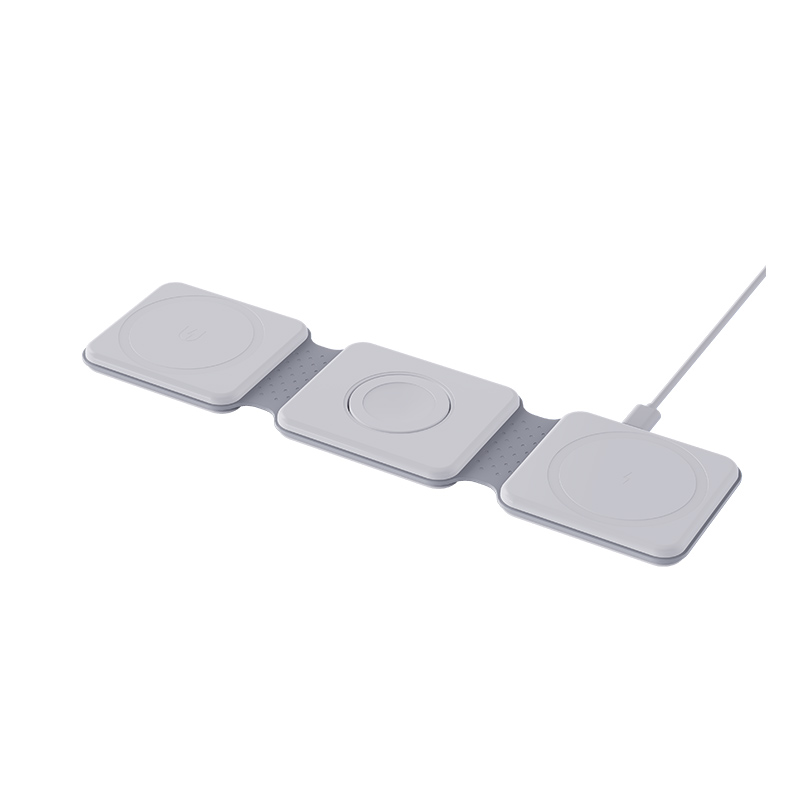
What can change without a new tool
Artwork, colour, finish, cable, packaging and the magnet grade can usually change on an existing platform.
Coil positions, surface geometry and wall thickness generally cannot, because they are moulded. Asking which items on a change list stay inside the existing tool is the fastest way to see whether a programme is a branding exercise or a tooling project, and the factory can usually answer that before any quotation is issued.
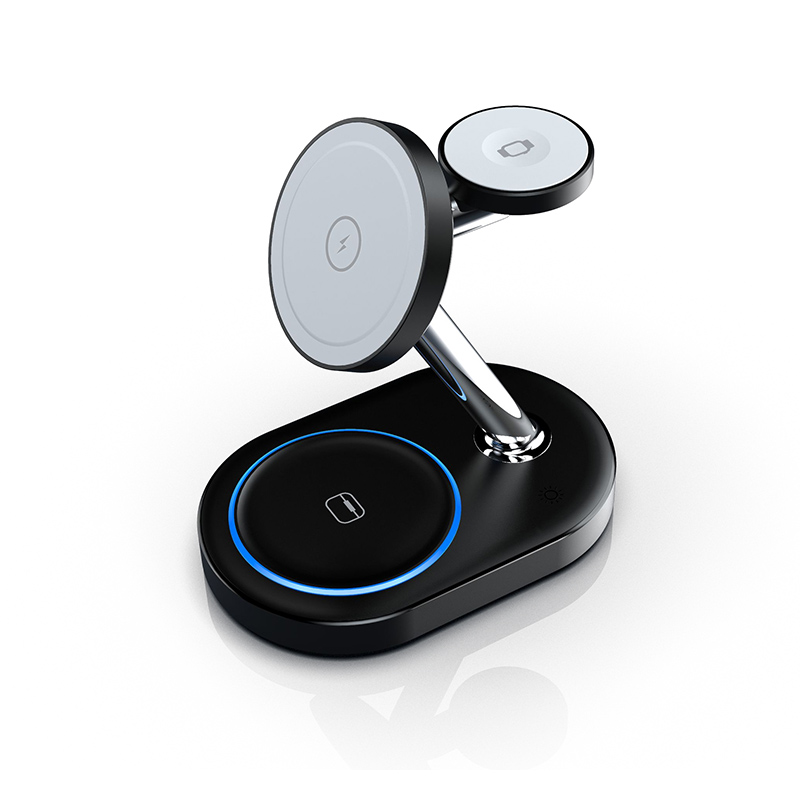
MOQ and lead time on a wireless platform programme
Platform programmes open at a lower quantity than a new enclosure does.
Tooling is the largest fixed cost in this category, and a platform build avoids it, so the minimum is set by the packaging print run, the component packaging for coils and magnets, and the test time per unit. Lead time follows the same logic: a branded platform build is measured in weeks, and a new enclosure adds tooling and characterisation work in front of production.
FAQ
How do we choose between a single coil, a multi-coil and a magnetic surface?
From the use case rather than the price list. A magnetic surface suits a phone that has to land in the right place every time, a multi-coil pad suits a table where several devices are placed loosely, and a single coil suits a fixed docking position. Choose from the use case: a magnetic surface for a phone that must land in the right place, a multi-coil pad for a loose table.
Will the charger work through a phone case?
It depends on the case thickness, the magnet arrangement and the coil spacing, and the limit should be stated in the specification as a distance rather than described as compatible. Thicker cases reduce the coupled power and, on a magnetic surface, also reduce the holding force. State the limit as a distance in the specification rather than describing it as compatible, because a thicker case reduces the coupled power.
Which markets need their own certification?
It follows the market list, and the list has to be written before the platform is selected. Certification for the radio interface, the safety of the adapter and the electromagnetic behaviour all appear in the same document set, and a platform that already holds the relevant reports removes the longest step from the programme. Write the market list before the platform is selected, because a platform that already holds the relevant reports removes the longest step.
What is the smallest sensible first order?
On a platform programme it is set by the packaging version and the test time rather than by tooling, which keeps the opening quantity modest. A new enclosure changes that number entirely, because the moulding batch becomes the binding constraint. Set the opening quantity from the packaging version and the test time rather than from tooling, while a new enclosure makes the moulding batch the binding constraint.
Can we change the surface material later?
A change of finish or colour is usually a printing or coating decision and can be made on the existing tool. A change of material or wall thickness moves the thermal path and becomes a tooling decision, which is why material belongs to the platform selection rather than to the packaging stage. A finish or colour change is usually a printing decision, while a material or wall-thickness change moves the thermal path into tooling.
Next step
Send the use case, the device list, the markets and the forecast to Wecent Group through the contact page. The reply names the platforms that fit, states which changes stay inside the existing tool and gives the minimum quantity and the certification scope for each option. Related reading: wireless charger applications, OEM and ODM charger manufacturing and charger quality control. External references: Wireless Power Consortium, WPC knowledge base, USB Power Delivery specification, IEC standards, EU CE marking rules and UL standards and certification.
{“@context”:”https://schema.org”,”@type”:”FAQPage”,”mainEntity”:[{“@type”:”Question”,”name”:”How do we choose between a single coil, a multi-coil and a magnetic surface?”,”acceptedAnswer”:{“@type”:”Answer”,”text”:”From the use case rather than the price list. A magnetic surface suits a phone that has to land in the right place every time, a multi-coil pad suits a table where several devices are placed loosely, and a single coil suits a fixed docking position.”}},{“@type”:”Question”,”name”:”Will the charger work through a phone case?”,”acceptedAnswer”:{“@type”:”Answer”,”text”:”It depends on the case thickness, the magnet arrangement and the coil spacing, and the limit should be stated in the specification as a distance rather than described as compatible. Thicker cases reduce the coupled power and, on a magnetic surface, also reduce the holding force.”}},{“@type”:”Question”,”name”:”Which markets need their own certification?”,”acceptedAnswer”:{“@type”:”Answer”,”text”:”It follows the market list, and the list has to be written before the platform is selected. Certification for the radio interface, the safety of the adapter and the electromagnetic behaviour all appear in the same document set, and a platform that already holds the relevant reports removes the longest step from the programme.”}},{“@type”:”Question”,”name”:”What is the smallest sensible first order?”,”acceptedAnswer”:{“@type”:”Answer”,”text”:”On a platform programme it is set by the packaging version and the test time rather than by tooling, which keeps the opening quantity modest. A new enclosure changes that number entirely, because the moulding batch becomes the binding constraint.”}},{“@type”:”Question”,”name”:”Can we change the surface material later?”,”acceptedAnswer”:{“@type”:”Answer”,”text”:”A change of finish or colour is usually a printing or coating decision and can be made on the existing tool. A change of material or wall thickness moves the thermal path and becomes a tooling decision, which is why material belongs to the platform selection rather than to the packaging stage.”}}]}