
Five documents decide whether a Qi2 claim survives a marketplace review, and four of them are usually requested in the wrong week. The mark is approved late, the artwork is already printed, and the file that would have supported the claim is still an attachment in an email thread. The checklist below is written to be run before the packaging proof is approved.
Qi2 certification: what a brand has to verify before printing the mark
Verify five items: the standard version, the product revision, the magnet arrangement, the power profile evidence and the holder of the certification.
Qi2 is built around a magnetic alignment reference, so the product’s claim depends on a mechanical arrangement as well as an electrical one. That is why the checks are partly documentary and partly physical, and why the physical ones have to be taken on a production assembly rather than on a prototype.
The order matters. Verifying the holder and the standard version first costs an afternoon; discovering either of them after the packaging is printed costs a reprint and, in a marketplace review, a listing suspension.
Check 1: the standard version and the product revision
Confirm which version of the standard the report covers and which revision of the product it describes.
Ask for the document to be read rather than summarised: the version of the specification tested, the revision identifier of the product, and the date range of the test. A file that names a revision the factory has since revised is a file for a product that no longer exists, and the difference is usually a coil change or a housing change made for a commercial reason.
Check 2: the magnet array and the alignment claim
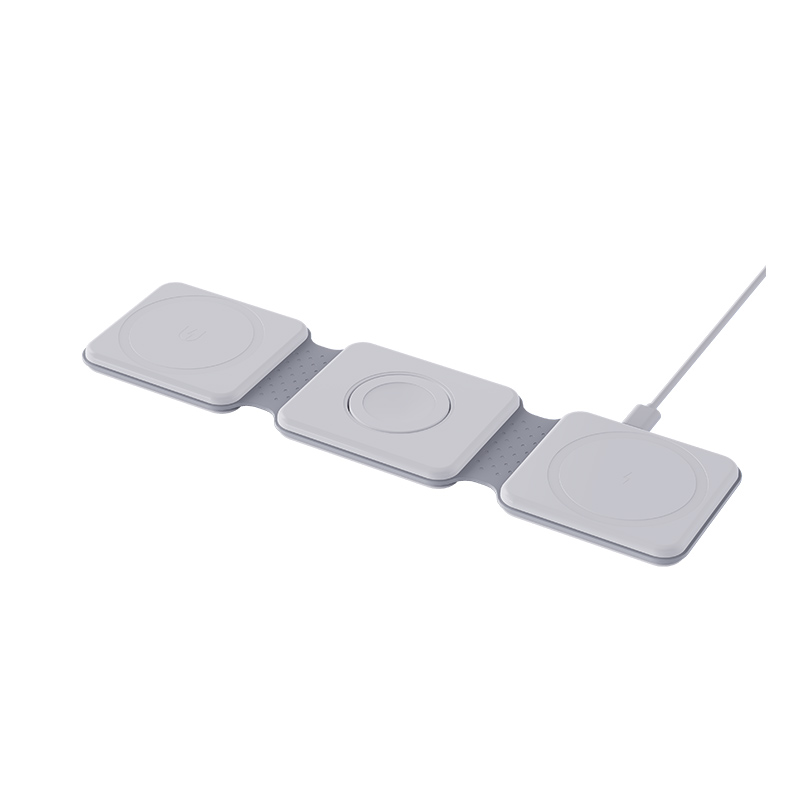
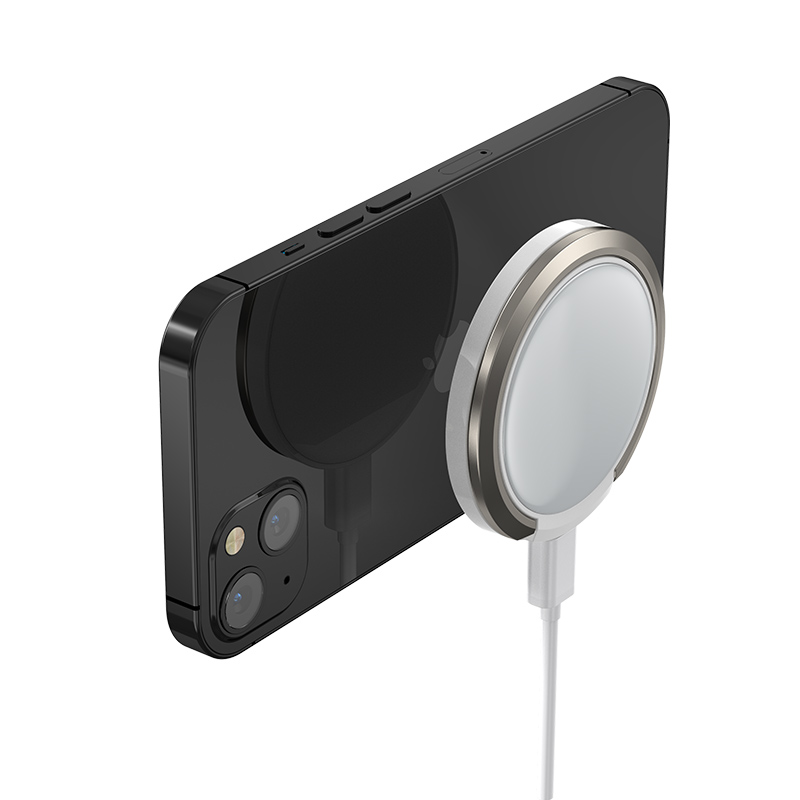
The alignment reference is a mechanical feature, so it can be verified on a unit.
Ask how concentricity between the coil and the magnet array is controlled in production and how it is measured on finished assemblies. Then take a unit and check the holding position and the delivered power at that position with the reference device. Where the array is added only in the retail packaging as an accessory, the product that was tested and the product that is shipped are not the same configuration.
Check 3: the power profile and the thermal evidence
The claimed profile is only meaningful with the adapter and the ambient condition beside it.
Ask which power profile the product implements, which adapter the figure was measured with, and what the temperature rise was in the shipping enclosure at a stated ambient. The derating condition belongs in the same answer: if the design reduces power above a threshold, that threshold is what the customer will experience and it should not be discovered from a review.
| Check | Document or test | What it proves | Common gap |
|---|---|---|---|
| Standard version | Report with the version and date range | The claim matches a published specification | A summary slide rather than the report |
| Product revision | Revision identifier in the file | The tested product is the shipped product | A revision changed after testing |
| Magnet array | Fixture record and finished-unit measurement | Alignment is controlled, not assumed | Concentricity measured on a prototype |
| Power profile | Measurement with a named adapter | The claimed figure is reproducible | No adapter or ambient stated |
| Holder and mark | Listing or certificate with the holder named | Permitted use of the mark | A file held by a third party |
Check 4: the certificate holder and the logo permission
Read the holder field before the artwork goes to print.
Certification is held by a company for a configuration. Where the brand name appears on the product, the file has to be consistent with that arrangement, and the permission to apply the mark follows the listing rather than the purchase order. Ask for the holder’s name, the product identifiers the listing covers and the conditions attached to the mark, such as size, prominence and the wording that may accompany it.
Check 5: what happens when the enclosure or the coil changes
A change of housing, coil or magnet arrangement reopens the question.
Because the tested configuration includes the mechanical and thermal arrangement, a new housing is assessed against the file rather than covered by it. The practical test is whether the change moves the coil position, the stack height or the thermal path; if it does, the file is describing a different product variant and needs to be extended or re-tested accordingly.
How the brand’s own name appears in the file
Three arrangements are common, and each has a different consequence.
The factory holds the listing and the brand resells the platform product; the brand becomes the responsible party on the finished product with the file updated to match; or the brand commissions a submission for its own configuration. The first is fastest and least protective, the third is slowest and most defensible, and the middle arrangement is what most branding programmes use. Deciding which one applies is the step that makes the other checks meaningful.
FAQ
What is the difference between Qi and Qi2 paperwork?
The programme and the documents are the same kind of evidence; the configuration differs. Qi2 adds a magnetic alignment reference, so the mechanical arrangement becomes part of what is tested and part of what the brand has to verify on production units. Qi2 adds a magnetic alignment reference, so the mechanical arrangement becomes part of what is tested and part of what the brand verifies on production units.
Can the mark be printed before the listing is confirmed?
Printing the mark before the file is confirmed risks a reprint of the packaging and the carton, and in a marketplace review it risks the listing itself. The artwork revision should follow the certificate holder confirmation rather than precede it. Printing the mark before the file is confirmed risks a reprint of the packaging and, in a marketplace review, the listing itself.
Which documents should travel with the shipment?
The listing or certificate with its scope, the test report for the shipped revision, and the declaration covering the marking, alongside the safety and EMC documents for the same revision. Consistency of the revision number across the pack is what a reviewer checks first. The listing with its scope, the test report for the shipped revision and the declaration covering the marking must describe the same revision number.
Does the brand need its own test if the factory already has one?
Where the configuration and the holder arrangement match the listing, the existing file supports the product. Where either differs, the file has to be extended or the brand commissions a submission, and that decision is best taken before tooling rather than after. Where the configuration and the holder arrangement match the listing the existing file supports the product, and where either differs the file is extended.
Next step
Send the configuration, the device list and the markets to Wecent Group through the contact page. The reply states which listing covers the configuration, which of the five checks the file already satisfies and what would have to be added for the brand’s own version. Related reading: charger quality control, wireless charger applications and OEM and ODM charger manufacturing. External references: Wireless Power Consortium Qi standard, Wireless Power Consortium, USB Power Delivery specification, IEC Webstore, TUV testing services and UL standards and certification.
{“@context”:”https://schema.org”,”@type”:”FAQPage”,”mainEntity”:[{“@type”:”Question”,”name”:”What is the difference between Qi and Qi2 paperwork?”,”acceptedAnswer”:{“@type”:”Answer”,”text”:”The programme and the documents are the same kind of evidence; the configuration differs. Qi2 adds a magnetic alignment reference, so the mechanical arrangement becomes part of what is tested and part of what the brand has to verify on production units.”}},{“@type”:”Question”,”name”:”Can the mark be printed before the listing is confirmed?”,”acceptedAnswer”:{“@type”:”Answer”,”text”:”Printing the mark before the file is confirmed risks a reprint of the packaging and the carton, and in a marketplace review it risks the listing itself. The artwork revision should follow the certificate holder confirmation rather than precede it.”}},{“@type”:”Question”,”name”:”Which documents should travel with the shipment?”,”acceptedAnswer”:{“@type”:”Answer”,”text”:”The listing or certificate with its scope, the test report for the shipped revision, and the declaration covering the marking, alongside the safety and EMC documents for the same revision. Consistency of the revision number across the pack is what a reviewer checks first.”}},{“@type”:”Question”,”name”:”Does the brand need its own test if the factory already has one?”,”acceptedAnswer”:{“@type”:”Answer”,”text”:”Where the configuration and the holder arrangement match the listing, the existing file supports the product. Where either differs, the file has to be extended or the brand commissions a submission, and that decision is best taken before tooling rather than after.”}}]}