
An enclosure was tooled and then found in a register, because the search had been run against the product’s name rather than against its appearance. The design was not copied and the tool was still at risk, which is the situation a twenty-minute search prevents. The search is a set of questions asked in the right order.
This guide is part of our OEM & ODM Charger Programmes. Read the full topic guide for the decisions that come before and after this step.
Charger patent search: the questions it answers
Whether the shape, the arrangement and the name are already taken.
Those three cover most of what a charger programme can realistically protect, and they are asked before the enclosure drawing is frozen. The answer is rarely yes or no; it is usually a location, a registration number and a date that tell the designer where to move.
The enclosure that was already registered
The register had been searched for the wrong thing.
The programme searched for the brand name and found nothing, because the earlier registration was held by a different company under a different name for a similar shape. Searching the appearance rather than the name would have found it in the first pass.
Question one: is the shape already claimed
The appearance is searched by image rather than by description.
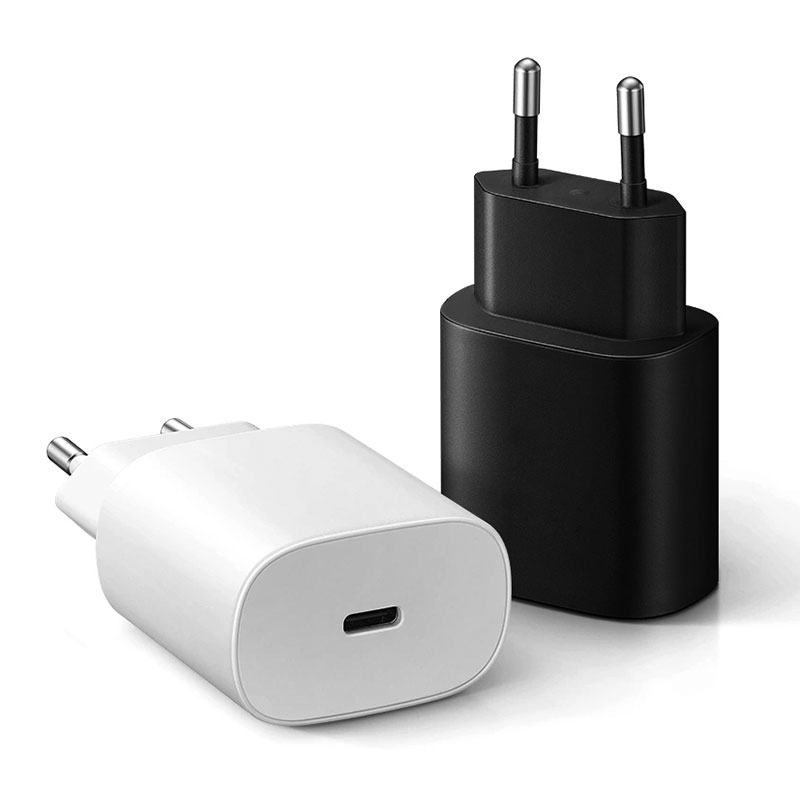
A charger enclosure is registered for how it looks, so the search starts from the drawing and compares silhouettes, port arrangements and proportions. Registers hold images for exactly this purpose, and a visual comparison finds matches that a keyword search misses.
Question two: is the arrangement claimed
The functional side is searched by classification.
A detachable plug head, a folding pin arrangement or a particular coil position can be claimed as a functional feature, and those are searched in the patent registers rather than the design registers. The classification for power conversion and for charging systems narrows the field before the reading starts.
Question three: is the name available
The name is a trademark search rather than a patent one.
A brand that intends to sell in three markets checks the name in each of them, in the classes that cover chargers and the classes that cover retail services. A name that is free in one market is frequently registered in another by an unrelated company.
How the registers differ
Four sources, and each covers a different thing.
The design registers cover appearance, the patent registers cover function, the trademark registers cover the name, and the national registers add filings that were never extended internationally. The table sets out what each is used for.
| Source | Covers | How to search | What it will not show |
|---|---|---|---|
| Design register | The appearance | By image and by class | Function and wording |
| Patent register | The functional arrangement | By classification and keyword | Appearance |
| Trademark register | The name and the logo | By name and class | Design and function |
| National register | Local filings | Per country | Other territories |
What a search result actually means
It describes a boundary, not a verdict.
A similar registration tells the designer which features to avoid reproducing; it does not prevent a charger being made. Most programmes respond by moving a port, changing a radius or altering the way the plug head folds, and the change is free at the drawing stage and expensive afterwards.
How to record the search
Four lines, and the date matters most.
The registers consulted, the queries used, the results that were close, and the date the search was run. A dated record also supports a filing of the programme’s own design, because it establishes when the design existed. The queries are kept with the results so that the same search can be repeated before the next variant rather than started again.
How often the search is repeated
A search describes the registers on the day it is run, and applications publish months after they are filed. Repeating it when a variant is added catches what the first pass could not, because the intervening period is exactly when a competing filing would appear.
The repeat is cheap when the queries are kept, because the same search runs again without rebuilding the terms. A programme that stores its queries alongside its results repeats the exercise in an afternoon.
The second occasion for a repeat is a change of market. A name that is free in the launch market may be registered in the second one, and that check belongs before the packaging for that market is printed rather than after. The third occasion is a change of platform, because a new circuit arrangement is a new functional position even when the name is unchanged.
FAQ
When should the search be run?
Before the enclosure drawing is frozen and before the name is printed on anything. Both changes are cheap at that point and expensive once tooling or packaging exists. Run it again when a variant is added, because a second enclosure or a second port layout is a new appearance and can sit closer to an existing registration than the first one did.
Does a search guarantee freedom to operate?
It reduces the risk rather than removing it. A search is a review of published registers at a point in time, and applications that have not yet published cannot appear in it. Treat the result as a dated review rather than a clearance, and repeat it before a variant or a new market rather than relying on the first pass.
Can the factory run the search?
It can run the technical part, because it knows the arrangement and the classification. The name and the territories belong to the brand, and those are checked by the brand or by its adviser. The factory’s part covers the arrangement and the classification; the brand’s part covers the name, the territories and the priorities. The factory also holds the drawings, which is what makes a repeat of the appearance search straightforward.
What if a similar design is found?
The features that create the similarity are identified and changed. Where the overlap concerns the function rather than the appearance, the question becomes whether the programme needs that arrangement at all. Where the change cannot be made within the appearance, the question becomes whether the arrangement is needed at all, and that is a programme decision rather than a design one.
Next step
Send the enclosure drawing, the intended markets and the brand name to Wecent Group through the contact page. The reply covers the technical search and the features to adjust before tooling. Related reading: OEM and ODM charger manufacturing, charger manufacturing services and inside the charger factory. External references: World Intellectual Property Organization, United States Patent and Trademark Office, UK Intellectual Property Office, China National Intellectual Property Administration, ICC business solutions for trade and BSI standards.