
The cheapest custom charger is usually the one with the least customisation, and that is not a slogan – it is arithmetic. Cost rises with the level of change, and the level of change determines the tooling, the opening quantity and the certification work together. A brand that understands which rung of the ladder its requirement sits on can predict the quotation before it arrives, and can decide whether the next rung is worth its price.
This guide is part of our OEM & ODM Charger Programmes. Read the full topic guide for the decisions that come before and after this step.
Custom charger manufacturing: the three rungs of the cost ladder
Three rungs, three cost structures.
Branding on an existing certified platform, re-specification inside the tested envelope, and a new enclosure or electrical design. Each rung adds a different fixed cost: artwork and print plates on the first, engineering and documentation on the second, tooling and a test programme on the third.
The reason the ladder matters more than the unit price is that fixed costs do not scale with the order. A brand comparing a platform quotation with a new-design quotation at 500 pieces is comparing a small fixed cost spread over 500 units with a large fixed cost spread over the same 500 units. At 50,000 pieces the two move much closer together, which is why the rung should be chosen against the forecast, not against the first order.
| Rung | Fixed cost added | Opening quantity | Certification |
|---|---|---|---|
| Branding on a platform | Artwork, print plates | From 200 pcs per model | Existing reports, updated file |
| Re-specification | Engineering, documentation, samples | Depends on the change | Review or update |
| New enclosure or design | Tooling, trial loops, test programme | Set by tooling economics | New test programme |
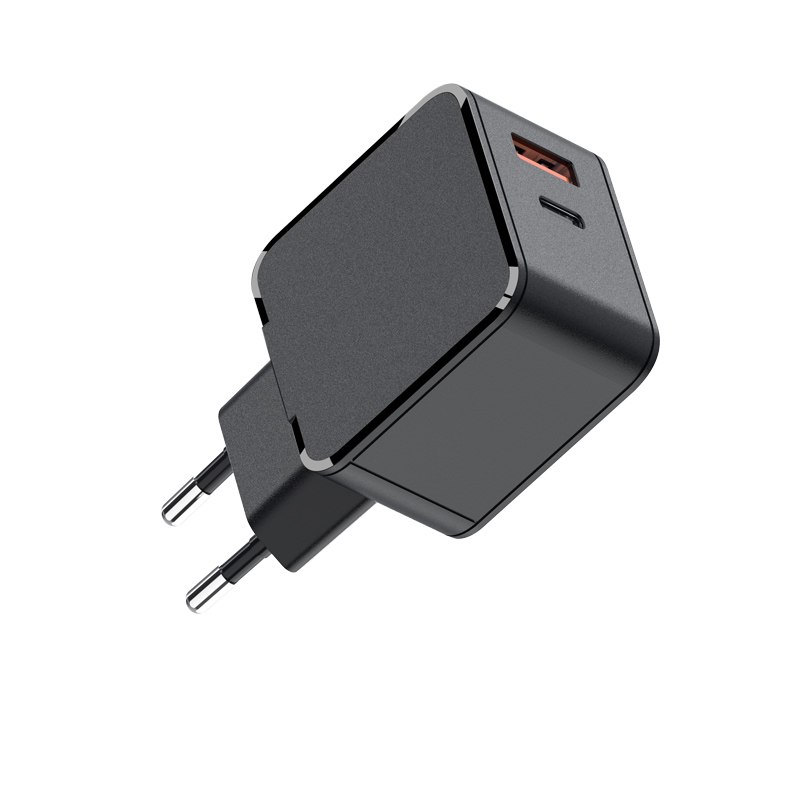
Rung 1: branding on a platform
Logo, colour, finish, label and packaging, with the electrical design untouched.
The fixed cost is limited to artwork and any print plates, and the certification file is updated rather than recreated. This is the rung that makes a 200-piece opening order practical, and it is where most brands should start unless the form itself is the reason to buy. The limitation is differentiation: the platform may be available to other customers in different branding.
Rung 2: re-specification inside the tested envelope
Port mix, plug kit, cable and small mechanical changes that stay within the platform’s characterised range.
The cost moves from artwork to engineering: documentation, a sample verification and possibly a review by the test house. Ask the factory to state which of your requested changes are covered and which step outside the envelope, because that line determines whether the programme keeps the platform’s certification or acquires a new test submission.
Rung 3: a new enclosure or electrical design
Tooling dominates this rung: mould design, steel, machining and trial loops, followed by certification on a worst-case build.
The schedule is measured in weeks rather than days, and the opening quantity is set by the tooling investment rather than by the brand’s budget. This rung is justified when the form is the reason to buy, when the volume can amortise the tooling, or when the specification needs an output or a connector no platform provides. If none of those is true, the first rung reaches the market sooner and cheaper.
How MOQ follows from the rung
The minimum order is the largest of five process constraints: the SMT panel and reels, the moulding batch where one applies, the packaging print run, the test time per unit, and the fixed cost of certification and documentation.
On the first rung, the moulding constraint disappears and the print run usually binds, which is why 200 pieces per model is realistic. On the third rung, the moulding batch binds, and it sets a number an order of magnitude larger. Ask which constraint binds your configuration, because that is the number the negotiation should target.
Reducing cost without removing a control
The safe levers are forecast accuracy, order consolidation, packaging simplification, longer lead-time acceptance and platform standardisation.
The unsafe levers are substituting a safety-critical component, removing the aging step, reducing the cable rating or accepting a shorter warranty commitment. A saving obtained by removing a control is repaid at the first claim, and it usually costs more than the difference it saved. Where a supplier offers a reduction that touches one of those four, ask what it changes in the test scope and the certification file.
How to compare two custom charger quotations
Compare the rung before the price.
Ask each supplier to state the platform or design revision, the rung the quotation covers, whether tooling and packaging setup are included, the MOQ and the lead time from order confirmation. Two quotations at different rungs are not comparable, and treating them as though they are is how a programme appears cheaper and then costs more.

FAQ
Is a custom charger much more expensive than a standard one?
At the first rung the difference is small: artwork and print plates. At the third rung the difference is a mould, trial loops and a test programme, which is why the opening quantity rises with it. Ask which rung the quotation assumes, because the difference at the first rung is artwork and plates, while the third adds a mould, trial loops and a test programme.
What is the minimum order for a custom charger?
From 200 pieces per model on an existing platform. A new enclosure carries tooling and a higher economic minimum. The minimum on an existing platform is set by the packaging print rather than by the electronics, while a new enclosure carries tooling and raises the economic minimum, which is set by the moulding economics of the die rather than by the order.
Can we move up a rung later?
Yes, and that is often the sequence: launch on a platform, then re-specify or re-tool the best-selling SKU once sell-through is known. Launch on a platform, then re-specify or re-tool the best-selling SKU once sell-through is known, because the later step then pays the fixed charges with sales data behind the decision rather than with a forecast. and record which rung the order sits on.
Where is the biggest saving?
Usually in packaging and packout, because those respond to design decisions the brand controls and do not affect the electrical specification. The packaging and the packout respond to design decisions the brand controls and do not affect the electrical specification, which is why they are the cheapest place to take cost out without reopening the evidence. and the packout is where that decision is made.
Does a new enclosure always require new certification?
It can require a review or retest, because the enclosure changes the thermal and electromagnetic behaviour. That cost belongs in the rung calculation. The enclosure changes the thermal and electromagnetic behaviour, so the review or retest belongs in the rung calculation rather than in a contingency, because it is a fixed cost of that rung and it is paid before the first shipment.
Next step
Send your requirement, the markets and the expected volume to Wecent Group through the contact page. The reply states the rung, the tooling position, the MOQ, the certification scope and the sample timing. Related reading: OEM/ODM manufacturing, quality control and wholesale chargers. External references: USB-IF documentation, IEC standards, EU CE marking, TUV testing and certification, UL certification programmes and ICC Incoterms.