
Two USB charger programmes reach the same shelf with the same headline wattage and very different economics. In the first, the brand launches a single SKU on an existing certified platform and extends the range six months later. In the second, the same brand commissions three tiers at once as standalone designs. The unit prices quoted for the three products look reasonable; the difference appears in tooling, test programmes, launch calendar and the forecast the brand has to carry before it has any sell-through data.
This guide is part of our Charger Factory & Production. Read the full topic guide for the decisions that come before and after this step.
USB charger manufacturing: the trade-offs that separate two programmes
Platform reuse decides the cost. USB charger programmes differ across four variables: platform reuse, port layout, thermal headroom and the packaging route.
Platform reuse decides the tooling and the certification path. Port layout decides the thermal load and the power-sharing complexity. Thermal headroom decides how small the enclosure can be at a given rating. The packaging route decides the freight and the number of versions to manage. Those four, not the wattage, decide what the second and third SKUs cost.
The engineering reason is that a USB charger is a system: the controller negotiates both the profile and the port split, the magnetics and the thermal path set the size, and the connector and cable set what reaches the device. Changing one variable moves the others, which is why the cheapest way to extend a range is usually to add a configuration to an existing platform rather than to design a second product around a different one.
Trade-off 1: one tier now versus three tiers at launch
Launching three tiers at once triples the forecasting problem before any data exists.
Where the entry and middle tiers share a certified platform, the second product becomes artwork and a sample rather than a development cycle. Where they do not, each tier carries its own mould, its own sample loop and its own test submission – and the brand pays for all three before the first sell-through report arrives. The commercial question is not which range is better on paper but which range can be corrected cheaply after the first season.
| Variable | Single-SKU launch on a platform | Three standalone tiers | What it decides |
|---|---|---|---|
| Tooling | Existing platform; branding only | Mould per design | Opening MOQ and cash |
| Certification | Existing reports, updated file | Test programme per design | Schedule and cost |
| Port layout | Fixed by the platform | Free to specify | Firmware and thermal load |
| Packaging | One master, market panels | Version per SKU | Freight and complexity |
| Range extension | Add a configuration | Add a project | Time to the second SKU |
Trade-off 2: port layout against thermal headroom
Every added port consumes volume that the thermal path also needs.
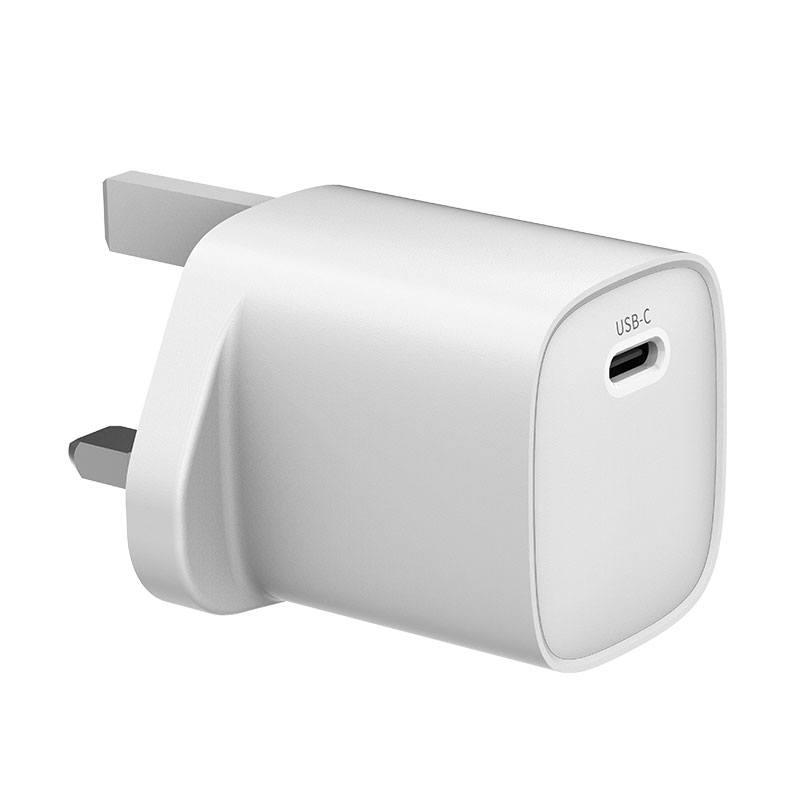
A 1A1C charger and a 2A3C charger can share a wattage figure and still be entirely different products. More ports mean more switching devices, more heat sources in the same enclosure and a more complex power-sharing rule in firmware. From an engineering standpoint the constraint is not the total wattage but the ability to remove heat from a smaller surface area per watt. Ask for the sustained temperature rise for the exact port configuration you intend to sell, not for a representative model in the same family.
Trade-off 3: size against delivered rate
A smaller enclosure does not change the physics; it changes where the heat goes.
Compact USB chargers achieve their size by running the switching stage faster and using smaller magnetics, which concentrates the losses in less material. The design can reach its rated output briefly and derate during a long session, which the customer experiences as inconsistent charging. The two figures to request are the temperature rise at full load in the shipping enclosure and the derating conditions, and they should be measured with the intended cable rather than a laboratory substitute.
Trade-off 4: packaging versions against freight
Packaging is a commercial decision with a freight consequence.
A master carton sized around one SKU rarely suits a second with a different accessory set, and each added version increases the print and the storage burden. At the same time, carton volume decides how many units travel per pallet and per container, so a packaging decision that looks cosmetic changes the landed cost. Ask for the carton dimensions and the loading plan for each SKU you intend to carry, and check whether one master design with market panels can serve the whole range.
What the platform route changes in practice
On a certified platform, a branded USB charger can open at 200 pieces per model with logo, colour, label and packaging applied, and samples with branding are typically prepared in two to three days where the platform allows. A new enclosure carries tooling and a sample loop, and the certification work follows the design rather than preceding it. The practical effect is that a platform programme can absorb a wrong forecast at a fraction of the cost, which matters more in the first season than in the fifth.
What to verify before choosing a route
Confirm three things before the commercial comparison: which tiers share a platform, what the sustained thermal behaviour is for your port configuration, and what the packaging volume is for each SKU.
Then ask for the quotation to separate tooling, electronics, packaging and tooling amortisation. A quotation that merges them cannot be compared with another, and the route decision is exactly a comparison between tooling-front-loaded and unit-price-loaded options. The same discipline applies to the sample review: test the configuration you will sell, with the cable you will ship.
FAQ
Is it cheaper to launch one SKU or a full range?
One SKU is cheaper to launch and cheaper to correct. The range can be extended from the same platform once sell-through is known, which reduces both tooling and forecasting risk. One SKU is cheaper to launch and cheaper to correct, and the range can be extended from the same platform once sell-through is known, which reduces tooling and forecasting risk.
How many ports should the first USB charger have?
Start with the layout your channel asks for and confirm the sustained thermal behaviour for that configuration. Additional ports increase heat density and firmware complexity. Start with the layout the channel asks for and confirm the sustained thermal behaviour for that configuration, because additional ports increase heat density and firmware complexity behind the sharing rule. Confirm the sustained rate rather than the peak figure.
Why does my compact charger slow down during charging?
Usually because the control system reaches its thermal limit and reduces power to protect the device and the charger. The derating conditions should be documented in the specification. The control system usually reaches its thermal limit and reduces power to protect the device and the charger, so the derating conditions belong in the specification and on the pack. State the derating threshold as well.
Does packaging affect the landed cost?
Yes. Carton dimensions decide units per pallet and per container, and each additional packaging version adds print and storage cost. Carton dimensions decide units per pallet and per container, and each additional packaging version adds print and storage cost, so the packing decision shows in the landed cost rather than only in the print price. Ask for the carton data with the quotation.
Next step
Send the tiers you are considering, the port layouts and the target markets to Wecent Group through the contact page. The reply states which tiers share a platform, the MOQ, the thermal position and the sample timing, so the route decision can be compared on the same terms. Related reading: wholesale chargers, our charger factory and quality control. External references: USB-IF documentation, IEC standards, FCC equipment authorisation, EU CE marking, EU energy-efficient products and ICC Incoterms.