
A charger factory can be evaluated on three axes: the platforms it builds, the capacity it can commit, and the commercial terms behind the quotation. Most buyers focus on price and discover the other two later, usually when a launch date is at risk.
This guide is part of our Charger Factory & Production. Read the full topic guide for the decisions that come before and after this step.
Charger Factory: reading the platform catalogue
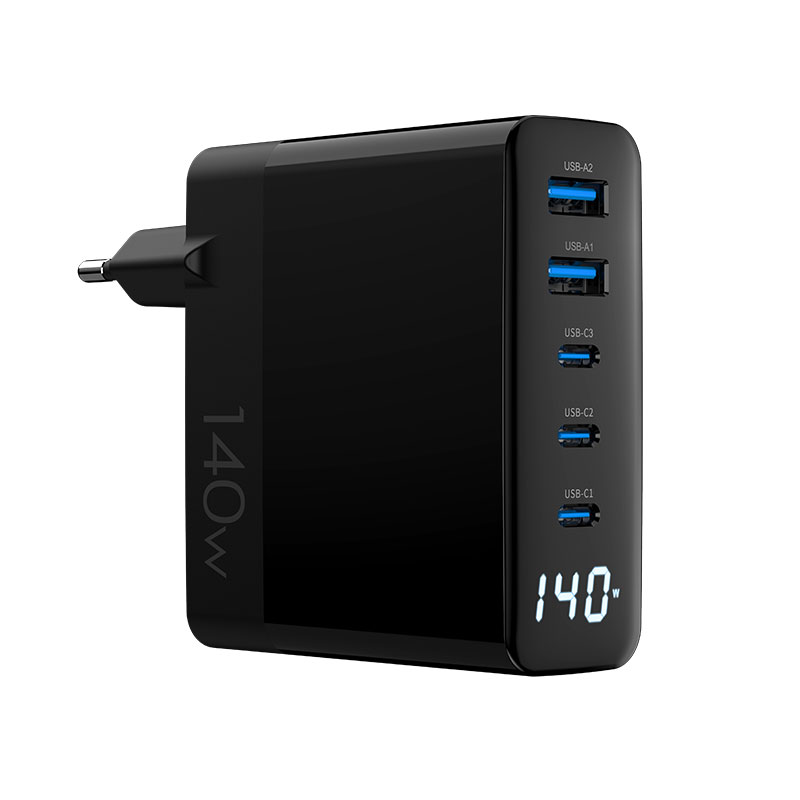
A useful platform catalogue states the wattage tiers, the port layouts, the plug systems and the certification status for each design. That allows a buyer to see immediately which SKUs can be opened at low volume and which require tooling. Where a factory lists models without stating the platform, the quotation cannot be compared with anyone else’s and the certification answer will be uncertain.
Platform configurations that change without retooling
Cosmetic changes such as logo, colour, finish and retail packaging do not touch the safety-critical design. Configuration changes within tested limits, such as port mix or plug kit, are usually covered by the existing documentation with an updated technical file. Structural changes, such as a new enclosure or a different topology, are effectively a new product and restart the tooling and certification clocks. Knowing which category a change falls into is what keeps a range affordable.
Capacity planning and the production calendar
Factory capacity is finite and allocated in blocks. Demand peaks around retail build seasons, when brands prepare stock for autumn and holiday programmes, and those windows fill weeks ahead. A platform order can often be placed inside a quiet window with a short lead time; a new enclosure with tooling and certification cannot be compressed into the same window regardless of quantity. The honest answer to “when can you build it” always references the milestone that starts the schedule.
| Order type | Critical path | What to confirm first |
|---|---|---|
| Platform rebadge | Branding, packaging, production slot | Platform availability and slot date |
| Respec within limits | Documentation update, samples | Which changes keep certification valid |
| New enclosure | Tooling loops, samples, certification | Design freeze date |
Commercial terms that belong in the quotation
A quotation that only states a unit price cannot be compared. It should state the platform, the included accessories, the packaging route, the tooling charge and whether it is one-off or amortised, the MOQ, the lead time from order confirmation, the certification scope, the Incoterm and the payment terms. Where any of those is missing, the price is an assumption rather than an offer.
Tooling ownership and repeat orders
Where a project uses custom tooling, the agreement should state who owns it, whether it can be transferred, and how a repeat order is protected if the relationship ends. For platform-based programs the question is simpler: the tooling belongs to the factory, and the brand’s protection comes from the approved sample, the specification and the repeat-order commitment rather than from owning a mould.
Quality gates and batch records
Ask how many inspection gates the factory operates and what record each produces. A five-gate structure covering incoming materials, in-process checks, electrical test, aging under load and outgoing sampling gives a buyer traceable evidence for every batch. Ask to see a batch record for a recent production run and check that the test data is linked to the batch rather than stored as a daily summary.
Certification status per platform
Certification is market-specific. Ask which markets the platform is prepared for, which reports exist, and which documents the brand must supply. Wecent Group prepares certification groundwork for CE, FCC, RoHS, PSE and KC, and confirms the current status per model before an order is placed. Buyers should treat “certified” without a market and a model number as an unanswered question.
Planning a launch date that holds
Work backwards: shipment date, production week, packing and inspection, pilot run, sample approval, tooling and certification, specification freeze. Assign a milestone owner to each stage and a buffer before the shipment date. A schedule without a buffer assumes every loop passes first time, which is not how tooling and certification behave.
Repeat-order consistency: what protects year-three quality
The risk in a charger program is not the first shipment; it is the tenth. Repeat-order consistency depends on four things: producing from the same platform, running from the approved sample, controlling component substitution through written notification, and retaining batch records so a change can be identified. Ask what happens when a component reaches end of life, and who approves the alternate. A supplier that treats substitution as an internal decision will change the product without telling you, and the first sign will be a customer complaint rather than a specification change.
What a factory visit should confirm about capacity
A visit should confirm that the capacity being quoted exists as equipment and people, not as a number in a brochure. Look at how many SMT lines are running, how many assembly benches are staffed, how large the aging rack is, and how much finished goods space is allocated to export orders. Then ask how many active programs the line supports and how a new order would be scheduled around them. The answers describe the real capacity position, and they explain why a date may move even when the materials are ready.
FAQ
What does a platform catalogue actually tell a buyer?
It shows which products can be configured without new tooling, which is where the schedule and the cost are decided. A catalogue that names the output and the port count but not the enclosure or the certification status is a list rather than a platform. Ask which products can be configured without new tooling, because that is where the schedule and the cost are decided.
How is production capacity verified?
By asking for the line count, the shift pattern and the cycle time per station, then comparing the result with the delivery date being promised. Capacity is arithmetic; the promise is only credible when the arithmetic supports it. Ask for the line count, the shift pattern and the cycle time per station, then compare the result with the delivery date being promised.
Who owns the tooling on a repeat order?
It follows the agreement rather than the repeat. Where the buyer funded the tool, the ownership is theirs; where it was amortised through the unit price, it usually remains with the factory. Where the buyer funded the tool the ownership is theirs, and where it was amortised through the unit price it usually remains with the factory rather than the buyer.
How is a launch date kept?
By planning backwards from the shelf date through the production slot, the transit and the clearance, and by holding the tooling release until the design is frozen. A date that is not built this way moves during the programme. Plan backwards from the shelf date through the production slot, the transit and the clearance, and hold the tooling release until the design is frozen.
Next step
Send your wattage tiers, target markets and required shipment date to Wecent Group through the contact page; the reply states the platform options, capacity position, MOQ and lead time. Related reading: our charger factory, factory floor and OEM/ODM manufacturing. External references: USB-IF documentation, IEC standards, ICC Incoterms, ISO 9001, EU energy-efficient products and FCC equipment authorisation.