
An audit is not a tour. A factory that assembles chargers can look impressive and still be unable to show a batch record, a calibration certificate or a process instruction. The purpose of the visit is to verify that the process that will produce your order is controlled and documented.
This guide is part of our Charger Quality & Inspection. Read the full topic guide for the decisions that come before and after this step.
What an audit is really testing
Four capabilities matter more than the size of the building: the ability to source and verify components, the ability to solder and assemble consistently, the ability to test functionally under load, and the ability to trace a finished unit back to its materials. Everything else – layout, equipment, headcount – supports those four.
Process chain: SMT, assembly, test and packing
Walk the process in order. Component storage and incoming inspection come first; then SMT placement and reflow, with static control and profile records; then hand assembly of the mechanical parts and cable; then functional test and aging under load; then packing and document preparation. At each station, ask what the operator does when a unit fails, and see whether the answer is a written instruction or a verbal habit.
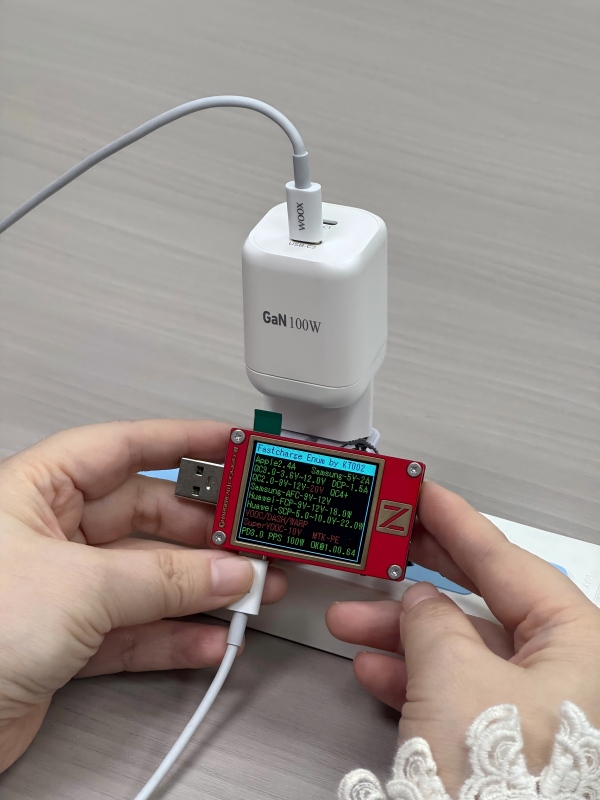
Quality system documents worth requesting
- Quality manual and process control plan
- Incoming inspection records and approved supplier list
- Control plan and work instructions for each station
- Calibration records for test and measurement equipment
- Non-conformance and corrective action records
- Sample retention and inspection records
Documents prove intent; records prove practice. Ask for a recent record rather than a template.
Traceability and batch records in practice
Pick a finished carton and ask the factory to trace it back: which batch, which date code, which component lots and which test records. The exercise takes minutes in a factory with real traceability and cannot be completed in one without it. This single test reveals more than any number of certificates on the wall.
Test equipment and calibration records
| Equipment | What it verifies | Record to request |
|---|---|---|
| Electrical safety tester | Dielectric strength and insulation | Calibration certificate |
| Electronic load / aging rack | Output under load over time | Load profile and log |
| Power meter | Input power and efficiency checks | Calibration certificate |
| Temperature logger | Thermal behaviour during aging | Calibration and records |
What a remote audit can and cannot prove
A remote audit can verify documents, review records on camera and watch a live test. It cannot verify housekeeping, the physical condition of equipment, material segregation or how the line behaves when the camera moves. If the programme is large or the risk is high, a remote audit is a useful first filter and a poor substitute for a visit. Where a visit is not possible, ask for a live walkthrough rather than an edited video.
Social, environmental and certification documents
Depending on your market, you may be asked for social compliance evidence, environmental permits or material declarations. Request the documents that actually exist and check the scope and expiry – a certificate that covers the wrong product category is not evidence for your order. Material declarations such as RoHS and REACH statements should reference the parts or the platform, not the company in general.
Ten questions that reveal a trading company
- Which station performs the 100% electrical test, and can I watch it now?
- Who writes the work instruction when a defect is found?
- How do you verify a component lot on receipt?
- What is the maximum rework count on a board?
- Which records link a finished unit to its component lots?
- How is aging under load recorded?
- Who calibrates the test equipment, and how often?
- What happens to a rejected lot?
- Which engineer answers a technical question on a quotation?
- Can I see the packing line preparing an export carton?
Audit scoring sheet
- Process chain complete and physically present: pass / partial / fail
- Quality documents current and specific: pass / partial / fail
- Traceability demonstrated on a real unit: pass / partial / fail
- Test equipment calibrated and in use: pass / partial / fail
- Non-conformance process evidenced: pass / partial / fail
Pre-order document pack
- Business licence and factory address verification
- ISO 9001 certificate, where held, with scope
- Product test reports applicable to the platform
- RoHS and REACH declarations for the platform
- Sample inspection report and batch record format
- Warranty and spares terms
FAQs
Can a factory audit be done remotely?
It can verify documents and live processes, but it cannot replace a physical visit for housekeeping, equipment condition and material control. Use it as a filter, then visit before a large commitment.
Which certificates should a charger factory hold?
At minimum, a recognised quality management certificate with a scope that covers charger manufacturing, plus the applicable product test reports for the platform you are buying. Ask to see the scope, not only the certificate.
How do I tell a factory from a trading company?
Ask to see the SMT line, the aging rack and the packing line in operation, and ask for a batch record for a finished unit. A trading company can produce a catalogue; it usually cannot produce a controlled process and its records.
Next step
Wecent Group runs engineering, assembly, testing and packing on one site in Bao’an, Shenzhen, and supports factory visits, video walkthroughs and third-party audits. Request an audit pack or arrange a walkthrough through the contact page. Related reading: our charger factory, quality control, factory videos and inspection gates. External references: ISO 9001, UL, TUV, Intertek, IEC standards and EU CE marking.
More on this topic: wireless charger manufacturing and GaN chargers from 20W to 240W.