
EVT, DVT and PVT look like three samples of the same thing, and they are not. The three builds are separated by the questions they answer, and a programme that runs them as three deliveries usually reaches the third one without having answered the first. The distinction matters when a measurement fails and the question is which build has to be repeated.
EVT, DVT and PVT for chargers: what each proves
Function, requirement compliance and repeatability.
The engineering validation proves the design functions, the design validation proves it meets the requirements written for it, and the production validation proves the line can build it the same way twice. Each build has a defined exit, and moving on without it moves the failure later.
The three builds are not three samples
They differ in the question rather than in the unit.
A unit built for engineering validation may not meet the final safety margin, because the margin has not been measured yet, and that is not a defect; it is the state of the programme. Reading the three builds as samples of increasing quality is what causes a buyer to reject a unit that was never intended to be approved.
EVT: does the design function
The board is the subject, and the enclosure is incidental.
The build confirms the topology works, the firmware negotiates the profiles, the protection behaves and the thermal result is in the expected region. Changes at this stage are made by editing the design rather than by changing the process.
DVT: does the design meet its requirements
The specification is the subject, and the measurements are the evidence.
The thermal margin in the shipping enclosure, the safety distance, the electromagnetic performance and the derating on the critical components are measured against the numbers written in the requirement. This is the stage that produces the pre-compliance results and the data a laboratory submission is built on.
PVT: does the line build it the same way
The process is the subject, and the yield is the evidence.
Units are built on production tooling and production fixtures by production operators, and the output is a yield figure, a cycle time and a list of the points where the line deviated from the design. No design change belongs at this stage, and one that appears here reopens the validation rather than the process.
| Build | Subject | Evidence produced | Change expected |
|---|---|---|---|
| EVT | The design | Function and thermal region | Design edits are normal |
| DVT | The requirement | Margins and pre-compliance data | Only where a margin fails |
| PVT | The process | Yield, cycle time, deviations | Process fixes, not design changes |
What has to be measured at each
Four measurements, with a different reference at each build.
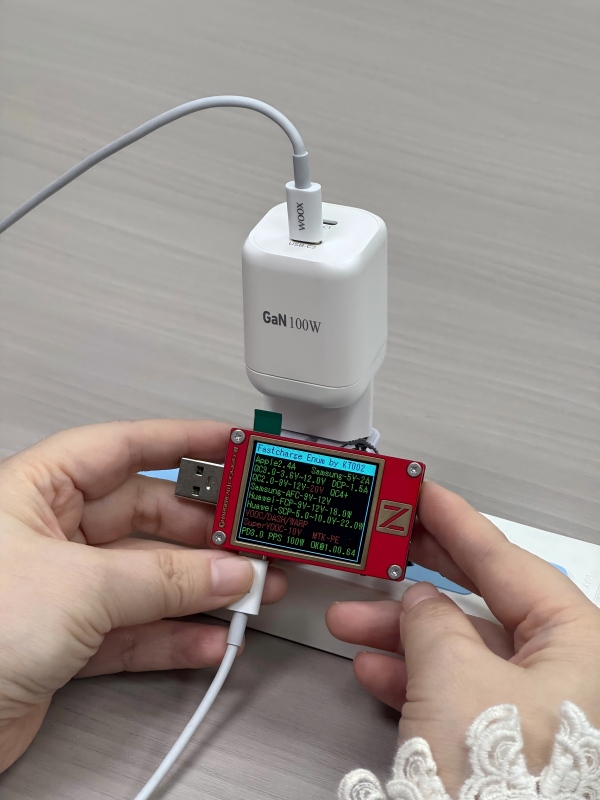
The output across the range, the efficiency, the temperature at the hottest component and the behaviour at the input extremes. At EVT they are compared with the design intent, at DVT with the written requirement, and at PVT with the units built earlier in the same run.
Where programmes collapse the stages
Two collapses, and the second is the expensive one.
Running DVT on engineering units, which produces margin data on a design that has not been frozen; and releasing the production tool before DVT closes, which means a failed margin becomes a second die rather than a design change. The first costs time and the second costs money.
What exits each build
Three artefacts, and each is the input to the next.
A frozen design with its measurement set, a validation report with the margins against the requirement, and a process record with the yield and the control points. The three together are what a later audit reads to establish that the product was verified rather than merely tested.
What each build produces as a document
Each build leaves a different artefact, and the three together are what an audit reads. The engineering build leaves a measurement set and a design revision; the design validation leaves margins against the written requirement; and the production build leaves a yield figure with the process deviations recorded.
The distinction matters when a product changes. A change to the design reopens the first two artefacts, a change to the process reopens the third, and a change to a component can reopen all three depending on what it affects.
Programmes that keep the three separate can answer a question about a specific delivery from the build record rather than from the current file.
Where the builds are merged, the artefacts are merged with them, which is why a merged programme usually finds it harder to establish what was verified and when.
FAQ
Can a charger programme run only two of the three builds?
It can, and the usual merge is EVT with DVT where the platform is known. The production build is rarely merged, because its question concerns the line rather than the design. The merge is a schedule decision rather than a technical one, and it is recorded, because a customer asking what was verified on a configuration will be answered from whichever build covered it.
Which build produces the submission units?
Normally the production validation, because the submission has to represent the units that will ship. Where the schedule is tight, the design validation build is used and the difference is declared. The units also have to be traceable to the build that produced them, because a submission that cannot be tied to a production run describes a sample rather than a shipment.
What happens if DVT fails a margin?
The design changes and the affected measurements are repeated. If the tool has already been cut, the change is made within the existing geometry where possible, which is why the tool release is held until DVT closes. The cost of the change depends on how far the validation has progressed, which is the practical argument for holding the tool release until the margins are known.
Is PVT needed for a repeat order?
It is not repeated for an unchanged product. It is repeated when the process, the tool, the fixture or a component changes, because those are the inputs the build was designed to check. The trigger is any change to an input the build was designed to check, so a new fixture or a revised operator procedure is as much a reason to repeat it as a new component.
Next step
Send the requirement, the schedule and the platform to Wecent Group through the contact page. The reply sets out the three builds, their exits and the measurements each one reports. Related reading: OEM and ODM charger manufacturing, GaN charger applications and charger quality control. External references: IEC standards, BSI standards, UL solutions, TUV testing and certification, Intertek testing services and EU CE marking.
{“@context”:”https://schema.org”,”@type”:”FAQPage”,”mainEntity”:[{“@type”:”Question”,”name”:”Can a charger programme run only two of the three builds?”,”acceptedAnswer”:{“@type”:”Answer”,”text”:”It can, and the usual merge is EVT with DVT where the platform is known. The production build is rarely merged, because its question concerns the line rather than the design.”}},{“@type”:”Question”,”name”:”Which build produces the submission units?”,”acceptedAnswer”:{“@type”:”Answer”,”text”:”Normally the production validation, because the submission has to represent the units that will ship. Where the schedule is tight, the design validation build is used and the difference is declared.”}},{“@type”:”Question”,”name”:”What happens if DVT fails a margin?”,”acceptedAnswer”:{“@type”:”Answer”,”text”:”The design changes and the affected measurements are repeated. If the tool has already been cut, the change is made within the existing geometry where possible, which is why the tool release is held until DVT closes.”}},{“@type”:”Question”,”name”:”Is PVT needed for a repeat order?”,”acceptedAnswer”:{“@type”:”Answer”,”text”:”It is not repeated for an unchanged product. It is repeated when the process, the tool, the fixture or a component changes, because those are the inputs the build was designed to check.”}}]}