
Two measurements decide the schedule of a GaN programme: the EMC margin at the switching frequency, and the temperature rise inside the shipping enclosure. Everything else in the certification path is documentation that follows those two numbers. That is why the sequence below starts with measurements rather than with forms.
GaN charger certification: the path from platform to brand-held file
The path runs through a frozen revision, pre-compliance measurement, a safety review, the technical file, and the marking and declaration.
Each step has an entry condition, and each produces something the next step consumes. A file cannot be written against a revision that is still moving, and a marking decision cannot be taken before the file names the responsible party.
GaN changes two things in this sequence rather than all of it. The switching behaviour moves the electromagnetic profile, which puts more weight on pre-compliance, and the power density leaves less thermal headroom, which makes the enclosure part of the electrical evidence. The documentation steps are the same as for any other charger.
Prerequisite 1: freeze the revision the file will describe
A technical file describes one revision, and everything downstream refers to it.
Freeze the schematic revision, the enclosure revision, the approved component list and the label artwork before the file is assembled. The frozen revision is what the test samples have to match, what the production line has to build and what the declaration refers to. Where the revision moves after the file is written, the file describes a product that no longer exists, and that is the failure an audit looks for first.
Prerequisite 2: fix the construction evidence
Creepage, clearance, isolation and the thermal path are decided in the layout, not at the test house.
Confirm the construction against the safety standard the product family falls under, and record the thermal path with the enclosure in place. On a GaN design the switching devices and the transformer sit closer together than on a comparable silicon design, which makes the creepage and the thermal interface the two items most likely to change late. Both are cheaper to correct before the samples are built.
Step 1: pre-compliance measurement on the GaN switching stage
The pre-scan is what converts an unknown margin into a plan.
Measure conducted and radiated emissions with the product at full load, in the shipping enclosure, with the intended adapter and cable. Record the margin rather than the pass or fail, because a comfortable margin allows the submission to be booked and a thin one calls for a design change while the tool is still open. Where the design uses a variable switching scheme, measure it at the worst of its operating modes rather than at a nominal one.
Step 2: safety review of the construction
The safety work is an examination of the product’s construction against the standard.
Isolation distances, the barrier between mains and output, the fault conditions the standard requires to be assessed, and the temperature rise of the components that carry the load. The evidence is a construction review with the measurements recorded against each requirement, and it is the part of the file a reviewer reads most closely for a product with high power density.
Step 3: assemble the technical file
The file is a set of documents that together describe the product.
The construction description, the circuit and layout revision, the component list, the safety and electromagnetic test results, the label artwork and the declaration naming the responsible party. For the brand, the relevant question is which of those documents it will hold at the end, because that determines whether it can answer a marketplace or a customs query without going back to the factory.
| Step | Output | Depends on | What forces a restart |
|---|---|---|---|
| Revision freeze | Fixed schematic, enclosure and component list | The brand’s specification | A change to any of the three |
| Construction evidence | Creepage, isolation and thermal path records | The frozen layout | A late component substitution |
| Pre-compliance | Measured emissions margins | A representative build | A design change after the measurement |
| Safety review | Construction assessment and temperature data | The frozen construction | An enclosure or barrier change |
| Technical file | The document pack and the declaration | All of the above | A revision that moved |

Step 4: marking, declaration and the market list
The last step is where the commercial decisions turn into obligations.
The market list decides which requirements apply and therefore which evidence the file has to contain; the marking carries the responsible party’s name and has to match the artwork in the file; and the instructions have to be in the language the market requires. This is also where the brand discovers whether its name can appear on the product, because that follows from who is prepared to take the responsible role rather than from the packaging design.
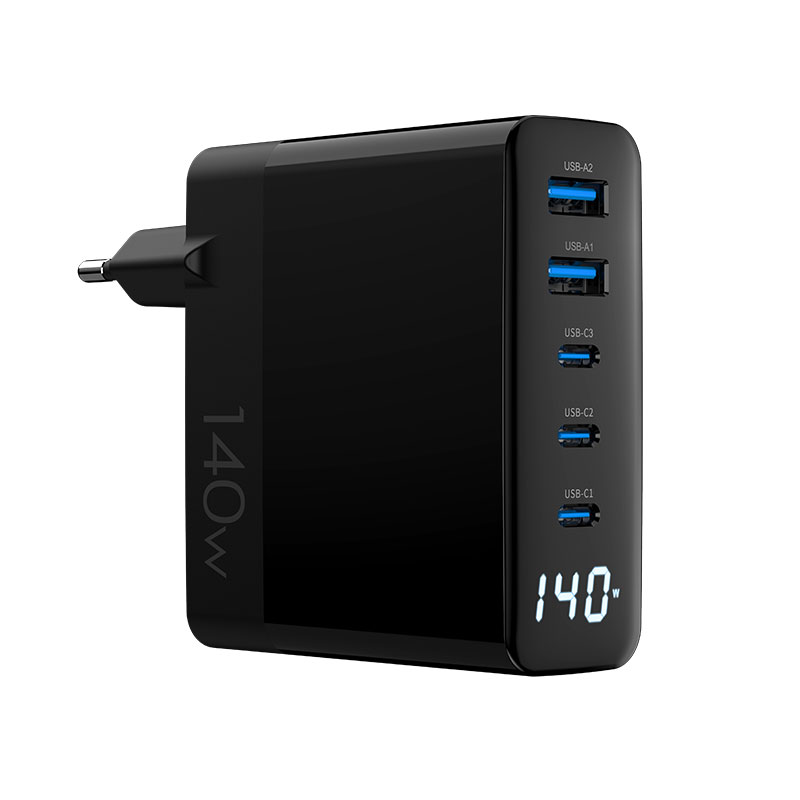
What the factory prepares and what the brand has to own
Split the responsibilities deliberately rather than by convenience.
The factory prepares the construction data, the component list, the production test records and, where it holds the platform evidence, the test reports. The brand owns the market list, the artwork, the declaration it is responsible for, and the obligation to keep the file consistent with what ships. Where the brand cannot hold a document, it should know that before the order rather than during a review.
FAQ
Is GaN certification different from a silicon charger’s?
The framework is the same and the emphasis is different. GaN designs switch faster and pack the components closer, so the electromagnetic margins and the thermal evidence carry more weight, and the construction review examines the same clearances with less space available. GaN designs switch faster and pack the components closer, so the electromagnetic margins and the thermal evidence carry more weight in the same framework.
What does the brand need to hand over before the file can be written?
The market list, the intended product name and marking, the packaging and instruction artwork, and the party that will be named as responsible. Without the last item the declaration cannot be drafted, and without the market list the evidence cannot be scoped. The market list, the intended product name and marking, the artwork and the party named as responsible are what the file is scoped from.
Can pre-compliance measurement be skipped if the platform already has reports?
Where the brand’s build is identical to the tested platform configuration, the existing evidence applies. Where the enclosure, the component list or the output arrangement differs, the differences still have to be assessed, and a measurement is usually cheaper than the assessment being wrong. Where the brand’s build is identical to the tested configuration the existing evidence applies, and where it differs the differences still have to be assessed.
How long does the whole path take?
It depends on the pre-compliance result and on how far the brand’s build departs from the platform: a documentation exercise on an identical build is a matter of weeks, while a new enclosure with a thin EMC margin adds a design loop in front of the programme. A documentation exercise on an identical build is a matter of weeks, while a new enclosure with a thin margin adds a design loop.
Next step
Send the platform, the enclosure revision, the markets and the intended marking to Wecent Group through the contact page. The reply states which evidence the platform already provides, what the brand’s build would add and which documents the brand would hold at the end. Related reading: OEM and ODM charger manufacturing, GaN charger applications and our charger factory. External references: IEC standards, IEC Webstore, EU Low Voltage Directive, EU EMC Directive 2014/30/EU, UL standards and certification and TUV testing services.
{“@context”:”https://schema.org”,”@type”:”FAQPage”,”mainEntity”:[{“@type”:”Question”,”name”:”Is GaN certification different from a silicon charger’s?”,”acceptedAnswer”:{“@type”:”Answer”,”text”:”The framework is the same and the emphasis is different. GaN designs switch faster and pack the components closer, so the electromagnetic margins and the thermal evidence carry more weight, and the construction review examines the same clearances with less space available.”}},{“@type”:”Question”,”name”:”What does the brand need to hand over before the file can be written?”,”acceptedAnswer”:{“@type”:”Answer”,”text”:”The market list, the intended product name and marking, the packaging and instruction artwork, and the party that will be named as responsible. Without the last item the declaration cannot be drafted, and without the market list the evidence cannot be scoped.”}},{“@type”:”Question”,”name”:”Can pre-compliance measurement be skipped if the platform already has reports?”,”acceptedAnswer”:{“@type”:”Answer”,”text”:”Where the brand’s build is identical to the tested platform configuration, the existing evidence applies. Where the enclosure, the component list or the output arrangement differs, the differences still have to be assessed, and a measurement is usually cheaper than the assessment being wrong.”}},{“@type”:”Question”,”name”:”How long does the whole path take?”,”acceptedAnswer”:{“@type”:”Answer”,”text”:”It depends on the pre-compliance result and on how far the brand’s build departs from the platform: a documentation exercise on an identical build is a matter of weeks, while a new enclosure with a thin EMC margin adds a design loop in front of the programme.”}}]}