
Two brands specify the same 65W GaN charger in the same week. The first re-badges a certified platform: logo, colour, retail box and a production slot. The second asks for a slimmer enclosure to match its product language. Both specifications describe a 65W GaN charger, and one of them ships in weeks while the other enters a tooling programme – because GaN designs have less thermal headroom than their silicon equivalents, and a smaller enclosure consumes it.
This guide is part of our GaN Charger Technology. Read the full topic guide for the decisions that come before and after this step.
Custom GaN charger programs: the four decisions that set the programme
Four decisions determine whether the programme is a re-badge or a development project.
The platform and topology, the enclosure and its thermal path, the port layout and power-sharing rule, and the certification scope by market. Each one moves the tooling, the schedule or the test programme, and each is cheaper to settle before the sample than after it.
The reason GaN behaves differently from older designs is that the size advantage comes from running the switching stage faster with smaller magnetics, which concentrates the losses. The enclosure has to remove that heat from a smaller volume, so a change in housing or port layout that would be cosmetic on a conventional design can change the thermal behaviour on a GaN one.
| Decision | What it fixes | Commercial consequence |
|---|---|---|
| Platform and topology | Controller, magnetics, certified markets | Tooling, MOQ, certification path |
| Enclosure and thermal path | Temperature rise, derating conditions | Whether a review is required |
| Port layout and sharing rule | Heat density, firmware complexity | Product claims and test scope |
| Certification scope | Reports per market | Label content and schedule |
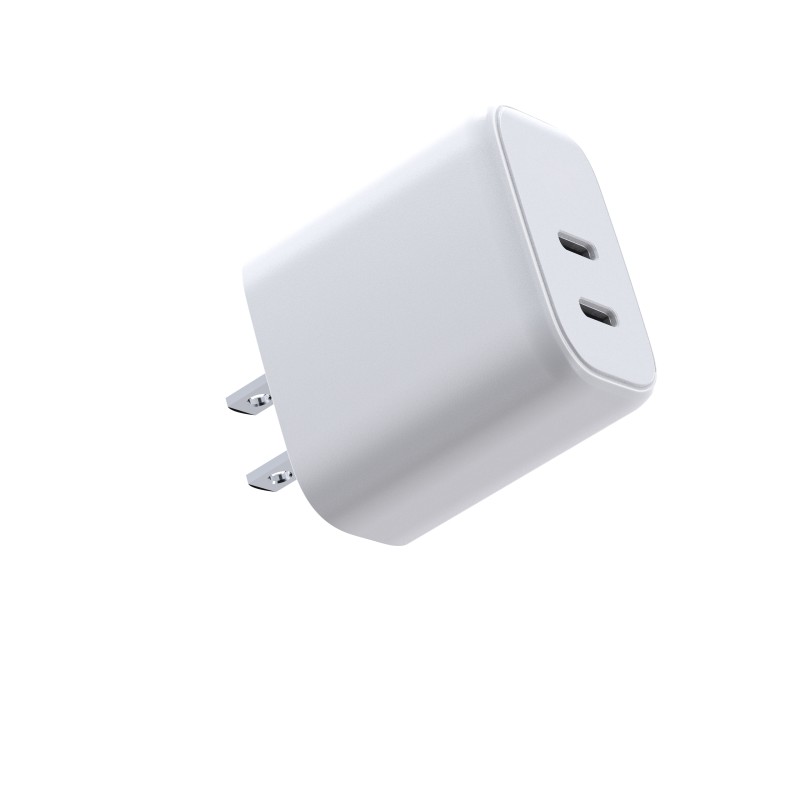
Decision 1: the platform and its topology
Ask which platform the quotation is built on before discussing the enclosure.
The platform fixes the topology, the controller family, the port layouts already characterised and the markets already covered. Where the brand’s requirement fits inside it, the programme changes only branding and packaging. Where it does not, the next question is how far outside it sits, because a small excursion can often be resolved by re-specification while a large one cannot.
Decision 2: enclosure and thermal headroom
Ask for the temperature rise at full load, in the shipping enclosure, at a stated ambient.
This single measurement describes whether a custom enclosure is viable. A smaller housing reduces the surface available for heat removal, and the control system will reduce power when the temperature reaches its limit. Where the design derates, the condition that triggers the reduction should be documented, because the customer experiences it as a charger that slows down.
Decision 3: port layout and the power-sharing rule
Ports consume the volume that the thermal path also needs.
A 65W single-port design and a 65W two-port design are different products: the second carries more switching devices, a more complex firmware rule and less area per watt. Ask for the sharing rule in writing, with the combinations your customers will use, and verify it on the sample with two real devices. Where the rule is unstated, the packaging claim about simultaneous charging is a guess.
Decision 4: certification scope by market
Certification follows the model and the market, and it follows the thermal and electromagnetic behaviour that the enclosure defines.
Wecent Group prepares certification groundwork for CE, FCC, RoHS, PSE and KC and confirms the current status per model. Ask which reports exist, whether they cover your enclosure and port configuration, and what a change to either would require. On a platform programme the work is a documentation update; on a new enclosure it is a review or a new submission.
What the programme costs at each route
On a certified platform, a branded GaN charger can open at 200 pieces per model with logo, colour, label and packaging applied; samples with branding are typically prepared in two to three days where the platform allows, and quotations are returned within 24 hours on business days.
A new enclosure carries tooling, sample loops and a certification review, which sets a higher minimum and a longer calendar. Ask the quotation to separate the electronics, the enclosure tooling and the packaging, and to state which route it represents.
Quality gates that matter for GaN
Functional test should verify the negotiated profiles, and aging should follow a defined profile rather than a generic burn-in.
Because GaN assemblies have less thermal margin, the aging record is the evidence that the product was exercised under conditions close to real use. Ask for the load, the duration and the ambient temperature, and ask whether the units are linked to the batch record. Then ask to trace a finished carton back to its component lots, which is what defines a containment scope if a defect appears.

FAQ
Can a custom GaN charger keep the platform certification?
Where the electrical design and the enclosure are unchanged, yes: the branded version is covered by the existing reports with an updated label and technical file. A smaller enclosure may require a review. Where the enclosure shrinks, the thermal result moves, so the review is a measurement rather than a paperwork step and it belongs before the tooling is cut or the label is printed.
What is the minimum order?
From 200 pieces per model on an existing platform. A new enclosure or power stage carries tooling and a higher economic minimum. The minimum on an existing platform is set by the packaging print rather than by the electronics, while a new enclosure or a new power stage adds tooling and raises the economic minimum set by the moulding economics of the die.
How many ports should a first GaN SKU have?
The layout the channel asks for. Each additional port raises the heat density and the firmware complexity, which is why the second port is best added after the first product proves the demand. Ask the channel which layout it wants, because each additional port raises the heat density and the firmware complexity behind the sharing rule, and the second port is best added once the first product proves the demand.
What thermal evidence should we request?
Temperature rise at full load in the shipping enclosure, at a stated ambient, together with the derating condition if the design reduces power above a certain temperature. Ask for the temperature rise at full load in the shipping enclosure at a stated ambient, together with the derating condition where the design reduces power above a stated temperature. and ask for the ambient to be stated with the figure.
Next step
Send the wattage tier, the port layout, the markets and the expected volume to Wecent Group through the contact page. The reply states the platform options, the thermal position, the certification scope, the MOQ and the sample timing. Related reading: GaN charger applications, OEM/ODM manufacturing and quality control. External references: USB-IF documentation, USB Power Delivery specification, IEC standards, UL standards and certification, EU CE marking and EU energy-efficient products.