
Wireless Charger Manufacturer
A wireless charger manufacturer that ships 15W Qi2 and MagSafe platforms with your logo, colour and retail packaging — from 200 pcs per model, samples in 2–3 days, mass production 7–15 days after artwork approval.
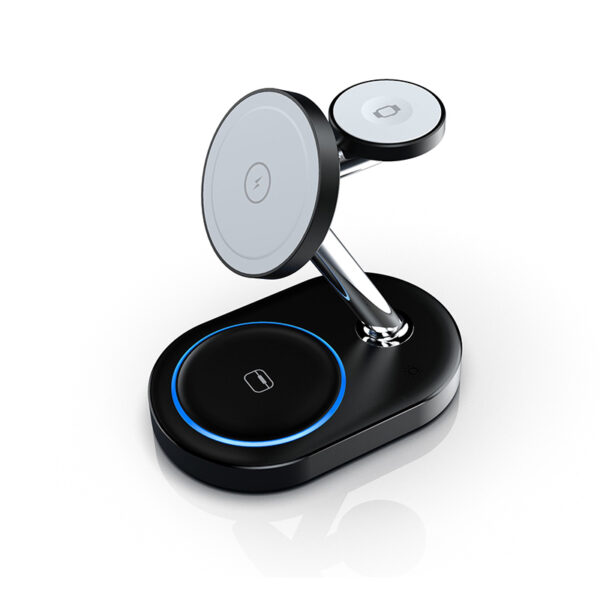
A wireless charger programme lives or dies on two things the housing does not show: whether the platform is already in production, which is what keeps the MOQ at 200 pcs and the sample at a few days, and how much of the certification work the factory carries for each destination market.
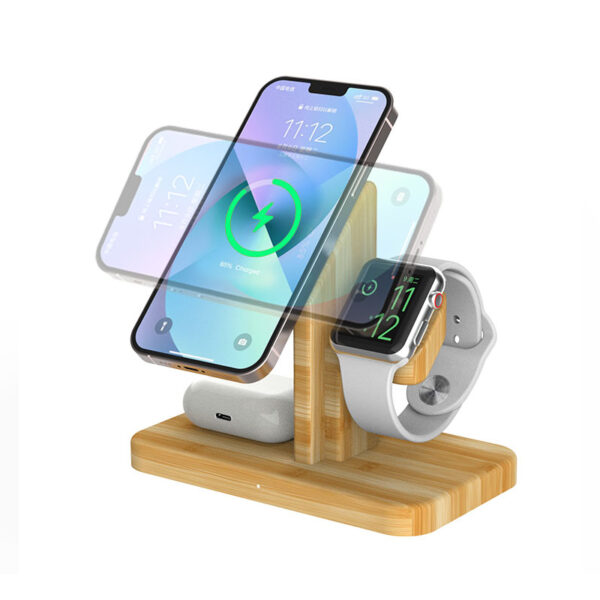
What actually separates one wireless charger factory from another
Wireless charging has fewer visible parts than a wall charger, so buyers tend to compare on price and enclosure finish. The differences that decide whether a programme runs smoothly sit underneath: coil placement and shielding, thermal behaviour at a sustained 15W, and how much of the certification work the factory can carry for your target markets.
A coil that is 2 mm off centre still charges, but it charges slowly and it runs hotter — and heat is what customers notice six months later, not during the sample review. The same applies to the magnet array on a Qi2 or MagSafe-compatible unit: the alignment behaviour is a mechanical tolerance question as much as an electrical one.
- Published platforms, not open tooling. Starting from a platform already in production keeps samples fast and the MOQ at 200 pcs — the electronics do not have to be re-certified from zero.
- Certification scope by market. CE and UKCA for Europe, FCC for the United States, PSE for Japan, KC for Korea — the file should be assembled from the first sample, not hunted down before dispatch.
- One contact through the programme. The person who quotes the project answers the sample questions and the shipping questions, so the specification does not drift between shipments.
15W Qi2 or a higher wireless number?
The number on the box is the easiest thing to sell and the easiest thing to get wrong. A certified 15W Qi2 or MagSafe-compatible platform is a known quantity: the profile is standardised, the certification path is established, and any compatible phone will negotiate it. Some channels will ask for a 20W wireless label, which in practice means a proprietary fast-charge profile that only specific device families negotiate — so it needs confirming against the devices your customers actually own before it goes on the artwork.
| What you are choosing | 15W Qi2 / MagSafe-compatible | Higher, vendor-specific profile |
|---|---|---|
| Device coverage | Any Qi2/MagSafe-compatible phone, plus earbuds and watches on a multi-coil unit | Only the device families that implement the profile |
| Alignment | Magnet array holds the phone in the coil sweet spot | Depends on the phone; usually free-position on a pad |
| Certification | Established path, reports reusable across branded variants | Needs verification per market and per device family |
| Best for | Retail, in-box accessories, hotel and desk programmes | Channels tied to one phone brand |
Send us the target devices and the markets and we will say plainly which band fits — the certification note covers what each market needs on paper.
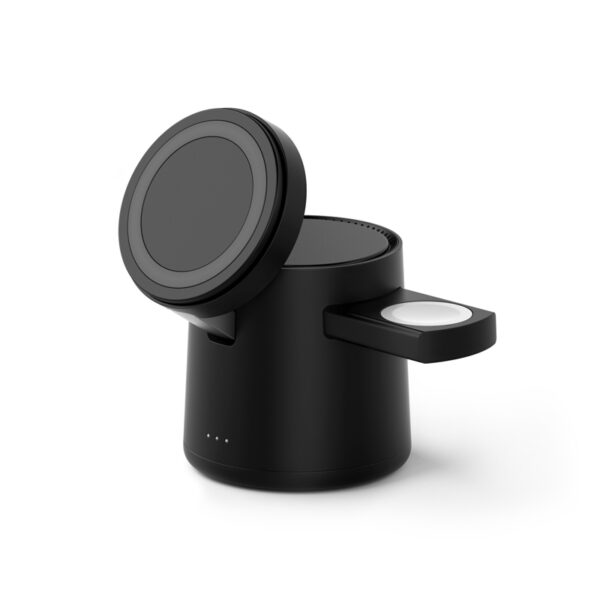
What you can change on a wireless charger
Everything below is applied on top of a platform that is already tested, which is what keeps the sample at 2–3 days and the MOQ at 200 pcs per model.
- Coil configuration — single coil, twin coil or a full 3-in-1 arrangement for phone, earbuds and watch.
- Housing and materials — ABS, PC, bamboo or wood face, PU leather and silicone surfaces, in your colour and finish.
- Logo and printing — silk-screen, laser etching or UV printing, single or multi-colour, placed to your artwork.
- Packaging and bundle — colour box, insert and sleeve artwork, plus a cable, adapter or pouch to make a retail-ready set.
Wireless charger platforms — what we build
| Charging standard | Qi2 and MagSafe-compatible 15W platforms; legacy Qi profiles confirmed per model on the datasheet |
|---|---|
| Form factors | Single pad, stand, 3-in-1 station, foldable travel unit, magnetic power bank, watch charger |
| Coil layout | Single, twin or three-coil; phone + earbuds + watch on one board |
| MagSafe material | Magnet array rated for phone alignment; magnet grade confirmed per model |
| Housing and finish | ABS, PC, bamboo or wood face, PU leather, silicone; black and white as standard plus custom colour |
| Input | USB-C; adapter and cable quoted as a bundle where the channel needs one |
| Certifications | CE, RoHS, FCC, UKCA, PSE, KC, SAA and CB reports for a wireless charger programme, depending on the target market |
| MOQ | 200 pcs per model for a branded wireless charger programme; a trial quantity can be split across a few SKUs |
| Samples | 2–3 days with your logo and finish applied to the wireless charger programme |
| Mass production | 7–15 days after sample and artwork approval for the wireless charger programme |
| Carton | 50 pcs per carton as standard for the wireless charger programme, or customised to your requirement |
| Warranty | 2 years on the wireless charger programme, with a 24-hour complaint response and batch traceability |
The rows above describe a standard wireless charger programme. Custom power stages, coil layouts, plugs and packaging are quoted per project, and every figure is confirmed on the datasheet before a sample is built.
Wireless platforms you can start from
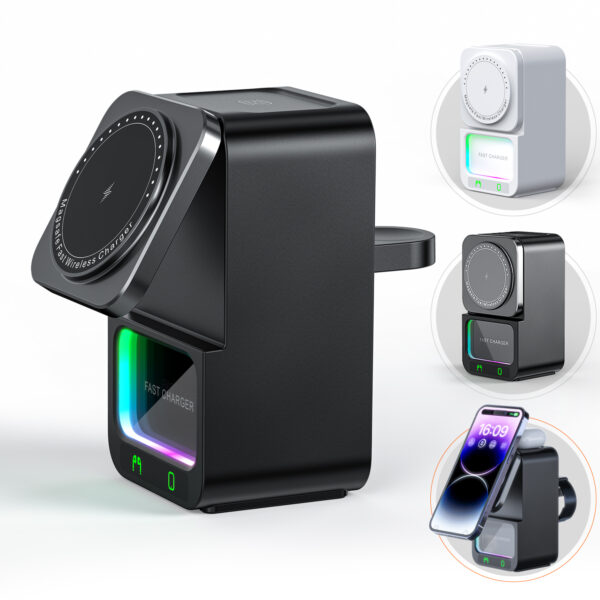
Y302 Qi2 3-in-1
Qi2 magnetic 3-in-1 for phone, earbuds and watch — the current flagship layout.
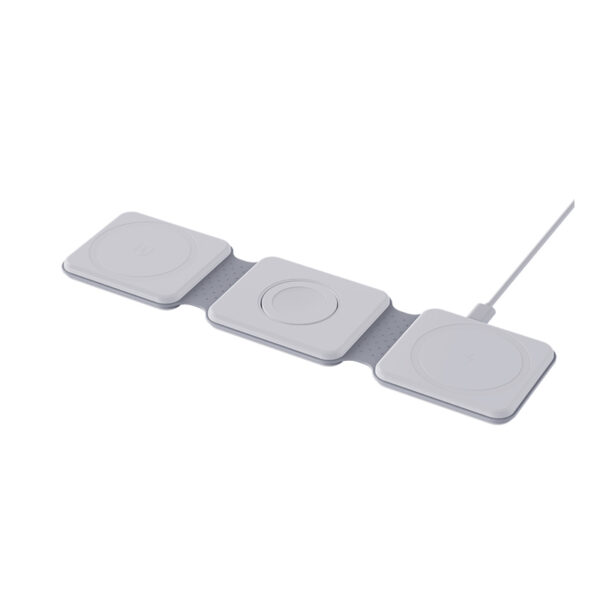
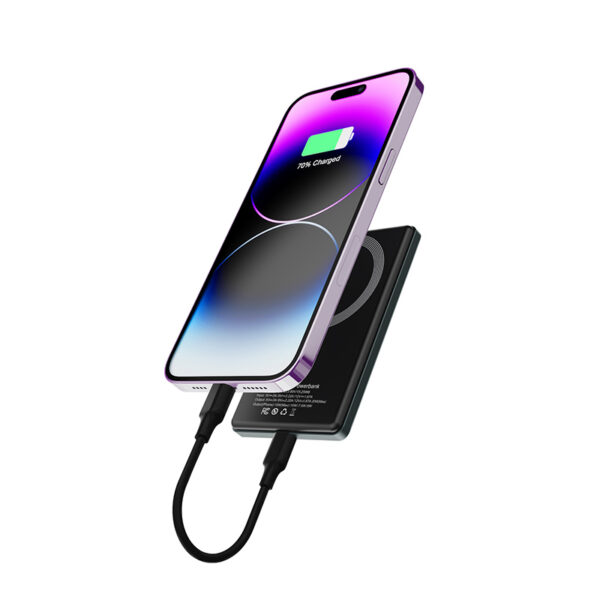
DH19 4-in-1 magnetic stand
Magnetic stand with speaker — a desk SKU rather than a travel one.
How a wireless charger programme is built and checked
A wireless charger programme runs through seven gates, from incoming materials to the shipment report. The gates are the same whether the order is a 200 pcs trial or a container.
Material preparation and checking
Incoming components are checked against the approved bill of materials before a board enters the line: the coil, the magnet array where fitted, the shielding, the power devices and the cable parts.
First-piece quality confirmation
The first unit of every wireless charger production run is built and charged on the bench before the line continues, which is where a coil-position drift shows up early.
Assembly on static-protected lines
Boards are assembled on static-protected lines to a written operation sheet, so the result depends on the sheet rather than on who happens to be on the shift.
Visual inspection rounds
Multiple visual inspection rounds cover solder joints, coil seating, magnet placement, shielding and the finish of the housing and contact surfaces.
Aging under load and electrical testing
Units run an aging cycle under load and are re-measured afterwards — the test that separates a wireless charger design that holds its rate from one that only reaches it briefly.
Charging and protocol verification
Output voltage and current are measured across every coil, and the charging profile is verified per phone family rather than assumed from the platform data.
QA sampling, packing and shipment inspection
Sampling runs before packing, the box, insert and accessories are checked against the approved artwork, and the batch report keeps every shipment traceable to its production run.
The route does not change with volume: a 200 pcs trial and a container order pass the same gates, and the batch report comes back in the same format either way.
Where a wireless charger programme usually goes
In-box accessory
Ships with a device or accessory launch, with the packaging matched to the product it accompanies.
Retail and gifting
A shelf SKU in its own colour box for electronics retail, brand stores and corporate gift channels.
Desk and office
Stand and station formats for hot-desking, meeting rooms and reception areas.
Travel and hospitality
Foldable and magnetic formats for travel retail, hotels and shared workspaces.
Certifications and what comes with the shipment
The file for a wireless charger programme is assembled from the first sample rather than hunted down before dispatch, so the paperwork matches the market the container is going to.
CE / UKCA
European Union and United Kingdom market access for the finished unit and its power supply.
FCC
United States electromagnetic compliance for the finished unit.
RoHS / REACH
Restricted-substance documentation for the European market.
PSE / KC
Japan and Korea market documentation, quoted with the plug kit.
CB / SAA / GS / ETL
Additional reports quoted where the channel or retailer requires them.
ErP efficiency
Efficiency documentation for the EU external power supply regulation.
Reference standards behind this page: Wireless Power Consortium (Qi / Qi2), EU external power supply regulation (ErP), EU CE marking and the USB Implementers Forum for USB-C and Power Delivery specifications.
Related guides and platforms
All wireless and GaN chargers
The full platform list with wattage, port layout and MOQ for every model.
Where wireless chargers get used
Desk, hotel, retail and gift channels — and what each one specifies differently.
OEM and ODM process
How a branded programme runs from sample to container.
Quality control
The five inspection gates every unit passes before it ships.
Certification for the EU and US
What the compliance file needs, and when to start it.
MOQ and tooling economics
Where the 200 pcs threshold comes from and what tooling costs.
Wireless charger manufacturing — FAQs
What is the minimum order for a branded wireless charger?
A branded wireless charger starts at 200 pcs per model, and a trial order can be split across two or three SKUs so the first purchase tests a channel rather than a container. Tooling and print plates are quoted as separate lines.
How fast are samples and production?
Samples normally ship in 2–3 days with your logo and finish applied. Mass production runs 7–15 days after sample and artwork approval, and a container programme takes 3–5 weeks depending on volume and packaging work.
Is 15W the maximum?
15W is the certified band for Qi2 and MagSafe-compatible platforms and it is what we build as standard. If your channel asks for a higher wireless number, tell us which devices it has to serve and we will confirm the profile before it goes on the artwork.
Which certifications can you supply?
CE, RoHS, FCC, UKCA, PSE, KC, SAA and CB reports depending on the target market, with GS, ETL and ErP documentation where the channel requires it. The compliance file is assembled from the first sample.
Can the magnet and coil be changed?
Yes. Single, twin and three-coil layouts are all in production, and the magnet array is specified with the coil. Because alignment is a mechanical tolerance question, we confirm the target phone models before the sample is built.
Do you supply the adapter and cable?
Yes — the unit can ship on its own or as a bundle with a USB-C adapter, cable or pouch. Bundling changes the carton configuration, so it is quoted with the packaging.
How is a wireless charger tested?
Every unit goes through five gates: components checked against the approved bill of materials, assembly on static-protected lines, repeated visual inspection, aging under load with electrical re-measurement, then QA sampling and a shipment report.
What is the warranty and what happens if units fail?
Two years on the platform, with a 24-hour first response and batch traceability that points at the production run rather than the shipment. A claim comes back as the batch report, the suspected cause and a written corrective action.
Can we visit the factory?
Yes, visits are welcome and usually include a sample review on the test bench — bring the devices you want to charge and we will test them against the platform.
What do you need to quote?
The device list, the form factor you want (pad, stand, 3-in-1, foldable), the markets, the quantity and whether it is a branded or neutral order. Pricing, lead time and the certification list come back within 24 hours on business days.
Who are some manufacturers of wireless chargers?
The wireless charger category is split between phone-brand accessories and independent factories, and the independent factories are the ones that quote branded work. The useful filter is not a list of names but what a manufacturer publishes: its platforms, its MOQ, its certification scope and whether it will state a coil and a profile for your devices.
Which company makes the best wireless chargers?
There is no single best — a charger is good when the coil, the magnet array and the thermal design match the phone and the channel it is sold into. That is why we start from your device list rather than from a model number, and why we would rather quote the platform that fits than the one with the highest rating on the box.
What manufacturer makes chargers?
Chargers are built by electronics factories that specialise in power conversion, and a single factory usually builds several categories: wired GaN adapters, wireless pads and multi-device stations share the same power-stage skills. Ours builds all three in Shenzhen, which is why one project can cover a wired and a wireless SKU.
Choosing a wireless charger manufacturer — what to check before you commit Know more Know less
How to compare wireless charger manufacturers
Most quotes for a wireless charger look similar, because the visible part of the product is a housing and a cable. The differences that decide how a programme runs sit underneath: whether the manufacturer publishes its platforms, whether it will state a coil and a charging profile for your devices, and how much of the certification work it carries for your target markets.
A short list of questions sorts them quickly. Which platforms are already in production? What is the MOQ per model? Which certifications are on file, and for which markets? Who answers questions after the order — the sales contact or an engineer?
What a factory should quote for a pad, stand or station
A useful quotation states the platform, the coil layout, the charging profile, the certifications already held, the unit cost at your volume, the sample date and the mass-production date. It also separates tooling, print plates and packaging dies from the unit cost, so the price does not change once artwork arrives.
If a quotation cannot state the profile or the certification scope, the missing information usually reappears later as a delay or a re-test.
Certification by market: CE, UKCA, FCC, PSE and KC
A wireless charger needs a different file depending on where it is sold: CE and UKCA for Europe and the UK, FCC for the United States, PSE for Japan, KC for Korea, with SAA and CB reports where the channel asks for them. ErP efficiency documentation is added when an adapter ships as part of the set.
The file should be assembled from the first sample rather than hunted down before dispatch, because the configuration that ships is the one the reviewer opens — including the plug kit and the adapter.
MOQ, tooling and sample timing
200 pcs per model is the threshold on our platforms, and a trial quantity can be split across two or three SKUs. The number exists because the branding steps — print plates, colour batches, box artwork — have their own minimums, and below that those minimums stop being worth amortising.
Samples ship in 2–3 days with your logo and finish applied; mass production runs 7–15 days after sample and artwork approval. In practice the artwork is the critical path rather than the production line.
What happens after the first shipment
A repeat order should not need a new sample cycle, because the platform and the artwork are already approved and the reports are on file. What changes between shipments should be the quantity, not the specification.
If something goes wrong, the answer should be a batch report, a suspected cause and a written corrective action — not a replacement promise. That is what batch traceability is for, and it is worth asking for it before the first order rather than after the first complaint.
Send your spec, get a costed quotation
Send the platform you are interested in, the target devices and the markets. You get unit pricing at your quantity, the sample date and the certification list per destination — normally inside one working day.
- MOQ from 200 pcs per model, splittable across a few SKUs
- Samples in 2–3 days with your logo and finish applied
- Reply within 24 hours on business days