
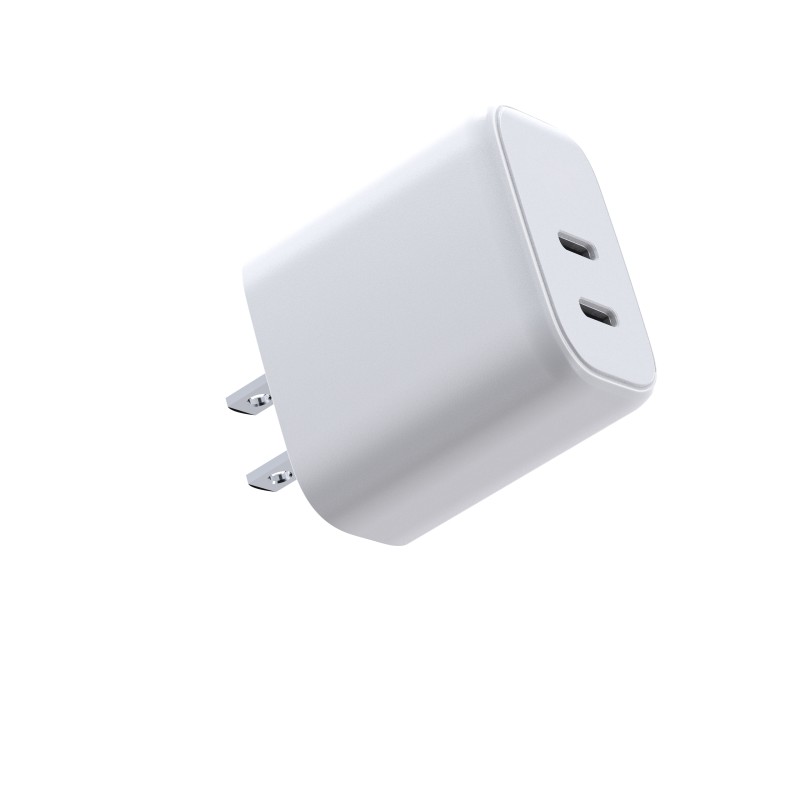
A USB C charger looks simple from the outside: a housing, a board and a connector. Inside a factory, it is a chain of processes where each stage can create a defect that only appears in the field. Understanding the chain is what allows a buyer to ask the right questions during an audit and to judge whether a quotation is realistic.
This guide is part of our Charger Quality & Inspection. Read the full topic guide for the decisions that come before and after this step.
USB C Charger Factory: the production chain in order
The chain runs in six steps. Production runs from component receipt to packed carton: incoming inspection, SMT placement and reflow, hand assembly of the mechanical parts and cable, functional test, aging under load, and packing with the compliance documents. Each stage has an owner, a specification and a record. A factory that controls all of them on one site can correct a defect at its source rather than screening for it at the end.
SMT: where the electrical foundation is set
SMT placement determines solder joint quality and electrical reliability. The process needs a controlled profile, verified paste and placement accuracy, and then inspection of the joints. Static control matters around the board, and the profile records matter to a buyer because they are the evidence that the process was run to specification rather than to habit.
Hand assembly and mechanical fit
Hand assembly joins the board to the enclosure and connects the mains interface. The risks here are connector seating, cable routing, screw torque and the fit of the shells. In-process inspection at defined intervals catches a drift before a whole batch is built. Ask to see the work instruction at the station and the record that the interval check produces.
Functional test: 100% of units
Every unit should pass a functional test that verifies output voltage and current behaviour, port detection and protection functions. This is a 100% test, not a sample. Sampling on an output parameter means a defective unit can reach the customer, and the cost of a return is higher than the test time saved.
Aging under load
Aging runs the charger at a defined load for a defined period. It exposes thermal problems, marginal components and intermittent faults that a short test misses. The record should state the load, the duration and the ambient conditions, and the units should be traceable to the aging run. Where a factory cannot describe the load profile, the aging step is decorative.
| Stage | Defect it prevents | Evidence to request |
|---|---|---|
| IQC | Wrong or substituted components | Inspection report against BOM |
| SMT | Poor joints and electrical faults | Profile and inspection records |
| Assembly | Connector and fit problems | Work instruction and IPQC records |
| Functional test | Output and protection failures | 100% test results |
| Aging | Thermal and intermittent faults | Aging log with load profile |
| OQC | Appearance, label and packing errors | Outgoing inspection report |
Outgoing inspection and packing
Outgoing inspection covers appearance, labelling, accessories and packing against the approved sample. It is the last gate before shipment and the one that produces the report a buyer reads. The sampling plan should be stated in the quality agreement, and functional and safety parameters should remain 100% tested rather than sampled.
Traceability: from carton to component lot
A date code on the product is only useful if the batch and material records behind it exist. The traceability chain should link a finished unit to its batch, its test data and its component lots. When a claim arrives, that chain turns an argument into an investigation. Ask for a demonstration on a real carton rather than a description of the system.
What a buyer should see in a walkthrough
- SMT line running with profile records available
- Static control in place at hand stations
- Functional test station in operation on production units
- Aging rack loaded and logged
- Packing line preparing an export carton with documents
Why platform-based production matters for USB C chargers
USB C charger ranges usually need several wattage tiers and port layouts. Where those are built on shared platforms, a brand can add a SKU without new tooling and with the existing certification maintained. Where every variant is a standalone design, each one carries a full development cycle. The platform decision therefore determines both the cost of the first order and the cost of extending the range.
Substitution control on USB C components
The components most exposed to substitution on a USB C charger are the controller, the power switch and the connector. Each affects either the electrical behaviour or the mechanical interface, and each can invalidate an assumption behind the certification file. A workable policy states which parts are safety-critical, requires written notification before any change, and requires customer approval before units built with an alternate part are shipped. Ask for the change-notification process and test it with a hypothetical: if the controller reaches end of life in month nine, what happens to the approved specification?
What to verify in a production walkthrough
During a walkthrough, confirm four physical facts: that the SMT line is running with profile records available, that static control is in place at the hand-assembly stations, that the functional test station is testing production units rather than demonstrating a sample, and that the aging rack is loaded and logged. Then ask to see the packing line prepare an export carton with its documents. These four checks establish that the process described in the quotation is the process that will build the order.

FAQ
Is every unit functionally tested?
On a properly run line it is, and the test station records the result per unit rather than per batch. A factory that tests by sampling at final assembly is relying on inspection to catch what the process produced. On a properly run line the test station records the result per unit rather than per batch, and sampling at final assembly relies on inspection.
What does the aging test reveal?
It reveals failures that appear only after the unit has been running under load, such as a component that drifts with temperature or a joint that fails once the assembly warms. A unit that passes at one minute and fails at sixty is invisible without it. It reveals failures that appear only after the unit has been running under load, such as a component that drifts with temperature.
How does a carton trace back to a component lot?
Through the batch code on the carton, which links to the production date, the test records and the incoming inspection records for the components used. The chain is only useful if every link is recorded at the time rather than reconstructed later. The batch code links the carton to the production date, the test records and the incoming inspection records for the components used.
What should be checked during a factory walkthrough?
The SMT line and its profile records, the test stations and their current calibration, the aging racks, the outgoing inspection area and the handling of non-conforming units. Those five areas describe the process more reliably than a presentation does. Check the SMT line and its profile records, the test stations and their calibration, the aging racks, the outgoing inspection area and non-conforming handling.
Next step
Wecent Group builds USB C chargers on certified platforms in Bao’an, Shenzhen, with five documented inspection gates and batch records retained for traceability. Request a factory walkthrough or a costed quotation through the contact page. Related reading: factory floor, quality control and our charger factory. External references: USB-IF documentation, IEC standards, ISO 9001, ISO 2859-1 sampling, UL and EU CE marking.